Whether a Himalayan Minds Being the Only Cat
A Himalayan can be the only cat in a home and still be content, but “quiet” does not automatically mean “fine alone.” These affectionate, routine-minded cats often enjoy having a person nearby, so the real question is whether their daily life offers enough company, play, and predictability. This guide explains how to spot a happy solo Himalayan and when a companion might help.
Can a Himalayan Be Happy as the Only Cat
Many Himalayans do well as the only pet, particularly when they have a steady routine and regular interaction with the people they trust. They often enjoy settling near someone, keeping an eye on household activity, and taking part in calm daily rituals. That doesn’t mean every Himalayan wants constant attention, though. Temperament, early social experiences, age, health, and the hours the household is away all matter.
A cat who appears relaxed while you work or read may be perfectly content. A cat who spends long stretches withdrawn, stops playing, or becomes unusually demanding when you return may need more stimulation or a closer look at their wellbeing. Rather than assuming a second cat is the answer, start by observing what your individual cat does throughout the day.
What companionship means to a Himalayan
For many Himalayans, companionship means being near their chosen person more than being physically held or entertained every minute. Your cat might follow you from the kitchen to the living room, settle beside your chair, or wait nearby while you finish a task. That quiet presence can be social engagement, even if your cat isn’t climbing into your lap.
This pattern is easy to misread. A Himalayan who naps in the same room while you work may seem “clingy” to one person and simply companionable to another. Likewise, a cat who prefers the sofa beside you rather than your lap may still be seeking company. The difference is often in the details: a relaxed posture, comfortable sleep, normal eating, and occasional interest in play generally suggest a cat who feels settled.
Their social habits also reflect their individual history. A kitten raised around other cats may be more accustomed to feline company, while an adult who has lived alone for years may find a newcomer disruptive. For a closer look at the breed’s daily rhythm, see How a Himalayan Divides Its Day Between Sleep and Lap. A Himalayan’s apparent inactivity doesn’t necessarily mean boredom either; Whether a Himalayan Is as Inactive as It Looks explores why a calm cat may still have plenty of interest in their surroundings.
When solo living tends to suit them
A Himalayan may be comfortable as an only cat when the home provides predictable routines, cozy places to rest, and a little interaction throughout the day. Regular meals, a familiar greeting, and a short play session can matter more than constant activity. Many cats appreciate knowing what to expect, especially if the household is busy or has recently changed.
Solo living can also be a good fit when a cat is territorial or easily unsettled by other animals. Some Himalayans would rather have a favorite chair and peaceful access to their people than share space, resting spots, food areas, and litter boxes with a new cat. A second cat might bring company, but it can also bring competition and stress.
A cat’s age and physical condition deserve consideration too. A senior Himalayan with stiffness, reduced vision, or a demanding grooming routine may appreciate a quiet home and familiar surroundings. In contrast, a young cat who spends long periods alone and seems eager for interaction may need more play and enrichment. A second cat is only one possible response, not an automatic solution.
Signs Your Himalayan Is Content or Needs More
It can be hard to tell the difference between a naturally low-key cat and one who is lonely. Look for changes from your Himalayan’s own normal behavior rather than comparing them with a more energetic breed or another cat. A gentle, reserved temperament may be perfectly healthy; a sudden shift in appetite, grooming, sociability, or bathroom habits deserves attention.
A simple daily observation can help. Note where your cat chooses to rest, whether they engage with toys or household activity, and how they behave before and after you’re away. Small patterns are often more useful than one dramatic moment. A Himalayan who sleeps most of the afternoon but eats normally, greets you, and enjoys a little play may be doing well.
Signs that solo life is working
A content solo cat usually has a mix of resting, exploring, grooming, eating, and social contact. They may spend much of the day napping, but they still show interest in familiar people or routines. Some greet their person at the door; others remain on their chair and acknowledge the reunion with a look, a chirp, or a quiet walk toward the food area.
Healthy independence can look understated. Your Himalayan might use a window perch, investigate a toy left out, or move between a sunny patch and a cool floor during the day. They may also be perfectly happy to sit nearby without demanding active attention. What matters is that they can settle, respond to their environment, and maintain their usual habits.
Notice whether your cat seems comfortable when left alone, rather than simply whether they are quiet. A relaxed nap and a normal greeting are reassuring. Destructive behavior, persistent vocalizing, or frantic attention-seeking can point to unmet needs, but those signs can also have other causes. Keep a short log if you’re unsure; comparing a few ordinary days can reveal a pattern more clearly than relying on memory.
Changes that deserve attention
A Himalayan who suddenly hides more, loses interest in favorite activities, or stops grooming as usual may not simply be lonely. Changes in appetite, thirst, litter-box use, mobility, or social behavior can signal pain or illness. Because long coats can hide changes in body condition and skin, a careful hands-on check and a veterinary conversation may be more useful than adding a companion right away.
Stress can also show up in subtle ways. A cat might become more vocal, seem unsettled when a routine changes, or stop using a favored resting place. Moving furniture, a new work schedule, visitors, or a change in who is home can affect a routine-sensitive cat. The guide How a Himalayan Reacts When Its Routine Breaks offers more context on interpreting those shifts.
If your Himalayan’s behavior changes sharply, or you notice symptoms such as repeated vomiting, difficulty breathing, painful urination, or refusal to eat, contact a veterinarian promptly. Loneliness is not a safe explanation to settle on before considering health. A medical issue and a social need can look surprisingly similar from across the room.
How to Make Life Better for a Solo Himalayan
If your Himalayan is the only cat, enrichment doesn’t need to mean a complicated setup or hours of energetic play. The goal is to give your cat comfortable choices: places to rest, safe things to investigate, and predictable moments of interaction. For a breed that may prefer the sofa to a tall climbing tower, low, accessible options are often more practical than elaborate vertical spaces.
Build enrichment around what your cat actually uses. If they enjoy watching birds, make a comfortable resting spot near a secure window. If they like food puzzles, choose one that is easy for them to reach and use. A flat face or shortened jaw can make some bowls and puzzle feeders awkward, so watch your cat try the setup rather than assuming it works.
Create a comfortable day while you’re away
Before leaving, make sure the basics are accessible: fresh water, a clean litter box, a comfortable resting place, and a room temperature your cat can tolerate. If your cat has trouble reaching a high surface, offer a stable step or a low perch. Long fur can make warm rooms uncomfortable, so include a shaded, cool place to rest rather than relying on a sunny window as the only option.
A little novelty can make the day more interesting without overwhelming a cat who prefers calm. Rotate a few safe toys instead of leaving every toy out all the time. Try a short wand-toy session before work, then leave a familiar toy or food puzzle for later if your cat uses it comfortably. Chewy carries a range of cat toys and enrichment items, but the important part is choosing something suited to your cat’s face, mobility, and interest level—not buying a large collection.
If you want to understand how a solo cat’s environment can work while nobody is home, see Making One Room Comfortable for a Himalayan Left Alone. A camera can sometimes help you learn whether your cat sleeps, explores, or vocalizes after you leave, but it’s an observation tool rather than a measure of whether the cat is emotionally fulfilled. A quiet afternoon on camera may be entirely normal.
Make interaction predictable and low-pressure
Many cats respond well to brief, regular moments of attention. You might offer a gentle play session before breakfast, a calm greeting when you return, and a few minutes of brushing or face care if your cat enjoys it. Consistency can make these moments reassuring. Avoid turning every interaction into handling; sitting nearby and speaking softly may be enough on a day when your cat wants company without contact.
Play should suit your Himalayan’s stamina. Short sessions with breaks are often more comfortable than trying to keep a cat chasing for a long time. Watch for heavy breathing, panting, or a sudden loss of interest, and stop if your cat seems overheated or uncomfortable. A soft wand toy moved along the floor can be more inviting than a toy held high above the cat’s head.
If food enrichment seems promising, start with something simple and easy to access. A shallow puzzle or a few small portions hidden in familiar spots can offer a bit of mental work. Chewy may be one place to browse for puzzles or toys, but choose an item only if your cat can use it without frustration. Chewy also stocks grooming and feeding supplies that may help with everyday routines; introduce any new item gradually and check that your cat can comfortably reach it.
Should You Get a Second Cat for Your Himalayan
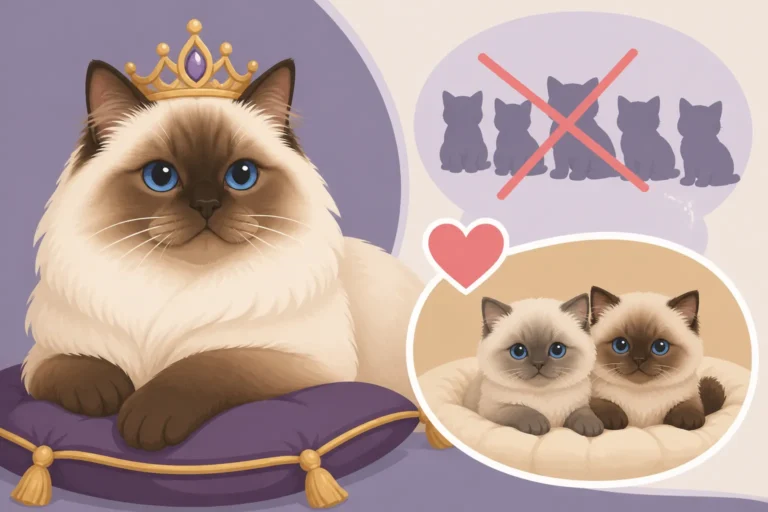
A second cat can provide company for some households, but it is not a guaranteed cure for boredom or loneliness. Cats don’t necessarily want a feline friend just because they live alone. A newcomer also changes access to resting areas, food, litter boxes, and human attention. If your Himalayan values a quiet home and a steady routine, a rushed introduction may create more stress than companionship.
Before deciding, consider your cat’s past relationships with other animals, how they respond to unfamiliar cats, and whether you have enough space to separate them while they adjust. A careful introduction takes time and should allow both cats to retreat. If the only reason for adopting another cat is the hope that it will keep your Himalayan occupied, first try adjusting play, routines, and enrichment.
Compare the options before deciding
| What you notice | What it may suggest | A sensible next step |
|---|---|---|
| Your cat rests peacefully, eats normally, and enjoys familiar routines | Solo living may suit them | Keep the routine steady and offer modest enrichment |
| Your cat seems bored but remains relaxed and healthy | More stimulation may help | Try short play sessions, toy rotation, or an easy puzzle |
| Your cat has a history of settling with other cats | A companion could be considered | Choose a compatible cat and plan a gradual introduction |
| Your cat hides, stops eating, or changes litter habits | Stress or illness may be involved | Contact a veterinarian before adopting another cat |
| Your schedule has changed and your cat seems unsettled | The routine may need rebuilding | Restore predictable meals, greetings, and resting places |
If you do consider adopting, match temperament and pace rather than focusing only on age or appearance. A very energetic cat may overwhelm a reserved Himalayan, while another calm, socially comfortable cat could be a better possibility. Even a good match requires a gradual introduction, separate resources, and patience while both animals learn each other’s scent and presence.
The article Bringing a Second Cat Home to a Himalayan covers the introduction process in more detail. It’s also worth asking whether your Himalayan has actually shown interest in other cats before. If your cat has always preferred distance, that history matters. Whether a Himalayan Wants a Second Cat can help you think through the difference between a cat who enjoys feline company and one who simply tolerates it.
When a companion is not the right first step
A second cat may be the wrong first move if your Himalayan is unwell, already anxious, or struggling with a recent household change. Adding another animal can make it harder to identify why the first cat’s behavior changed. It can also increase daily responsibilities, including separate feeding, litter management, grooming, and veterinary care.
Your own schedule matters as well. If you are away frequently, a second cat may not remove the need for human care and interaction. Some cats bond with one person and enjoy that relationship more than they would enjoy sharing their home with another animal. For a broader look at that lifestyle question, see Whether a Himalayan Suits Someone Working Away and Why a Himalayan Follows One Person Around the House.
A good decision leaves room for your cat’s preferences. If solo living appears to suit them, there is no need to adopt a second cat to meet an imagined requirement. If you see persistent changes or distress, talk with your veterinarian and improve the daily environment first. Then, if your cat’s temperament and your household are a good fit for another animal, plan the introduction slowly and give both cats time to adjust.
Disclaimer
This article is for general informational purposes only and does not constitute professional advice. Laws, prices and regulations vary by location and change over time. Consult a qualified professional for guidance on your specific situation.