Why a Himalayan Plays Longer Than a Persian and Less Than a Siamese
If you're bringing a Himalayan into your home, or perhaps you already have one and find yourself a bit puzzled by their activity levels, you're not alone. Many cat parents wonder if their beautiful, fluffy companion is destined to be a complete couch potato like some Persians, or if there's a spark of the lively Siamese lurking beneath all that gorgeous fur. The truth is, the Himalayan often occupies a wonderful middle ground, offering a unique blend of playful engagement and serene companionship that requires a nuanced understanding. This guide will delve deep into the fascinating world of Himalayan play, exploring how their distinct ancestry shapes their energy, and how you can best engage with your beloved feline.
The Himalayan's Genetic Tapestry: A Tale of Two Ancestries
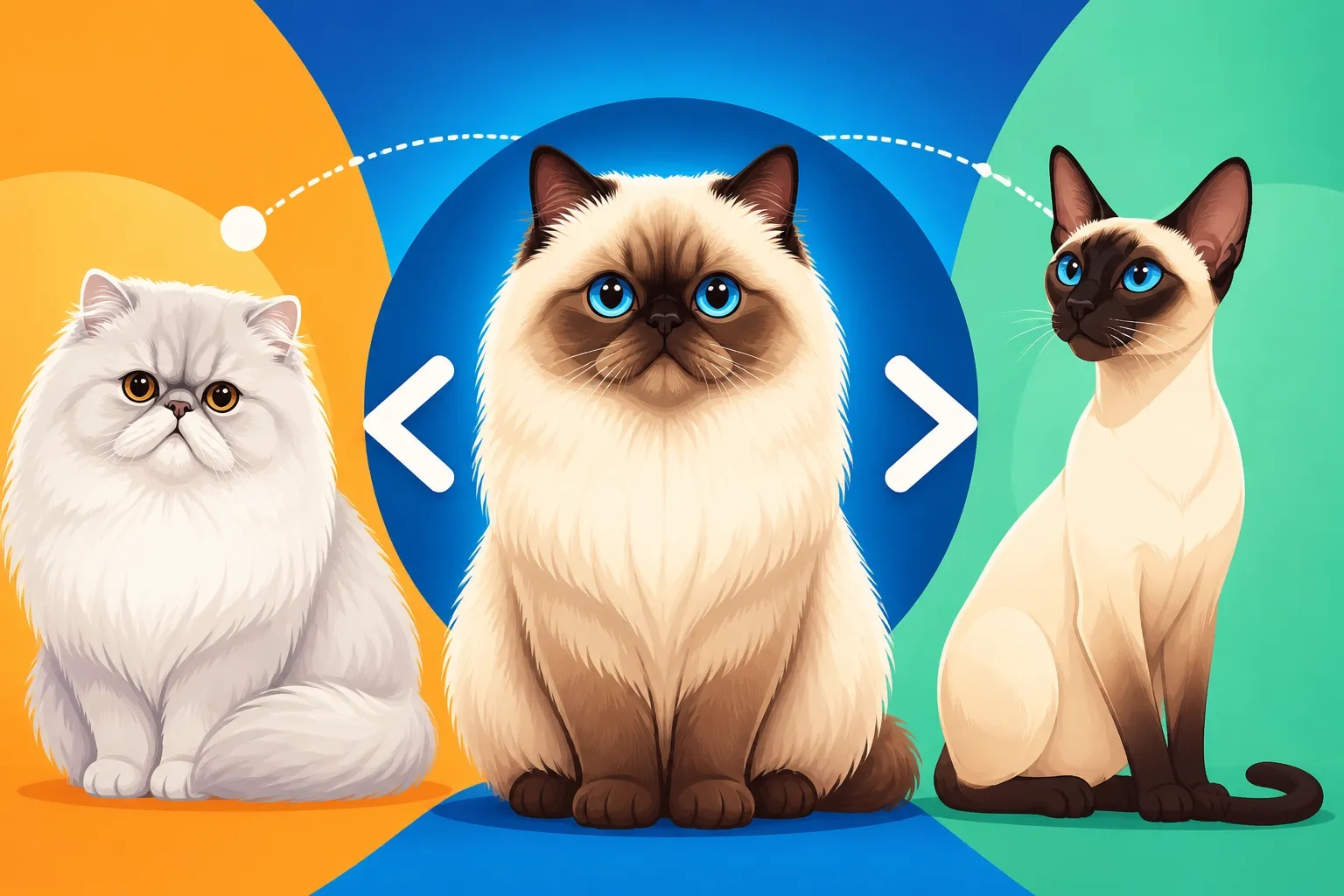
To truly grasp why your Himalayan behaves the way it does – from its vocalizations to its play style – we need to understand the rich genetic heritage it carries. This isn't just about appearance; it's about temperament and energy levels too. The Himalayan breed, in essence, is a beautiful fusion, designed to combine the striking colorpoint pattern of the Siamese with the luxurious long coat and placid nature of the Persian. This deliberate blending has created a cat that, while sharing many physical traits with the Persian, often retains a whisper of its Siamese ancestors' spirited personality.
The Persian's Legacy of Calm
The Persian cat is renowned for its dignified, often serene demeanor. They are the quintessential lap cats, preferring a comfortable perch on the sofa to scaling the bookshelves. Their energy levels are generally low, and their play sessions tend to be short, gentle, and often initiated from a relaxed position. They aren't typically known for high-octane chases or lengthy romps around the house. Instead, a flick of a feather wand from the comfort of their human's lap, or a gentle batting at a toy mouse, is often enough to satisfy their playful urges. This calm disposition is a huge part of the Himalayan's charm, making them excellent companions for quieter homes.
It's this inherited calmness that often dictates the pace of a Himalayan's day. You'll frequently find your Himalayan luxuriating in a sunbeam, or observing the world with a calm, discerning gaze from their favorite chair. This isn't laziness; it's simply their natural inclination towards tranquility, a direct echo of their Persian forebears. For an owner, recognizing this means appreciating the subtle joys of a quiet companion, rather than expecting a cat that constantly demands attention through energetic antics. This inherent stillness is a core aspect of their character, influencing everything from their daily routine to how they interact with their environment.
However, even the most placid Persian, and by extension, your Himalayan, still needs engagement. It might not be a frantic game of tag, but rather a focused, brief interaction that stimulates their minds. A common misconception is that a calm cat needs no play, but this couldn't be further from the truth. Their play may look different, but it's vital for their mental and physical well-being. Think of it as intellectual play rather than purely physical exertion, engaging their hunting instincts in a more subdued, yet equally satisfying, manner.
The Siamese's Infusion of Spirit
On the flip side, we have the Siamese – a breed celebrated for its intelligence, vocal nature, and boundless energy. Siamese cats are known to be highly interactive, demanding attention with their distinctive "meow," and engaging in spirited games of fetch or lengthy play sessions. They are agile, curious, and often described as having a dog-like loyalty, following their humans from room to room. This vibrant personality is what breeders hoped to introduce to the long-haired, colorpoint cat, adding a spark to the Persian's placidity.
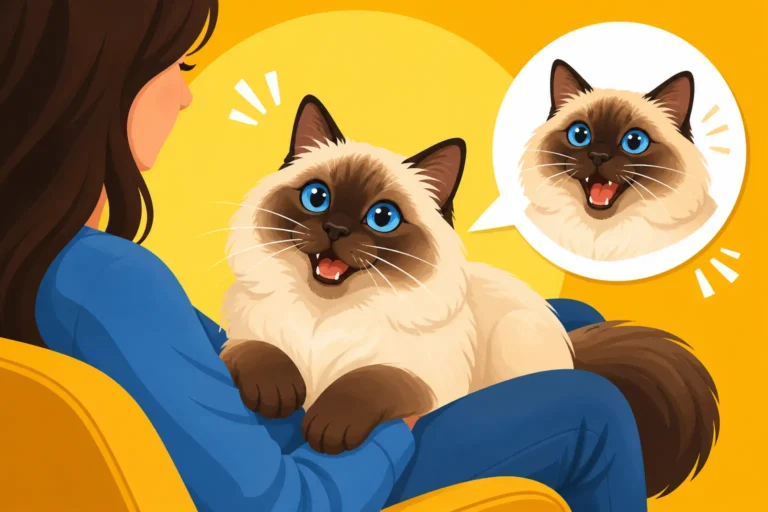
The Siamese influence is often what surprises new Himalayan owners. While they might appear as fluffy, regal Persians, many Himalayans possess a vocal repertoire and an interactive streak that clearly points back to their Siamese roots. You might find your Himalayan engaging in conversational "chirps" or a more insistent "meow" when they want something, a clear departure from the usually quiet Persian. This vocal trait can be charming, turning your cat into a talkative companion who "answers back" when spoken to. It's a delightful aspect of their personality that adds another layer to their character. How Much More a Himalayan Talks Than a Persian explores this in more detail.
This spiritedness also manifests in their curiosity and engagement with their surroundings. While they may not be scaling curtains like a purebred Siamese, they are often more observant and responsive than their Persian cousins. They might "help" you with chores, gently bat at your shoelaces, or follow you into the kitchen with a hopeful look. This level of interaction means they thrive on being part of the family, rather than merely being a decorative presence. It’s this active participation in household life that truly distinguishes them.
The Persian's Play Style: Sedate and Dignified
Let's really dig into the Persian side of things, because it forms the baseline for your Himalayan's activity. Persians are not built for marathons, nor do they typically seek them out. Their play is more like a leisurely stroll through a garden than a sprint across an open field. This isn't a flaw; it's a fundamental part of their charm and why so many people adore them.
Short Bursts of Gentle Interaction
A typical Persian play session is often characterized by its brevity and low intensity. Imagine a game where the cat lies comfortably, perhaps on its side, and daintily bats at a toy dangling nearby. There's no frantic pouncing or high-speed chase involved. They might stretch out a paw, flick their tail, and engage for a few minutes before deciding they've had quite enough exertion for the moment. This is perfectly normal and healthy for a Persian. They conserve their energy, preferring short, focused bursts of activity that don't overexert their cobby bodies or dense coats.
It's also worth noting that the Persian's physical build contributes to this. Their generally stocky bodies and shorter legs, combined with their luxuriant long coats, aren't designed for sustained, vigorous exercise. Overheating can be a concern, especially for those with flatter faces, which can impact their breathing during strenuous activity. So, their preference for gentle, shorter play is not just a personality trait but also a practical one. It's their way of enjoying interaction without pushing their physical limits, a trait that your Himalayan will undoubtedly share.
Many Persian owners find that the best way to engage their cats is with toys that come to them, rather than requiring the cat to chase. A laser pointer (used carefully and always ending with a tangible toy catch), a feather wand that hovers temptingly within paw's reach, or a soft, crinkly ball gently tossed nearby often gets a better response than something requiring a full-body sprint. This approach honors their natural inclination and ensures that play remains enjoyable and comfortable for them.
Preference for Observation Over Participation
While Persians might not always be active participants, they are often keen observers. They love to watch the world go by from a comfortable vantage point, whether it's a window perch or the back of a sofa. This observational nature extends to play. They might watch another cat, or even you, playing with a toy, their eyes following every movement intently, even if they choose not to join in. This isn't disinterest; it's their way of engaging mentally without expending physical energy.
Think of it as enjoying a good show. They are absorbing the stimulation, processing the movements, and perhaps even mentally "hunting" from afar. This passive engagement is just as valid a form of enrichment for a Persian, and for a Himalayan, as active play. It shows their intelligence and their preference for a more contemplative existence. Understanding this means not forcing them into energetic games they clearly don't enjoy, but rather providing a rich visual and auditory environment that satisfies their curiosity.
This observational quality can also be seen in how they interact with new toys. Instead of pouncing immediately, a Persian or a Himalayan might approach a new item with caution, sniffing it, giving it a gentle tap, and then retreating to observe it from a distance before fully engaging. This measured response is characteristic of their thoughtful nature and should be respected. Patience is key when introducing new forms of enrichment, allowing them to acclimate at their own pace.
The Siamese's Play Drive: Energetic and Vocal
Now, let's swing to the other end of the spectrum with the Siamese, whose influence adds that unique zest to the Himalayan's character. Siamese are the athletes and conversationalists of the feline world, and their play reflects that.
High-Energy Chases and Interactive Games
Siamese cats are synonymous with high energy. They love to run, jump, and climb, often engaging in acrobatic feats that would leave a Persian breathless. Their play sessions can last for extended periods, involving fast-paced chases, vigorous pouncing, and even games of fetch, bringing toys back to their humans for another toss. They thrive on interaction and often instigate play, using their distinctive voices to demand attention. This intense play drive is a hallmark of the breed, a testament to their active and intelligent minds.
Owners of Siamese cats often describe them as having endless energy, requiring multiple, engaging play sessions throughout the day to keep them happy and prevent boredom-induced mischief. They are problem-solvers, capable of figuring out puzzle toys with impressive speed, and enjoy the challenge of a new game. This mental and physical stimulation is crucial for their well-being. Without it, a Siamese can become restless, vocalizing excessively, or even engaging in destructive behaviors.
This high level of activity also means they are often very fit and agile. Their lean, muscular bodies are built for speed and dexterity, allowing them to navigate their environment with grace and precision. Observing a Siamese in full play mode is a captivating experience, showcasing their athletic prowess and sharp instincts. It's this dynamic energy that provides the contrast to the Persian's calm and contributes to the Himalayan's unique blend.
Vocalizations as Part of the Play Experience
Beyond their physical energy, Siamese cats are famously vocal. Their range of sounds, from demanding yelps to conversational meows and chirps, is often used to communicate their desires, including their eagerness for play. When a Siamese wants to play, you'll likely hear about it! They might lead you to their favorite toy, "talk" to you while you dangle a wand, or express their excitement with a series of chirps and trills during a chase. Their voice is an integral part of their personality and their interactive play style. Where the Himalayan's Voice Came From covers their ancestry in this regard.
This vocal trait isn't just about making noise; it's about engagement and communication. A Siamese uses its voice to build a connection with its human, to express its feelings, and to ensure its needs are met. During play, these vocalizations add an extra layer of enjoyment and dynamism, making the interaction feel more like a two-way conversation than a solitary activity. It's a key reason why they are often described as having dog-like personalities, as they actively seek to communicate and interact.
For a Himalayan owner, understanding this Siamese heritage means appreciating those moments when your cat "talks" to you, especially around playtime. It’s a sign of their engagement and their desire to connect. While they may not reach the same volume as a purebred Siamese, those inherited vocal nuances are a delightful part of their charm and a clear indicator of the genetic blend at play. It reminds us that our fluffy companions are much more than just pretty faces; they have vibrant inner lives that they want to share.
The Himalayan's Unique Play Equation: A Blended Temperament
So, what happens when you mix the calm dignity of the Persian with the spirited, vocal energy of the Siamese? You get the Himalayan – a cat with a truly unique and often delightful play equation. They are not entirely one or the other, but a captivating blend that offers the best of both worlds.
The Best of Both Worlds: Active Laziness
This might sound like a contradiction, but it perfectly encapsulates the Himalayan's play style: active laziness. They love to play, certainly more than many Persians, but their play sessions are typically shorter and less intense than those of a Siamese. They might launch into an enthusiastic chase for a feather wand, showing surprising bursts of speed, but they'll often tire more quickly and retreat to a comfy spot to observe, before perhaps rejoining the fray. Think of them as sprinters, not marathon runners. They are willing to expend energy, but only in controlled, enjoyable bursts. Why a Himalayan Plays Longer Than a Persian and Less Than a Siamese is a very accurate description of their inherent nature.
Many Himalayan owners report that their cats have a specific "playtime" each day, often in the morning or evening, where they are most receptive to engagement. Outside of these times, they might prefer to nap or simply observe household activities. This pattern reflects the balanced influence of their ancestry – the capacity for energetic play, tempered by the Persian's preference for calm and rest. They offer the joy of an interactive cat without the constant demands for stimulation that a high-energy Siamese might present.
The key to engaging a Himalayan lies in understanding this rhythm. Short, frequent play sessions are often more effective than one long, exhausting one. Providing a variety of toys, easily accessible, also allows them to initiate play when the mood strikes, giving them autonomy over their activity. This respect for their natural ebb and flow of energy is crucial for fostering a happy and well-adjusted Himalayan.
Vocal Yet Gentle Interactions
Just as their play intensity is a blend, so too is their vocal nature. Himalayans tend to be more vocal than Persians, but usually less so than Siamese. They might use a soft trill or a distinctive "chirp" to get your attention, or engage in a quiet "conversation" when you talk to them. These vocalizations add to their interactive charm without being overwhelming or overly demanding. What a Himalayan Is Saying When It Chirps is a great resource if you're curious about their specific communication. They love to chat, but they typically don't feel the need to shout.
During play, these gentle vocalizations might manifest as excited little "chuffs" or purrs as they bat at a toy, or a soft meow inviting you to continue the game. This gentler approach to communication makes them wonderful companions for those who appreciate an interactive cat but prefer a less boisterous household. They have a way of communicating their desires and happiness that is both clear and endearing.
This means that while they might not demand play with the intensity of a Siamese, they will certainly let you know they're interested. Learning to interpret their subtle cues – a tail flick, a direct gaze, a soft trill – is part of the joy of owning a Himalayan. They teach you to listen more closely, to appreciate the quieter language of feline affection and engagement. This nuanced communication style fosters a deeper bond between cat and owner.
Tailoring Play to Your Himalayan: Practical Advice
Understanding your Himalayan's unique blend of energy is only the first step. The next is putting that knowledge into practice. Tailoring your play strategy to their specific needs and preferences is crucial for their physical and mental well-being.
Choosing the Right Toys
Because Himalayans often exhibit a mix of energy levels, a variety of toys works best. Think about those low-effort, high-reward toys for their more placid moments, and more engaging options for when their Siamese side shines through. Feather wands are almost universally loved, as they allow for interactive play without requiring the cat to run too much if they prefer to bat from a seated position. Small, lightweight crinkle balls or soft stuffed mice are also excellent for gentle batting and pouncing. You can find a fantastic selection of these on Amazon, often in multi-packs, so you always have a fresh one on hand.
For those moments when your Himalayan feels a burst of energy, toys that simulate prey can be very effective. A wand toy with a sturdy stick and various attachments (feathers, ribbons, small plush animals) allows you to mimic the erratic movements of prey, engaging their natural hunting instincts. Which Toys Get a Himalayan Off the Sofa provides some excellent ideas for motivating them. Remember to keep play sessions shorter to avoid overheating, especially if your Himalayan has a flatter face. Always put wand toys away after use to prevent accidental ingestion of strings or feathers.
Puzzle feeders are also a fantastic way to engage their minds, appealing to their inherent curiosity without demanding excessive physical exertion. Choose puzzle feeders designed for flat-faced cats, as deep bowls can be difficult for them. A flat, shallow puzzle mat or a feeder with wide openings can provide mental stimulation while slowing down their eating, which is a bonus if your Himalayan is a bit too enthusiastic about mealtime. Again, Amazon offers a wide range of options suitable for various feline facial structures.
Respecting Their Energy Limits
This is perhaps the most crucial aspect of playing with a Himalayan. Due to their cobby build, dense Persian coat, and sometimes brachycephalic (flat) face, Himalayans can overheat quickly and struggle with strenuous activity. Unlike a Siamese who might go, go, go, your Himalayan will likely have a much shorter fuse for intense play. Watch for signs of tiring: slower movements, heavy breathing, or simply walking away from the game. Why a Himalayan Pants After Five Minutes of Play is a real concern, and you should always be mindful of it.
Never push your Himalayan beyond their comfort zone. A play session should always end before they become overtly tired or distressed. Short, frequent play periods scattered throughout the day are far better than one long, exhausting one. For instance, two five-minute sessions, rather than one continuous ten-minute one, can be much more enjoyable and safer for them. This approach allows them to engage fully without risking overheating or respiratory strain.
It's also important to consider the temperature of your home. In warmer weather, active play should be even more limited. Provide plenty of fresh water and consider using cooling mats, available on Amazon, during hot days, especially if you plan any playful interaction. Recognizing The Signal a Himalayan Gives Before It Overheats is vital for their health and safety. Their comfort and well-being should always take precedence over extending a play session.
Recognizing Play Cues and Limits: What to Watch For
Himalayans, being the sensitive and observant cats they are, communicate their desires and discomforts through subtle cues. Learning to read these signals is key to a harmonious relationship and ensuring play remains a joyful activity.
Signs of Engagement and Enjoyment
When your Himalayan is engaged and enjoying play, their body language will tell you everything. Look for dilated pupils, ears perked forward and swiveling towards the toy, and a tail held high with a slight curl or gentle sway. They might stalk the toy with slow, deliberate movements before pouncing, or bat at it with enthusiasm, showing off their surprising agility. Soft chirps or rumbling purrs are also clear indicators of happiness and excitement. Their focus will be entirely on the toy, demonstrating their innate hunting instincts.
An engaged Himalayan will often initiate play themselves, perhaps by bringing you a toy, rubbing against your leg, or sitting expectantly near their favorite wand. This self-initiation is a wonderful sign that they feel comfortable and secure enough to express their playful desires. Responding to these cues promptly reinforces their trust and encourages them to continue communicating with you. These moments are precious, showing the unique bond you share.
Remember, even when they're highly engaged, their play might still be more 'paws-on' than 'claws-out' and less frenetic than other breeds. They are elegant hunters, even when playing. A successful play session will leave them satisfied, perhaps a little tired, but still purring and content, often settling down for a nap in their favorite spot. How a Himalayan Divides Its Day Between Sleep and Lap often includes these bursts of playful activity.
Recognizing Overexertion or Disinterest
Just as important as recognizing enjoyment is knowing when your Himalayan has had enough, or when they're simply not interested. Signs of overexertion or discomfort include heavy panting, open-mouth breathing, or a change in their purr to a more labored sound. If their breathing becomes shallow or rapid, it's time to stop immediately. Their physical structure means they simply cannot cool themselves as efficiently as other cats. When a Himalayan's Open Mouth Breathing Needs a Vet is not something to be ignored.
Disinterest, on the other hand, might manifest as turning their back on the toy, walking away from the play area, or simply lying down and observing without participating. Their ears might flatten slightly, or their tail might lie still. They might give you a slow blink, a clear sign of disengagement. If you notice these cues, respect them. Forcing play will only create a negative association with the activity. Perhaps they're just not in the mood, or they've already had enough mental and physical stimulation for that particular moment.
It's also essential to be mindful of their general well-being. If a Himalayan, who is usually playful, suddenly loses interest in all forms of play, it could be a subtle sign of underlying illness. Himalayans are known for hiding discomfort, so any significant change in their normal routine or activity level warrants a closer look and perhaps a call to your vet. This vigilance is part of being a responsible owner for this particular breed.
Enrichment Beyond Active Play: Mental Stimulation
Play isn't just about physical exertion; it's also about engaging the mind. For a Himalayan, whose physical limits might dictate shorter active play sessions, mental enrichment becomes incredibly important. This helps prevent boredom and keeps their intelligent minds sharp.
The Power of Observation and Exploration
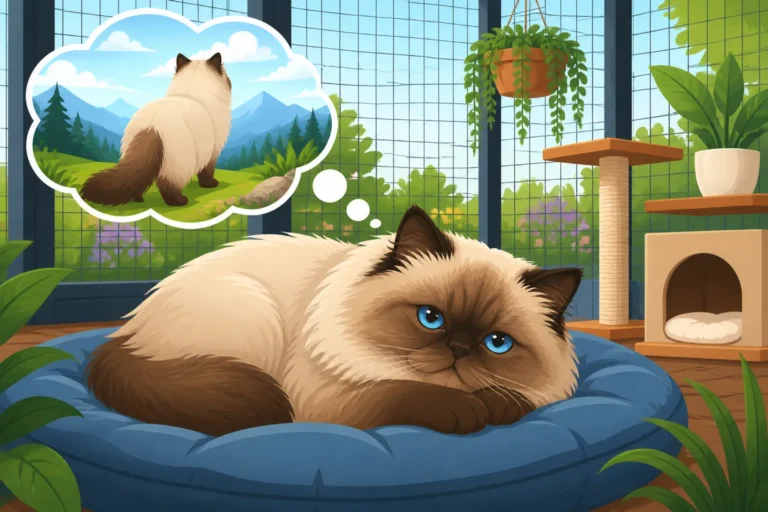
Himalayans are often described as being observant creatures, taking in their surroundings with a quiet intensity. This preference for observation can be a huge source of mental enrichment. Provide them with safe, comfortable vantage points from which to watch the world go by – a sunny windowsill, a cat tree with wide, sturdy platforms (remembering their cobby build and preference for lower heights), or even a comfy chair near a window. The sights and sounds of birds, squirrels, or passersby can be endlessly fascinating and stimulating. Why a Himalayan Picks the Sofa Over the Windowsill because comfort is key for them.
You can enhance this observational experience by providing a bird feeder outside a favored window. The sheer variety of activity will keep their minds engaged for hours, satisfying their innate curiosity and hunting instincts without requiring any physical effort from them. This passive form of enrichment is often overlooked but is incredibly valuable for breeds that aren't constantly on the go. It allows them to feel connected to the outside world from the comfort and safety of their indoor domain.
Regularly rotating their environment, even subtly, can also provide mental stimulation. Moving a cat tree to a different window, or rearranging furniture slightly, creates new perspectives and opportunities for exploration within their familiar territory. Even just bringing a fresh, cat-safe plant into the house can offer new scents and textures for them to investigate, enriching their world in simple yet profound ways.
Interactive Puzzle Toys and Food Games
Puzzle feeders, as mentioned earlier, are fantastic for mental enrichment. They challenge your Himalayan to "work" for their food, stimulating their problem-solving skills and preventing them from eating too quickly. Look for flat, shallow designs or trays with multiple compartments that they can easily access with their paws and flattened faces. Many of these interactive feeders are readily available on Amazon and can be filled with dry kibble or healthy treats. This turns mealtime into a stimulating game.
Beyond commercial puzzle toys, you can create simple DIY enrichment games. Hide small portions of their kibble in different, easy-to-reach spots around the room, encouraging them to "hunt" for their meals. Place a few treats inside a paper bag (with the handles removed for safety) or a toilet paper roll for them to bat around and figure out how to retrieve the goodies. These types of activities engage their natural foraging behaviors and provide a sense of accomplishment.
Even simple interactive games that don't involve a lot of running can be mentally stimulating. Hiding treats under cups and having them choose the correct one, or a game of "shell game" with their favorite toy, can keep their minds sharp. Remember, the goal is to challenge them gently, not to frustrate them. Keep the games short, positive, and always end on a high note. Which Puzzle Feeder a Himalayan Can Get Its Face Into is a relevant consideration when choosing these items.
Managing Play in a Multi-Cat Household: Social Dynamics
Bringing a Himalayan into a home with other cats, or adding another feline to your Himalayan's domain, means considering how their unique play style fits into the social dynamics. Their blend of Persian calm and Siamese spirit will influence how they interact.
Finding Playmates with Compatible Energy Levels
If you're considering a multi-cat household, or already have one, selecting a playmate with a compatible energy level for your Himalayan is key. A high-energy, boisterous cat might overwhelm your more reserved Himalayan, leading to stress or avoidance. Conversely, a very sedentary cat might not provide the spark of interaction that your Himalayan, with its Siamese heritage, secretly craves. Ideally, look for cats with a moderate energy level – perhaps another Persian, an Exotic Shorthair, or even a laid-back Ragdoll. Which Cats Move Slowly Enough for a Himalayan are typically the best companions.
Introducing new cats slowly and carefully is paramount. Provide separate spaces, food, water, and litter boxes initially, allowing them to acclimate to each other's scent before direct introductions. Supervise all initial interactions, keeping them brief and positive, often involving shared meal times or parallel play with separate toys. This gradual approach minimizes stress and maximizes the chances of a successful integration.
Even with compatible playmates, remember that your Himalayan might still prefer solo play or interaction primarily with you. Respect their individual preferences. Some Himalayans thrive with a companion, while others are perfectly content as the sole feline focus of the household. The goal is always to create an environment where all your cats feel secure, happy, and have their social and play needs met.
Observing Social Play Dynamics
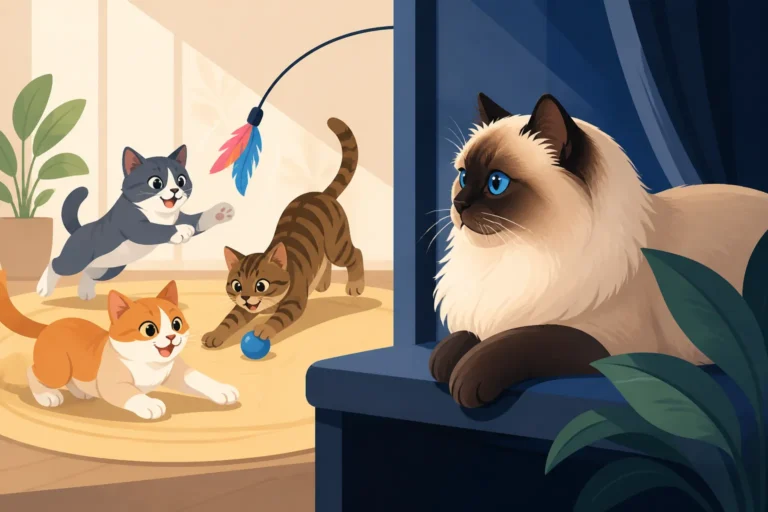
When Himalayans do engage in social play with other cats, it tends to be less rough-and-tumble than with more athletic breeds. You might see gentle wrestling, mutual grooming, or a game of "follow the leader" at a moderate pace. They often enjoy "stalk and pounce" games with a sibling, but their sessions won't typically involve high-flying acrobatics or extended, high-speed chases. It's more about shared companionship and lighthearted interaction.
Pay close attention to body language during multi-cat play. Ensure that your Himalayan isn't being constantly chased, overwhelmed, or intimidated by a more dominant playmate. Look for balanced interactions where both cats are initiating and responding in equal measure. If your Himalayan frequently retreats, hisses, or shows signs of stress during play with another cat, it's important to intervene and manage their interactions more closely. Whether a Himalayan Plays With Another Cat often depends on the personality of both cats involved.
Providing ample resources – multiple scratching posts, cat trees, beds, and toys – helps reduce potential conflict and ensures each cat has their own space and preferred play items. Sometimes, parallel play, where two cats play independently in the same room, is the most comfortable form of shared activity for Himalayans. They might enjoy the presence of another feline but prefer to engage in their own, individual play routines.
| Breed | Energy Level | Play Duration | Vocalization During Play | Preferred Play Types | Common Interaction Style |
|---|---|---|---|---|---|
| Persian | Low | Short (1-5 min) | Minimal, soft chirps | Gentle batting, observation, slow wand play | Dignified, often passive |
| Siamese | High | Long (10-20+ min) | Frequent, demanding | Fetch, vigorous chasing, climbing, puzzle solving | Highly interactive, vocal |
| Himalayan | Moderate (bursts) | Medium (5-10 min) | Moderate, soft trills | Interactive wand play, gentle pouncing, puzzle toys | Engaged, but with periods of rest |
Disclaimer
This article is for general informational purposes only and does not constitute professional advice. Laws, prices and regulations vary by location and change over time. Consult a qualified professional for guidance on your specific situation.