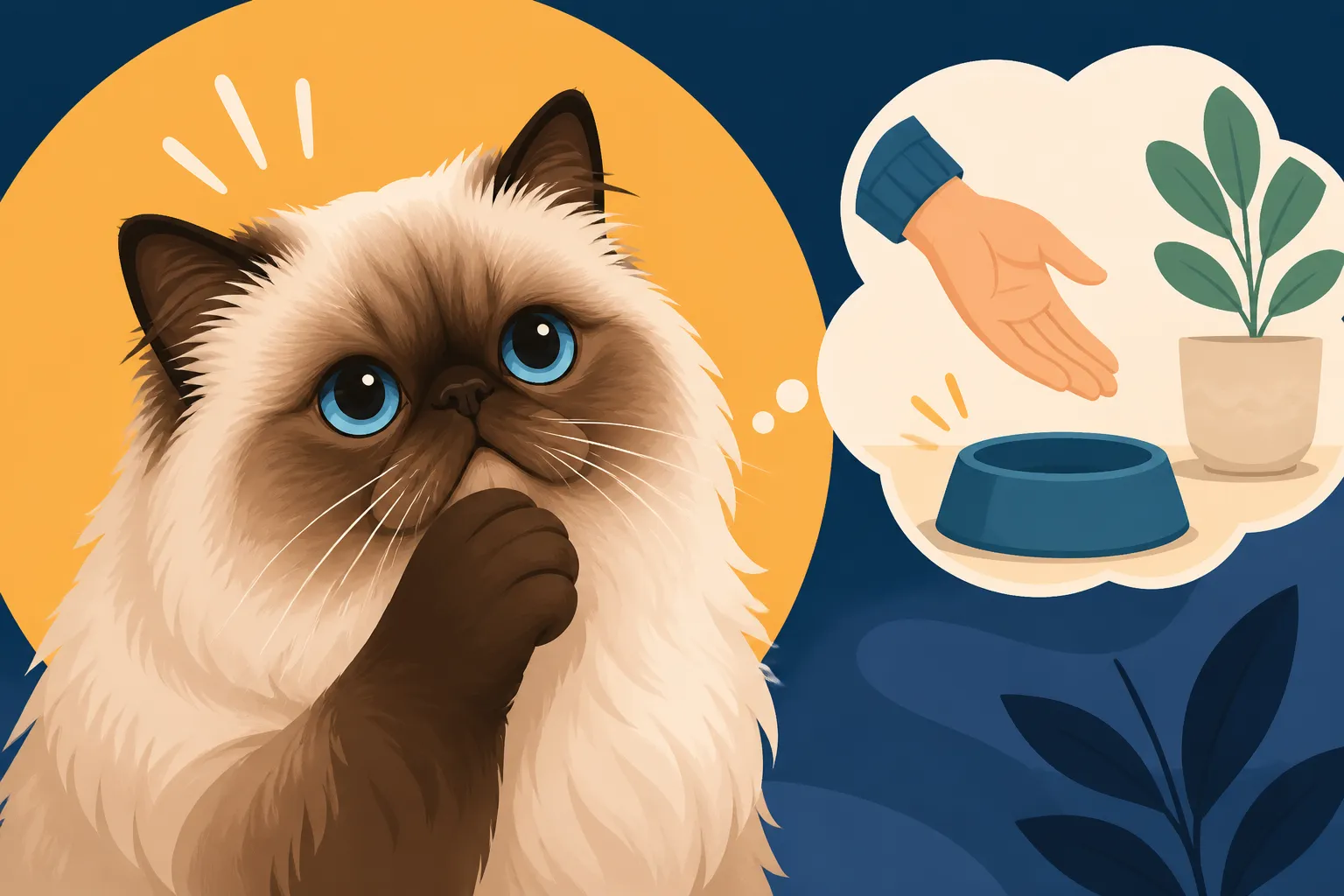
How a Himalayan Asks Without Raising Its Voice
It’s easy to misunderstand your Himalayan. Many new owners, and even some seasoned cat people, mistakenly believe these beautiful felines are quiet, aloof, or simply not very communicative. But nothing could be further from the truth! Your Himalayan is absolutely chatting with you all day long; they just prefer a more subtle, understated approach, a whisper where other breeds might choose a shout. This guide is dedicated to helping you truly hear and understand the gentle, often profound, ways your Himalayan asks for what they need without ever having to raise their voice.
Understanding the Nuances of Himalayan Communication
Let's be honest, if you're used to a Siamese cat's booming pronouncements or a Bengal's energetic demands, a Himalayan might seem like a silent sphinx. This misconception often leads to owners missing key signals their feline friend is trying to send. The truth is, while they definitely inherited some of the Siamese vocal tendencies, it came with a much-reduced volume knob. What Is Left of the Siamese Voice in a Himalayan is a delicate purr, a soft trill, or a quiet chirrup, not the ear-splitting yowls you might expect from their distant cousins.
Beyond the Yowl: Why Himalayans Are Different
The Himalayan's communication style is a fascinating blend of their Persian and Siamese heritage. From the Persian side, they inherited a calm, often placid demeanor, and a tendency towards subtle expressions rather than overt vocalizations. From the Siamese, they got the desire to communicate, the intelligence, and the companionable nature that seeks interaction. The result is a cat that is highly communicative but does so with a quiet grace. They won't usually jump on the counter and scream for food, but they might sit by their bowl and stare at you with an intensity that speaks volumes. This quiet approach requires us, as their humans, to be more observant, to truly watch and listen to the nuances of their behavior.
A Tapestry of Subtle Signals
Think of your Himalayan's communication as a rich tapestry woven with many threads: body language, eye contact, subtle vocalizations, and even their adherence to routine. They are creatures of habit, and any deviation from that habit can be a signal in itself. For instance, if your Himalayan suddenly sits by a closed door they usually ignore, they're not just admiring the woodwork; they're probably asking for something on the other side. Learning this intricate language not only strengthens your bond but also ensures their needs are met, leading to a happier, less frustrated cat – and a less confused owner!
The Silent Language of Body and Gaze
Our Himalayans are masters of non-verbal cues. Their luxurious coats might hide some of the more dramatic body language shifts you see in short-haired breeds, but their eyes, ears, and tail are constantly at work, sending messages if you know how to interpret them. It’s like watching a silent film where every flicker of expression tells a story.
Eyes That Speak Volumes
A Himalayan's large, round, blue eyes are incredibly expressive. They can convey a surprising depth of emotion and intent without a single sound. A slow blink, often called a "cat kiss," is a sign of deep trust and contentment. If your Himalayan gives you a long, unblinking stare, especially towards an object, they're likely trying to direct your attention to it. This could be their empty food bowl, a favorite toy stuck under the sofa, or even just asking for a gentle head scratch. Conversely, wide eyes with dilated pupils can signal fear or excitement, while narrowed eyes might indicate discomfort or irritation. Paying attention to where their gaze is directed can often be the key to understanding their request. For example, my own Himalayan, Bella, will sit calmly in her favorite armchair and simply look at her bowl on the floor when she's ready for her evening meal, no meows needed.
The Subtle Sway of the Tail
While not as dramatic as a dog's wag, a Himalayan's tail is a delicate barometer of their mood and intentions. A gently swishing tail, often low, usually indicates a relaxed, observant state. If the tip is twitching, it might mean they're mildly interested or contemplating something. A tail held high with a slight curve at the tip, often called a "question mark" tail, is usually a friendly greeting and an invitation for interaction, perhaps asking for a pet or a moment of your time. However, a tail thumping heavily against the floor can signal irritation or annoyance, especially if they're otherwise still. You’ll rarely see the dramatic puffed-up tail of an alarmed cat, but a slight stiffening or tucking can still signal unease.
Ear Twitches and Whispers
Their small, low-set ears are also key indicators. Ears pricked forward usually mean they are engaged and attentive to what's happening around them. If their ears are slightly turned to the side, it often suggests a relaxed state, possibly listening to background sounds. However, ears flattened against their head, even slightly, are a clear sign of fear, anger, or feeling threatened, signaling that they wish to be left alone or are uncomfortable with a situation. While their long ruff can sometimes obscure these movements, a keen eye can still catch the subtle shifts that reveal their inner state. A quick twitch can sometimes be their polite way of acknowledging your presence without fully committing to interaction, a gentle "I hear you, human."
Quiet Vocalizations: The Low Volume Approach
It’s true, Himalayans aren't generally known for their booming voices, unlike their Siamese ancestors. Why a Himalayan Is Quieter Than Its Siamese Ancestors is a testament to the Persian influence in their lineage. Yet, they do have a range of soft, charming vocalizations that are definitely meant to get your attention, if you're listening closely.
The Purr With a Purpose
A purr is often associated with contentment, and indeed, a deep, rumbling purr from a Himalayan nestled on your lap is a sound of pure bliss. However, Himalayans also use their purrs for communication in a more strategic way. Sometimes, a purr can be a subtle request, especially when it’s combined with a gentle rub against your leg or a prolonged gaze. It's their way of saying, “Hello, I'm here, and I'd like some attention, please.” That a Himalayan purrs more than it meows is often true; for many, it's their primary vocal communication tool, and the variations in its intensity and context can tell you a lot about what they're asking for. They might purr harder when you're almost hitting the spot they want scratched, or purr softly when they just want to remind you they're in the room and appreciate your company.
Chirps, Trills, and Soft Meows
Beyond the purr, Himalayans employ an array of soft, melodious sounds. Chirps and trills are often used as greetings, a gentle "hello" when you walk into a room, or perhaps an invitation to follow them. My Himalayan, Mittens, will often emit a soft, almost bird-like chirp when she wants me to look at something, like a bird at the window, or if she's simply checking in. A soft meow, much less demanding than those of other breeds, is usually reserved for a direct request. This might be a quiet "mew" by the food bowl when they’re hungry, or a soft "meow?" from their favorite sleeping spot, asking for you to come closer for a pet. It's never accusatory or loud; it's always a polite query. If you're wondering What a Himalayan Is Saying When It Chirps, it's almost always an invitation or a friendly acknowledgment, a gentle reaching out.
Snoring and Heavy Breathing: Not Always a Complaint
Given their brachycephalic (flat-faced) structure, Himalayans are prone to Why a Himalayan Snores Louder Than Its Siamese Ancestors and heavy breathing. While sometimes these are just normal sounds of a deeply sleeping cat, it’s important to distinguish them from signs of distress. If their breathing sounds unusually labored, especially when awake or after minimal activity, it could be a sign of respiratory issues. However, a soft snore is usually just a hallmark of the breed, a cozy sound indicating deep relaxation. They aren't "asking" for anything with a snore, but it's a sound that's part of their unique vocal landscape, and understanding its typical rhythm helps you notice when something might be amiss. Keep an eye on any sudden changes, as sometimes a new snore or more labored breathing can signal an underlying health concern that needs a vet visit.
Routine and Expectation: How Habits Become Demands
Himalayans thrive on routine. Seriously, they are the most scheduled creatures you'll ever meet! They have an internal clock that puts Big Ben to shame, and any deviation can be met with subtle but persistent communication. How a Himalayan Reacts When Its Routine Breaks is often through these quiet, persistent "reminders."
The Unspoken Dinner Bell
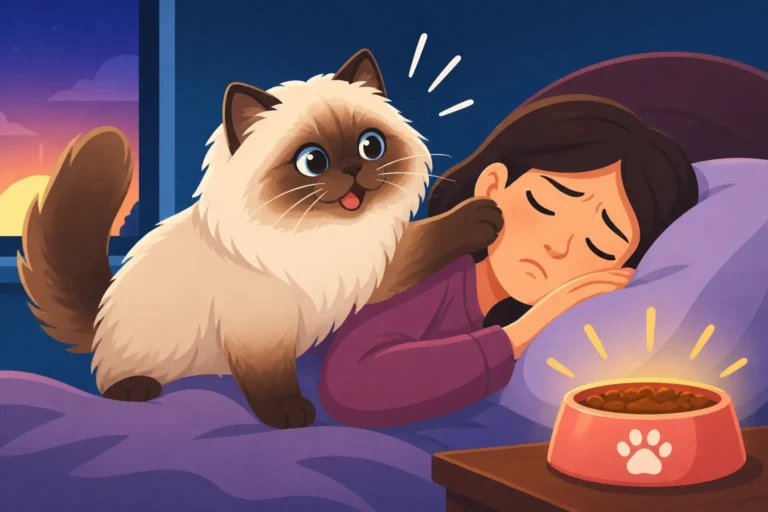
If you feed your Himalayan at 6 PM every day, you can bet that by 5:50 PM, they'll be sitting by their bowl, looking intently at you, or following you silently from room to room. They don't need to meow loudly; their presence and their unwavering gaze are usually enough. They've learned that consistent behavior from you means food is coming, and they'll "ask" for it by simply being exactly where they expect you to be, at the precise time. Why a Himalayan Expects to Be Fed at the Same Hour isn't just a quirk; it's deeply ingrained, and they'll use this expectation to communicate their needs. If you're late, the intensity of their stare might increase, or they might engage in a soft chirp to nudge you along.
Claiming Their Space: A Gentle Assertion
Himalayans are very particular about their territory, especially their favorite sleeping spots. Why a Himalayan Claims One Chair and Keeps It is common knowledge among owners. If you accidentally sit in "their" chair, they might communicate their displeasure or desire for you to move by simply sitting on the floor next to you and staring at the empty spot on the chair, or even giving a soft, exasperated sigh. They won't usually claw at you or push you off, but they will make their preference known through silent, persistent presence. It's a gentle assertion of their established routine and boundaries, asking you to respect their sense of order.
The Fixed Schedule Expectation
Beyond meal times, Himalayans have routines for everything: nap times, grooming sessions, and even play. They notice even the smallest changes. How Often a Himalayan Notices Anything Has Changed is quite astonishing. If you usually have a playtime session with a favorite wand toy around lunchtime, and you forget, your Himalayan might bring the toy to you, drop it at your feet, and then sit quietly, waiting for you to initiate the game. They might not make a sound, but their actions are a clear request. Similarly, if it's time for their daily comb and you're preoccupied, they might subtly position themselves near their grooming tools or nudge your hand, reminding you of the expected routine.
Proximity and Touch: The Gentle Nudges
One of the most intimate ways a Himalayan communicates is through their physical presence and gentle touches. They aren't typically bouncy, demanding cats; instead, they use their compact, cobby bodies to quietly convey their desires.
The Silent Follow: Leading You to What They Want
Has your Himalayan ever appeared at your heels without a sound, then walked a few paces ahead, looked back, and continued walking, leading you somewhere? This is a classic Himalayan "ask." They won't pull on your pants or loudly demand your attention; instead, they'll silently guide you to what they want. This could be their water bowl, a window they want to look out of, or perhaps an inaccessible toy. Why a Himalayan Follows One Person Around the House often ties into this; they learn who is most likely to respond to these subtle leading cues. It's an understated yet effective way to get you to their point of interest, letting their actions speak louder than any meow.
The Head Nuzzle and Cheek Rub
A head nuzzle or a gentle rub against your leg or hand is a clear sign of affection, but it can also be a quiet request for attention or petting. When a Himalayan presses their head into your hand, they're not just being loving; they're asking for more of that good feeling. They might even bump their head against yours, a sweet and gentle gesture that says, "I'm here, I love you, and I wouldn't mind a scratch behind the ears." This is also how they mark you with their scent glands, claiming you as part of their safe and beloved territory. It's a comforting, low-key way of reaching out for interaction.
The "Accidental" Trip Hazard
Sometimes, a Himalayan will place themselves directly in your path, almost like an "accidental" trip hazard. They'll lie down right where you're about to step, or sit squarely in the doorway you're heading towards. This isn't usually a malicious act, but rather a subtle, passive-aggressive way of asking for attention or trying to redirect your movements. They are literally putting themselves in your way to interrupt your current task and remind you of their presence. It's a quiet plea for you to stop, acknowledge them, and perhaps offer a pet or a moment of play. They won't trip you on purpose, but they'll ensure you have to notice them.
Decoding Environmental Cues
Himalayans are incredibly observant and will often use their environment to communicate their needs. They don't need elaborate tools or tricks; they simply leverage what's around them to send their message.
The Intentional Stare at an Object
Beyond just staring at you, a Himalayan will often direct their gaze intensely at an object to convey a request. If they want a specific toy, they'll sit and stare at it until you notice. If their water bowl is low, they might stare at the bowl, then at you, then back at the bowl, making their point perfectly clear. This is especially true for items like their favorite treats, which might be stored in a particular cupboard. Their focused attention on an object, often accompanied by a soft purr or an expectant posture, is their way of saying, "I want that." You might find yourself searching for the best elevated ceramic bowls on Amazon, specifically designed to accommodate their flat faces, after noticing them repeatedly staring at their water dish because it’s too deep.
The Doorway Vigil
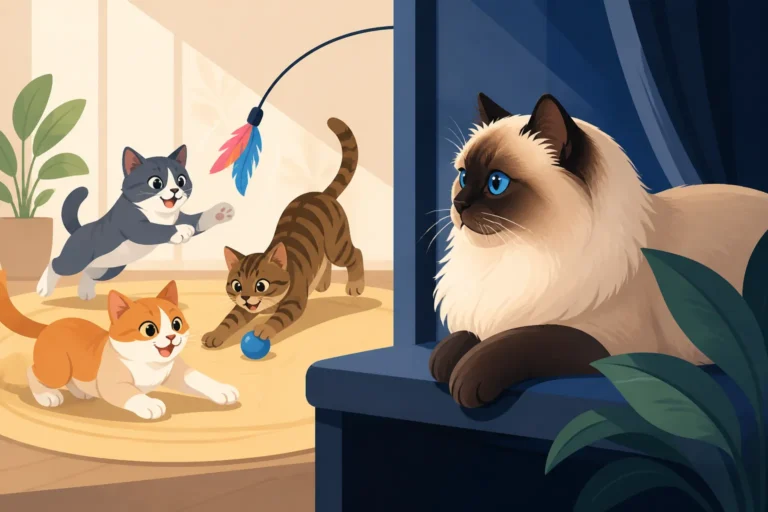
Himalayans are not typically daredevils, but they do enjoy surveying their domain from various vantage points, or sometimes they simply want access to a room you've closed them out of. Why a Himalayan Waits Rather Than Complains at a Door is part of their polite nature. Instead of scratching or meowing loudly at a closed door, they will often sit patiently in front of it, perhaps with a soft, questioning glance at you. They'll wait, sometimes for a surprisingly long time, hoping you'll notice their silent vigil and open the door for them. This quiet patience is a distinct trait that sets them apart from more boisterous breeds. It's a gentle nudge, a hopeful appeal that relies on your attentiveness.
The Litter Box Statement
While not always a pleasant form of communication, a Himalayan will use their litter box to make a statement about its cleanliness or their comfort. If they find their box unsatisfactory, they're unlikely to loudly complain. Instead, they might use the edges of the box, or, in more extreme cases, go outside of it, usually very close by, as a clear signal that something is amiss. This isn't usually spite; it's a desperate, albeit messy, form of communication. They are asking you to address the issue, whether it's an unclean box, an uncomfortable litter type, or a box that's simply too small for their cobby frame. Ensuring they have a low-sided, spacious litter box with comfortable, low-dust litter (which you can easily find on Amazon) can prevent these kinds of unwanted "statements."
Here’s a quick guide to some common Himalayan signals:
| Signal | Interpretation | What They Might Be Asking For |
|---|---|---|
| Slow Blink (Cat Kiss) | Contentment, trust, affection | Nothing specific, just acknowledging your presence and connection. |
| Direct, Unblinking Stare | Focused attention, trying to get your attention | Food, play, an object, a door opened, or simply your presence. |
| Tail Held High (Question Mark) | Friendly greeting, invitation to interact | Petting, play, or just acknowledging you. |
| Gentle Tail Swish | Relaxed, observant, mildly interested | No immediate request, just taking things in. |
| Purring (especially combined with contact) | Contentment, but also a gentle request for more attention/petting | More petting, a lap cuddle, food, or just your continued presence. |
| Soft Chirp or Trill | Greeting, "Look at this!", invitation to follow | Follow me, acknowledge this interesting thing, play. |
| Soft Meow | Direct, polite request | Food, water, attention, open door. |
| Sitting by Empty Bowl | Expectation, hunger | Dinner, please! |
| Following You Silently | Seeking attention, trying to lead you somewhere | Follow me, what I want is over here! |
| Head Nuzzle/Cheek Rub | Affection, seeking touch/petting, marking you as theirs | Pet me, scratch behind my ears, cuddle. |
| Lying in Your Path | Attention-seeking, subtle interruption | Notice me, pet me, play with me. |
| Staring at a Closed Door | Desire to enter/exit, curiosity | Open the door for me. |
Understanding your Himalayan’s subtle language is an ongoing journey, but one that deeply enriches your relationship. They communicate beautifully, if only we take the time to truly observe and appreciate their quiet grace.
Disclaimer
This article is for general informational purposes only and does not constitute professional advice. Laws, prices and regulations vary by location and change over time. Consult a qualified professional for guidance on your specific situation.