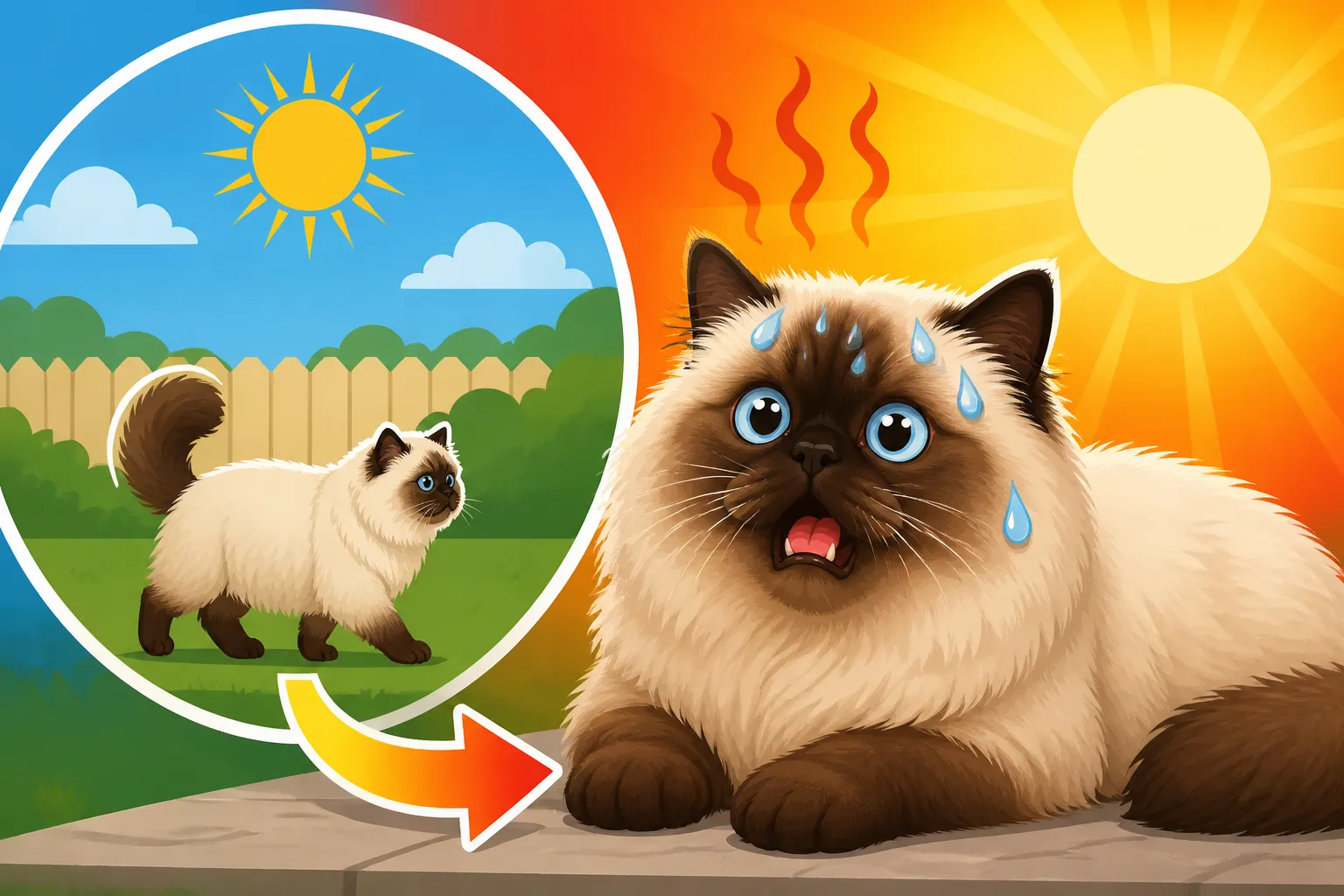
How Fast an Outdoor Himalayan Overheats
It's a natural instinct to want your beloved feline companion to experience the fresh air and sunshine of the great outdoors. Many cat owners picture their furry friend happily exploring the garden, stretching out in a warm patch of grass, or chasing a butterfly. However, if you're a Himalayan cat owner, that idyllic picture can quickly turn into a dangerous reality, as these unique cats are exceptionally prone to overheating, often much faster than people realize. This guide is dedicated to explaining precisely why your beautiful Himalayan can overheat so alarmingly quickly outdoors and how to keep them safe and comfortable in any weather.
The Himalayan's Built-In Overheating Challenges
Understanding why Himalayans are so susceptible to heat stress starts with recognizing the very traits that make them so charming. Their luxurious coats and distinctive flattened faces, while endearing, unfortunately, create significant physiological hurdles when it comes to regulating their body temperature, especially in warm or humid conditions. It’s a combination of these specific physical characteristics that puts them at a distinct disadvantage compared to many other cat breeds.
The Dense Persian Coat: A Thermal Blanket
Your Himalayan's magnificent coat is a true marvel to behold, with its long, flowing guard hairs and incredibly dense undercoat. It’s descended from the Persian, a breed originally hailing from colder, mountainous regions, and this coat is perfectly engineered for insulation. Imagine wearing a heavy, wool-lined winter coat on a warm day – that's essentially what your Himalayan experiences, even in what you might consider mild weather. This thick double layer traps heat close to their body, making it incredibly difficult for them to release excess warmth into the air.
This dense insulation, while wonderful for keeping them cozy in winter, becomes a significant liability when temperatures rise. Even a gentle breeze might not penetrate deep enough into their fur to provide adequate cooling. What might feel like a pleasant spring day to you could be a sweltering furnace for a Himalayan, turning a short stint outdoors into a rapid march toward overheating. Their body struggles to dissipate heat, turning their own beautiful coat into a thermal trap.
Furthermore, if their coat isn't meticulously groomed, mats can form. These mats not only pull on their skin and cause discomfort, but they also further reduce any air circulation close to the skin, intensifying the insulating effect. This makes regular grooming not just about aesthetics, but a vital part of their health management, especially as the weather warms. A well-maintained, tangle-free coat can offer slightly better ventilation, but it's still no match for true heat.
Brachycephalic Airway: Struggling to Breathe and Cool
Beyond their magnificent coats, the Himalayan's most defining feature is their charming, flattened face, a trait they inherited from their Persian lineage. This brachycephalic (meaning "short-headed") structure, while giving them that adorable "doll face" or "peke face" look, comes with a significant trade-off in terms of respiratory function. Their shortened nasal passages, often stenotic (narrowed) nostrils, and sometimes an elongated soft palate mean they simply cannot breathe as efficiently as cats with longer muzzles.
Cats, like dogs, primarily cool themselves through panting. This process involves rapid, shallow breathing that increases airflow over the moist surfaces of their mouth and lungs, allowing water to evaporate and carry heat away from the body. However, for a Himalayan, this crucial cooling mechanism is severely hampered. The restricted airways make it harder to draw in and expel air efficiently, reducing the effectiveness of their panting. They have to work much harder to achieve the same cooling effect as a long-nosed cat, and often, they can't achieve it at all. Why a Himalayan Snores Louder Than Its Siamese Ancestors
This means that even a small increase in body temperature, or a moderate amount of physical exertion that would barely affect another cat, can quickly push a Himalayan into respiratory distress. They're already working harder just to breathe normally, and adding heat stress significantly compounds this challenge. Understanding these inherent anatomical limitations is paramount for any Himalayan owner looking to provide a safe and comfortable environment. How a Vet Grades a Himalayan's Nostrils
How Quickly Danger Arrives for an Outdoor Himalayan
It’s easy to assume that because a cat isn't actively running around, they aren't exerting themselves. But for a Himalayan, simply existing in warm temperatures, even while seemingly calm, is an exertion. The speed at which they can transition from content to critically overheated is often shocking to unprepared owners.
The Rapid Onset of Heat Stress
The most alarming aspect of a Himalayan's vulnerability to heat is how rapidly heat stress can set in. Unlike many other breeds that might show gradual signs of discomfort, a Himalayan can go from seemingly fine to exhibiting serious symptoms in a matter of minutes, not hours. A seemingly harmless five or ten minutes in the direct sun, or even a short period of playful chasing in a warm room, can be enough to tip the scales. It's a cruel irony that their often-sedate nature can make owners underestimate the internal struggle their bodies are facing.
Consider a typical scenario: you let your Himalayan out into a shaded part of the garden on what feels like a pleasant 75-degree Fahrenheit (24 degrees Celsius) day. They settle down for a nap in a sunbeam that's crept into the shade. Within a surprisingly short time, perhaps 15-20 minutes, their core body temperature can begin to rise dangerously. Because their coat insulates so well and their breathing is compromised, that heat quickly accumulates. Why a Himalayan Overheats Twice as Fast as a Siamese
Many owners mistake their Himalayan's inherent calm or 'laziness' for being resilient to environmental factors. In reality, their quiet demeanor often masks a deep struggle to cope with even mild heat. They might not be zipping around, but their internal furnace is working overtime with inadequate ventilation, leading to a much faster escalation of heat-related problems than you might expect from a more active, less insulated, or more aerodynamically "designed" cat.
Recognizing the Signs of Overheating
Being vigilant for the signs of overheating is critical, because once they appear, swift action is needed. Don't wait; these are not signals to observe, but rather emergencies demanding intervention. It's helpful to know the subtle cues before they become blatant distress signals. A Himalayan won't always cry out or make a huge fuss, which can be misleading.
Early signs might include restlessness, seeking cooler spots more intensely, or a slightly faster breathing rate than normal. However, once a Himalayan starts truly overheating, the symptoms become much more pronounced and worrying. Look for persistent, heavy panting – not just a few quick breaths after a toy session, but deep, labored breathing that doesn't subside. You might notice excessive drooling, indicating their body is trying desperately to cool down. Their gums might become bright red, almost cherry-colored, which is a sign of increased blood flow attempting to dissipate heat. As the situation worsens, lethargy, weakness, staggering, muscle tremors, or even vomiting can occur. These are critical signs of heatstroke, and at this point, every second counts. When a Himalayan's Open Mouth Breathing Needs a Vet
It's important to differentiate between a brief pant after intense play (which should quickly resolve) and sustained, distressed panting. If your Himalayan is panting heavily and continuously, appears disoriented, or struggles to stand, they are in immediate danger. Their normal body temperature is around 100-102.5°F (37.8-39.2°C). If it climbs even a few degrees above that, their organs can start to shut down. Immediate cooling measures and a trip to the emergency vet are imperative. The Temperature a Himalayan Starts to Struggle At
| Sign Category | Mild Discomfort (Early Warning) | Emergency (Heatstroke) |
|---|---|---|
| Breathing | Slightly faster than usual | Heavy, continuous panting; open-mouthed breathing |
| Behavior | Restlessness, seeking cool spots | Lethargy, disorientation, stumbling, collapse |
| Appearance | Subtle changes | Bright red gums, excessive drooling, dilated pupils |
| Physical Sensation | Warm to the touch | Very hot to the touch, muscle tremors, vomiting |
| Urgency | Monitor closely, move to cooler environment | Immediate veterinary attention required |
Preventing Overheating: The Indoor Sanctuary
Given their unique vulnerabilities, the single most impactful choice you can make for your Himalayan's safety and well-being is to provide a strictly indoor existence. This isn't about being overprotective; it's about being realistic about their physical limitations.
The Argument for a Strictly Indoor Life
For a Himalayan, the outdoors isn't just a place with warm temperatures; it's an environment fraught with multiple dangers they are inherently ill-equipped to handle. Beyond the extreme risk of overheating, their long, flowing coats can easily become tangled in bushes or pick up burrs and debris, leading to discomfort and matting. Their calm, sometimes ponderous nature, combined with their limited agility due to their cobby build and short legs, makes them poor candidates for escaping predators, stray dogs, or fast-moving vehicles. They aren't sprinters, and they certainly aren't adept climbers like many other breeds.
Furthermore, their beautiful coats, while insulating, offer little in the way of camouflage, making them easily visible to larger, faster animals. They are also at a higher risk for parasites, fights with other outdoor cats, and exposure to various toxins or illnesses. Frankly, their well-being dictates that they remain within the controlled safety of a home. Why a Himalayan Has No Business Outdoors at All
Choosing a strictly indoor life for your Himalayan is a loving and responsible decision that prioritizes their health and longevity. It removes the unpredictable variables of the outdoor world, allowing you to control their exposure to temperature extremes, potential injuries, and infectious diseases. It ensures that their delicate respiratory system isn't overtaxed by environmental heat or stress, giving them the best chance at a long, healthy, and happy life.
Creating a Cool, Stimulating Indoor Environment
Just because your Himalayan is an indoor cat doesn't mean their life needs to be boring or devoid of stimulation. In fact, creating a rich and comfortable indoor environment is essential for their mental and physical health. The key is to provide enrichment that doesn't inadvertently lead to overheating. Start with climate control: during warmer months, air conditioning is often a necessity, not a luxury. If AC isn't available, strategically placed fans can help circulate air, but remember that fans primarily cool by evaporation from skin, which is less effective through a thick coat.
Consider cooling mats, which can be found easily on platforms like Amazon. These are often gel-filled and activated by pressure, providing a cool surface for your Himalayan to lie on, helping to draw heat away from their body. Always have multiple water sources available, preferably wide, shallow bowls that don't bend their sensitive whiskers and allow them to drink comfortably without soaking their ruffs. Some Himalayans even appreciate a small pet fountain, just ensure it’s easy for their flat faces to access. How to Cool a Long Coated Himalayan in Summer
For enrichment, focus on mental stimulation rather than strenuous physical activity. Puzzle feeders (you can find many suitable options on Amazon for brachycephalic cats) encourage problem-solving and slow eating without requiring them to run around and get hot. Window perches offer safe views of the outside world, satisfying their curiosity without exposure to danger. Keep play sessions short and sweet, ideally during the coolest parts of the day (early morning or late evening), using wand toys that allow them to stalk and pounce without overexerting themselves. A laser pointer can also provide fun without too much physical strain. Which Puzzle Feeder a Himalayan Can Get Its Face Into
When a Himalayan Must Go Outside (Safely!)
While a strictly indoor life is ideal, there are times when outdoor exposure is unavoidable, such as vet visits, or when an owner wishes to provide limited, controlled outdoor experiences like a catio. In these situations, meticulous planning and constant supervision are not optional.
Essential Precautions for Controlled Outdoor Exposure
If your Himalayan absolutely must venture outside, whether for a necessary veterinary appointment or for a controlled outdoor experience like a catio, the precautions you take become even more critical. First and foremost, never, ever use a collar with a leash on a Himalayan. Their brachycephalic airway means that any pressure on their neck or throat can severely compromise their breathing. Instead, invest in a well-fitting harness that distributes pressure across their chest and shoulders. Harness training should begin early, in a calm indoor environment, to ensure they are comfortable before any outdoor excursions. Fitting a Harness Under a Himalayan's Ruff
When transporting them, especially in warmer weather, use a spacious, well-ventilated carrier. Air circulation is key, so avoid carriers that restrict airflow. Many airlines, for instance, have policies against flat-faced breeds flying in cargo precisely because of their breathing difficulties in enclosed, temperature-unstable environments. Why Airlines Refuse a Flat Faced Himalayan Always place the carrier in the coolest part of the car, never in direct sunlight, and ensure the vehicle is air-conditioned. For short trips, a battery-operated fan attached to the carrier can provide additional airflow.
Most importantly, never leave your Himalayan unsupervised outdoors, not even for a minute. Their inability to regulate temperature, combined with their lack of agility and defensive capabilities, makes them incredibly vulnerable. Your presence ensures immediate intervention if signs of heat stress appear, or if they encounter any other unexpected danger. The goal is maximum safety, even for the briefest outdoor moment. Which Carrier Gives a Himalayan Enough Air
Catio Considerations for the Flat-Faced Feline
A catio can be a wonderful compromise for owners who want to offer their indoor Himalayan a taste of the outdoors, but it must be designed with their unique needs in mind. A Himalayan catio isn't about vertical exploration or elaborate climbing structures; it's primarily about safe access to fresh air and natural light without the dangers of free-roaming. The most crucial design element for a Himalayan catio is ample, reliable shade. Direct sunlight, even for short periods, is a recipe for disaster. Think about where the sun tracks throughout the day and ensure there are always deeply shaded areas.
Within the catio, incorporate features that aid in cooling. Place cooling mats (readily available from retailers like Amazon) on various surfaces where your Himalayan might lounge. Ensure there are multiple sources of fresh, cool water, perhaps even a large, shallow ceramic bowl that stays naturally cooler. Avoid any enclosed or poorly ventilated spaces within the catio that could trap heat. The focus should be on horizontal space rather than vertical height, with comfortable, low platforms where they can observe their surroundings without having to jump or climb extensively. Why a Himalayan's Catio Needs More Shade Than Space
On warmer or more humid days, even with shade, you must vigilantly monitor the temperature inside the catio. Use a thermometer to gauge the actual heat your cat is experiencing. If it's anything above a mild, comfortable temperature (generally below 75°F/24°C, and even lower if humid), or if your cat shows any sign of discomfort, bring them indoors immediately. Short, supervised stints are always better than prolonged exposure, and on truly hot days, the catio should remain strictly off-limits.
Disclaimer
This article is for general informational purposes only and does not constitute professional advice. Laws, prices and regulations vary by location and change over time. Consult a qualified professional for guidance on your specific situation.