Why a Himalayan’s Ears and Tail Are the Darkest Points
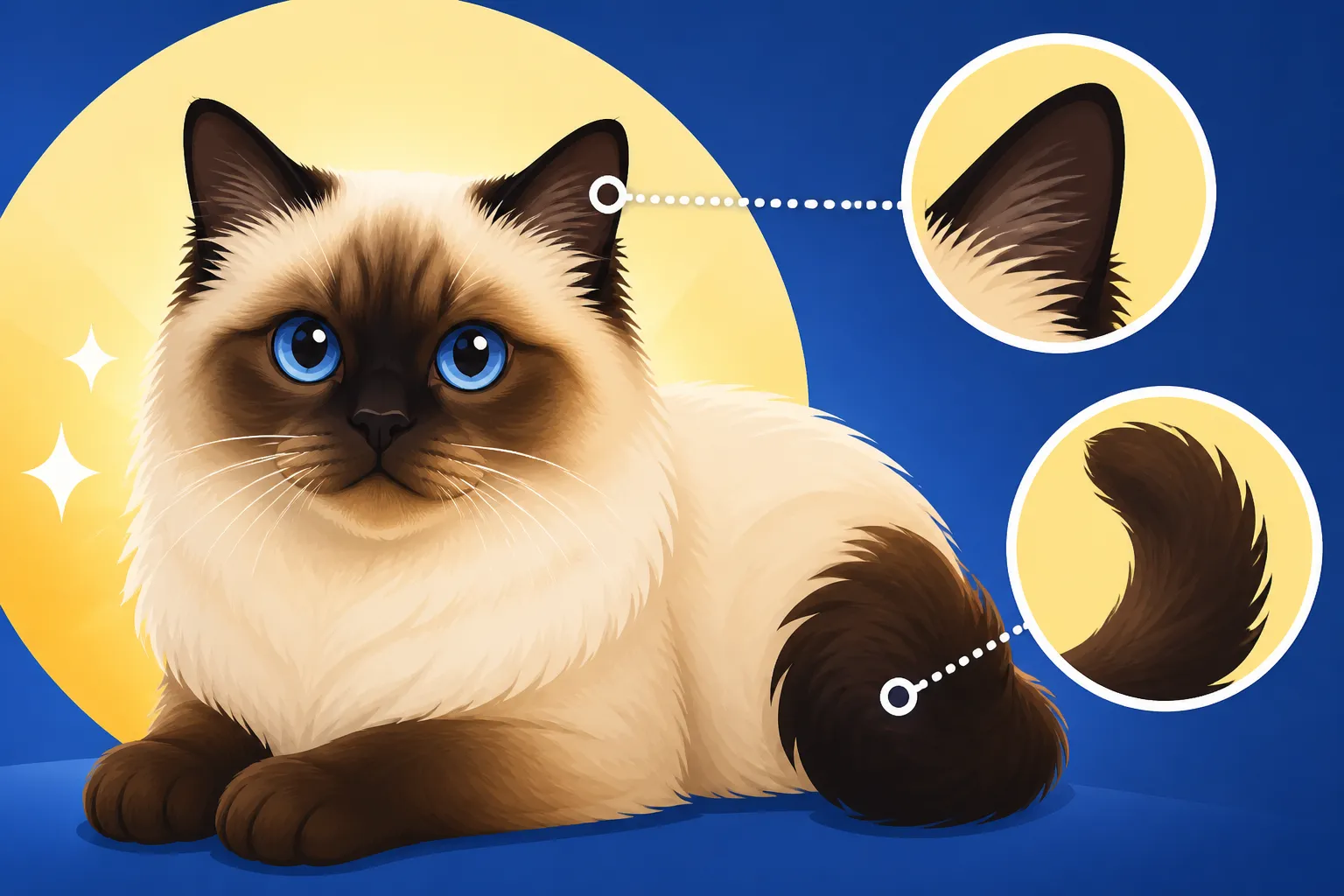
Have you ever looked at your beautiful Himalayan cat, perhaps snuggled up on the sofa, and wondered why those stunning points – the ears, the tail, the feet, the mask – are so distinctly dark compared to their creamy body? It’s a common observation that sparks curiosity, and frankly, it’s one of the most unique and charming characteristics of the breed. This guide is going to take a deep dive into the fascinating genetic and biological reasons behind this distinctive coloration, helping you understand the science that makes your Himalayan so wonderfully unique.
The Genetic Masterpiece Behind Himalayan Coloration
At first glance, it might seem like pure magic, but the contrasting coloration on your Himalayan is a marvelous example of genetic science at play. It all comes down to a specific gene mutation that makes their pigment production incredibly sensitive to temperature.
Temperature-Sensitive Tyrosinase and the Pointed Gene
The secret behind the Himalayan's captivating color pattern lies with a special gene often referred to as the "pointed gene." This isn't just about color; it's about how color develops. Specifically, it's a mutation in the tyrosinase enzyme, which is absolutely crucial for melanin production – that's the pigment responsible for all those lovely fur colors. In most animals, this enzyme works pretty consistently regardless of temperature. But for Himalayans, and other pointed breeds, this enzyme has a quirk: it's temperature-sensitive.
What does that mean for your cat? It means the enzyme only really gets down to business and produces pigment effectively when the temperature is cooler. Think of it like a tiny, furry thermometer where certain parts of the body are just the right "cool" to trigger color production. In warmer areas of the body, the enzyme becomes inactive, and very little to no pigment is produced, leaving the fur a pale cream or white. This is a direct result of the specific mutation that Himalayans inherited, often traced back to their Siamese ancestry. If you're curious about the deeper dive into the specific genetic markers, you might find Which Gene Makes a Himalayan Pointed a fascinating read.
Why a Himalayan Kitten Is Born Almost White
It’s one of the most delightful surprises of a Himalayan litter: tiny, almost pure white kittens! It seems counter-intuitive when you know their parents have those dramatic dark points, but it makes perfect sense once you understand the temperature-sensitive gene. While nestled safely in their mother's womb, kittens are kept at a consistently warm, even temperature – a cozy 100 to 102 degrees Fahrenheit (around 38-39 degrees Celsius). This internal warmth is too high for the temperature-sensitive tyrosinase enzyme to activate and produce pigment.
Therefore, the melanin-producing machinery is essentially "off" during gestation. As a result, when these little bundles of joy make their grand entrance into the world, their fur is uniformly pale, usually a creamy white. It’s only as they are exposed to the cooler ambient temperatures outside the womb that their points gradually begin to emerge. Over the first few weeks and months, you'll see those characteristic dark shades slowly bloom on their ears, tails, and paws, almost like a time-lapse photography project happening right before your eyes. It’s a beautiful transformation, and it perfectly illustrates the genetic principle at work. For more on this early development, check out Why Every Himalayan Kitten Is Born Almost White.
The Logic of Location: Why Ears and Tail Get the Darkest Hues
Now that we understand the temperature-sensitive nature of their pigment production, it becomes clear why certain parts of your Himalayan's body are destined to be darker than others. It's all about where the coolest spots are!
Cooler Extremities and Blood Flow
Consider your own body for a moment: your fingertips and toes are often the first to feel chilly, right? The same principle applies to your Himalayan. The ears, tail, and paws are the furthest extremities from the cat's core body heat. These areas naturally have slightly less blood flow and less muscle mass compared to the main torso, meaning they dissipate heat more readily and remain consistently cooler than the rest of the body.
This constant, slightly lower temperature in these extremities provides the ideal conditions for the temperature-sensitive tyrosinase enzyme to be highly active. With sustained coolness, the enzyme works tirelessly, producing a concentrated amount of melanin, which results in those rich, dark point colors you adore. The warm, well-insulated trunk of your cat, however, stays above the temperature threshold needed for significant pigment production, hence the pale body coat. It’s a beautifully efficient system, ensuring the darkest colors appear exactly where the environment allows them to. It’s a neat trick of nature that ensures Why the Cold Parts of a Himalayan Grow Dark Fur.
The Influence of Environmental Temperature on Point Development
It's not just your cat's internal thermostat that plays a role; the external environment has a surprising impact on how deeply colored your Himalayan's points become. A Himalayan living in a consistently cooler environment, say a home kept at a lower temperature or one in a colder climate, might develop darker and more extensive pointing than a cat living in a very warm house. The sustained exposure to cooler air encourages the tyrosinase enzyme to stay active for longer periods and over broader areas of the body.
You might even notice subtle differences in your cat's shading depending on seasons or if they have a favorite cool spot to nap in. Some owners even report a slight darkening of the body coat in winter months if their homes are on the chillier side. Conversely, a Himalayan spending a lot of time in a very warm room or lying in sunbeams might appear to have slightly lighter points or less contrast. This adaptability is fascinating, showcasing how intimately connected their genetics are to their surroundings. Understanding Why a Himalayan in a Cold House Darkens All Over really highlights this environmental influence. While we can't completely change our homes' climates, providing a consistent, comfortable temperature is key for their overall well-being, and many pet owners find useful items like automatic feeders or water fountains on sites like Chewy that contribute to a stable environment.
Beyond Genetics: Other Factors Influencing Point Color Depth
While the temperature-sensitive gene is the undeniable star of the show, it's not the only factor influencing the intensity and spread of your Himalayan's point colors. A few other elements come into play throughout their lives, adding layers to their already captivating appearance.
Age and Point Deepening
If you’ve had your Himalayan for a few years, you’ve likely noticed a gradual, subtle deepening of their point colors over time. This isn’t your imagination! It's a natural progression where the tyrosinase enzyme, with its continuous activity over the years, steadily builds up melanin in those cooler extremities. As a Himalayan ages, their points tend to become richer and more defined. Some older Himalayans, especially those past their prime, can even develop a noticeable amount of shading or "smokiness" on their body coats, making the contrast with their points less stark than it was in their youth.
This cumulative effect is part of the aging process for pointed cats. It’s not a sign of ill health, but rather a charming indicator of their years. You might find that an elderly Himalayan’s formerly pristine cream body now has a lovely sepia tone, and their ears, tail, and face mask are almost solid in color. It’s a testament to a long and well-loved life. For more on this fascinating transformation, explore Why a Himalayan's Points Deepen Every Year It Lives.
Injury, Shaving, and Pigment Surprises
Here’s a curious phenomenon that perfectly illustrates the temperature-sensitive gene in action: if your Himalayan ever needs a patch of fur shaved, perhaps for surgery, or if they experience an injury that requires a clipped area, you might notice something interesting when the fur grows back. Often, that new fur will grow in significantly darker than the surrounding body coat, sometimes even approaching the color of their points!
Why does this happen? When an area of fur is shaved, that part of the body is suddenly exposed directly to the ambient air, losing the insulating effect of the thick coat. This immediate and sustained exposure to cooler temperatures triggers the temperature-sensitive tyrosinase enzyme to become highly active in that specific spot. The result? Denser pigment production and darker fur regrowth. The same can occur in an injured area, where inflammation and altered blood flow might temporarily lower the surface temperature, leading to a darker patch once the fur returns. This is a very clear and visible demonstration of the underlying genetic mechanism. If you ever need to manage your Himalayan's coat, especially after a medical procedure, using gentle grooming tools available from retailers like Amazon can help ensure healthy regrowth. Also, understanding Why a Shaved Patch Regrows Darker on a Himalayan can save you a moment of surprise!
Understanding and Appreciating Your Himalayan's Unique Palette
The science behind your Himalayan's coloration is truly marvelous, creating a living work of art that changes subtly over time and with its environment. Appreciating these nuances adds another layer of joy to sharing your home with these magnificent felines.
The Spectrum of Point Colors and Their Nuances
While the mechanism for point coloration is the same across all Himalayans – the temperature-sensitive gene – the actual color of those points can vary wonderfully. This is determined by other genes that dictate the base pigment. You'll find Himalayans with a spectrum of point colors, each with its own charm:
- Seal Point: This is perhaps the most classic, featuring dark brown, almost black, points.
- Blue Point: A diluted version of seal, resulting in a lovely slate gray.
- Chocolate Point: A warm, milk-chocolate brown.
- Lilac Point: The diluted version of chocolate, presenting as a delicate, frosty gray-pink.
- Flame (Red) Point: Bright, fiery orange-red points.
- Cream Point: A softer, muted version of flame, appearing as a warm beige.
- Tortie Point: A delightful mix of red/cream with seal/blue/chocolate/lilac, often appearing as patches of color.
- Lynx Point: This adds a tabby pattern over any of the above point colors, giving a striped appearance.
Each of these base colors interacts with the temperature-sensitive gene, creating the stunning contrast that defines the Himalayan. For instance, the richness of a seal point is due to the intense melanin production, while a lilac point showcases the more subtle pigment created by diluted genes at work in those cooler areas. Exploring What a Seal Point Himalayan Sells For or Which Point Colors the Standard Lists for a Himalayan can give you a deeper understanding of these beautiful variations.
| Point Color | Base Pigment | Dilution Gene | Expected Darkness (Ears/Tail) | Body Color Hue (Typical) |
|---|---|---|---|---|
| Seal Point | Black | Absent | Very Dark Brown/Black | Cream/Fawn |
| Blue Point | Black | Present | Slate Gray | Bluish-White |
| Chocolate Point | Brown | Absent | Milk Chocolate Brown | Ivory/Cream |
| Lilac Point | Brown | Present | Frosty Gray-Pink | Glacier White |
| Flame Point | Red | Absent | Bright Orange-Red | Cream |
| Cream Point | Red | Present | Soft Cream/Beige | Off-White |
| Tortie Point | Black/Red | Variable | Patches of Dark & Red/Cream | Cream/Fawn |
| Lynx Point | All | Variable | Striped/Tabby Pattern | Cream/Fawn/White |
What a Breeder Looks For in Point Contrast
For breeders, especially those involved in showing Himalayans, the clarity and intensity of the point color, along with a crisp contrast against the body, are highly prized characteristics. They aren't just looking for dark ears and tails; they are looking for well-defined points that clearly delineate from the pale body coat. This strong contrast is considered a hallmark of a well-bred Himalayan and demonstrates the optimal expression of the pointed gene.
A breeder will assess how smoothly the color transitions from the dark points to the light body, noting the depth of color in the ears, tail, mask, and paws. They look for a body color that is as pale as possible, ideally a pure cream or even white, to maximize the visual impact of the points. Any "smudginess" or excessive shading on the body, particularly in younger cats, might be seen as less desirable in the show ring, though it's perfectly normal and charming for a beloved pet. This meticulous attention to detail is part of the art and science of breeding, striving for that perfect balance that makes a Himalayan so breathtaking. To understand the finer points of judging, you might be interested in How Judges Score a Himalayan's Point Contrast.
Caring for your Himalayan's coat, including their gloriously dark points, is a daily commitment. Ensuring a balanced diet, perhaps with specialized formulas that support skin and coat health, can contribute to the vibrancy of their colors and the overall health of their magnificent fur. Also, don't forget that those pale body coats need regular grooming to maintain their pristine appearance.
Disclaimer
This article is for general informational purposes only and does not constitute professional advice. Laws, prices and regulations vary by location and change over time. Consult a qualified professional for guidance on your specific situation.