How Long a Himalayan’s Coat Actually Grows
Many prospective Himalayan cat owners are captivated by their stunning looks, but they often underestimate the sheer volume and continuous growth of that magnificent coat. It’s not just "long hair"; it's a dense, flowing mantle that brings with it a unique set of care requirements and a significant commitment. This guide will walk you through just how long a Himalayan's coat truly grows, what influences its lusciousness, and the practical daily care involved in keeping your feline friend comfortable and mat-free.
Understanding the Himalayan's Luxurious Coat Length and Density
When we talk about a Himalayan's coat, we're not just discussing a few inches of extra fluff. We're describing a truly luxurious, double-layered coat that can grow to impressive lengths, often appearing to sweep the floor on a well-conditioned adult. This isn't just a superficial aesthetic; it's a defining characteristic inherited directly from their Persian ancestors, which provides both beauty and a unique set of care considerations.
The Persian Inheritance: A Double Coat of Distinction
The Himalayan’s coat is a direct legacy of its Persian lineage, meaning it’s not just a single layer of long hair. Instead, it boasts a thick, soft undercoat beneath a longer, silkier outer coat, often referred to as guard hairs. Both layers contribute to the incredible volume and flowing appearance. The guard hairs can easily reach several inches in length across the body, while the undercoat provides insulation and density, giving the coat its plush feel. This combination means you're dealing with a much more substantial amount of fur than you might initially imagine. It’s this double layer that often catches owners by surprise, as it adds not only to the length but also to the overall thickness and propensity for matting.
Imagine a show-quality Himalayan, and you’ll picture a cat whose coat truly flows, sometimes almost touching the ground around its skirts or "britches," and cascading around its face in a magnificent "ruff." These are the areas where the coat reaches its absolute maximum genetic potential, often exceeding four to six inches in length, creating that iconic, stately silhouette. The tail, too, is a plume of impressive length and fullness, contributing to the cat's regal presence. When we consider How Long a Himalayan's Coat Actually Grows, it's not just about linear measurement but the holistic effect of its abundant, multi-layered texture.
Beyond Length: The Sheer Volume of Undercoat
While the outer guard hairs are what give the coat its flowing appearance, it’s the dense undercoat that truly defines the Himalayan’s plushness and warmth. This isn't just sparse fuzz; it's a thick, woolly layer that lies close to the skin. This undercoat is constantly shedding and regrowing, and if not diligently managed, it can quickly become a tangled mess underneath the longer guard hairs. It's often the hidden undercoat that forms the most stubborn mats, pulling at the skin and causing discomfort.
The presence of this significant undercoat is why a Himalayan's coat feels so substantial to the touch, and why regular grooming is non-negotiable. It’s not just about aesthetics; it’s about preventing painful skin issues and maintaining their overall well-being. Think of it like trying to brush through a thick woolen blanket compared to a silk scarf – the effort and tools required are vastly different. Understanding How Much Undercoat a Himalayan Carries Under Its Points helps you grasp the daily grooming commitment. This isn't a cat you can just "pet" to remove loose hair; you need to actively work through those layers to keep everything flowing freely and prevent tangles from forming deep within the coat.
Factors That Influence Your Himalayan's Coat Growth
While genetics provide the blueprint for a Himalayan's long, dense coat, several factors can influence just how luxuriant, healthy, and long it actually grows. It's not a static feature; it's a dynamic part of their physiology that responds to their environment and care.
Genetic Predisposition and Age-Related Changes
At the core of every Himalayan's coat is its Persian genetic heritage. This genetic code dictates the maximum length, density, and texture of the fur. You'll notice that kittens, while fluffy, don't have the full, flowing coats of adults. Their coats gradually thicken and lengthen as they mature, typically reaching their full magnificence by two to three years of age. It's a journey, not an overnight transformation.
As your Himalayan ages, you might notice subtle changes in their coat. Senior cats, for instance, sometimes experience a slight thinning of their undercoat or a change in texture, becoming a bit coarser or more prone to static. Conversely, some older Himalayans may have coats that are even more challenging to manage due to reduced self-grooming and the continuous growth. The coat's development is a long process, and it takes How Many Years a Himalayan's Points Take to Finish for the full color and length to truly establish themselves.
Nutrition and Environmental Temperature
What goes into your Himalayan literally shows on the outside. A diet rich in high-quality protein and essential fatty acids, particularly Omega-3s and Omega-6s, is crucial for maintaining a healthy, shiny, and strong coat. These nutrients support hair follicle health, reduce shedding of dead undercoat, and contribute to the overall integrity of each hair strand, making it less prone to breakage and matting. Many premium cat food brands formulate their recipes with skin and coat health in mind, which can make a noticeable difference.
Temperature also plays a fascinating role, particularly for a colorpoint breed like the Himalayan. The enzyme responsible for their point coloration is temperature-sensitive, meaning colder body parts (ears, paws, tail, face mask) develop darker pigment. While this primarily affects color, environmental temperature can also influence coat density and growth subtly. A Himalayan kept in a consistently cooler environment may develop a slightly denser coat to aid insulation, whereas one in a warmer climate might have a slightly less dense undercoat. This phenomenon is closely tied to How Temperature Decides a Himalayan's Point Color, demonstrating the intricate link between their environment and their unique appearance.
The Daily Reality of Living with a Long-Coated Himalayan
Owning a Himalayan means embracing a certain lifestyle, one that revolves around consistent and dedicated grooming. Their expansive, flowing coat isn't just something to admire; it's a daily commitment that, if neglected, can quickly lead to painful problems for your beloved cat.
The Non-Negotiable Daily Grooming Routine
There’s simply no getting around it: a Himalayan requires daily combing. This isn't an optional spa treatment; it’s a fundamental health necessity. Skipping even a single day can allow the fine undercoat to tangle and begin forming mats, especially in high-friction areas like the armpits, behind the ears, and in the "britches" around their hind legs. A good quality steel comb, easily found on Amazon, is your best friend here. You need to work through the entire coat, section by section, from root to tip, to remove loose hair and prevent tangles from tightening.
This daily ritual not only keeps their coat beautiful but also provides an opportunity to bond with your cat and check for any skin issues, parasites, or changes in their body condition. It truly is The Daily Comb a Himalayan Cannot Skip if you want to ensure your Himalayan remains comfortable and healthy. It also helps distribute natural skin oils, promoting a healthy sheen.
The Inevitable Battle Against Matting
Despite your best efforts, mats can still form. The Himalayan’s dense double coat is particularly prone to matting because the shed undercoat gets trapped within the longer guard hairs, tightening and pulling at the skin. Why a Missed Day Costs a Himalayan a Mat isn't an exaggeration – a small tangle on Monday can be a solid, painful mat by Wednesday. These aren't just cosmetic issues; mats can restrict movement, cause skin irritation, hide infections, and lead to significant discomfort.
If a mat forms, it needs to be carefully removed. Never try to cut a mat out with scissors unless you are a professional, as it’s incredibly easy to accidentally cut the cat’s delicate skin. Often, working a mat out with your fingers and a fine-toothed comb is the best approach for smaller tangles. For more serious or extensive matting, a professional groomer or your veterinarian might be needed, sometimes even requiring sedation for safe removal. It's a constant vigilance, especially when you understand Where a Himalayan's First Mat Forms, typically in those sensitive areas where skin folds or movement creates friction.
Strategies for Managing the Himalayan's Expansive Coat
Living with a Himalayan's magnificent coat doesn't have to be a struggle. With the right tools, techniques, and perhaps a little professional help, you can keep your feline companion's fur in tip-top condition, ensuring their comfort and your peace of mind.
Essential Grooming Tools and Techniques
To effectively manage a Himalayan's long coat, you need the right arsenal of grooming tools. Forget flimsy brushes; you'll need sturdy, effective instruments. A wide-toothed metal comb for initial detangling, followed by a finer-toothed comb for working through the undercoat, is essential. Many owners also find a slicker brush helpful for removing loose hair, although it should be used gently to avoid skin irritation. Investing in good quality tools from retailers like Amazon or a specialized pet supply store, such as Chewy, makes the daily combing session much more effective and less stressful for both of you.
When combing, always work in small sections, gently separating the fur and combing from the skin outwards. Pay particular attention to the "high-traffic" areas prone to matting: the ruff around the neck, the armpits, the belly, and the hindquarters or "britches." Working a Comb Through a Himalayan's Ruff can be particularly challenging due to its density and the cat's natural aversion to having its neck handled, but it’s critical. Establishing a positive routine from kittenhood, with treats and gentle handling, makes a world of difference.
Professional Grooming and Lion Cuts
Even with daily home grooming, some Himalayans benefit greatly from occasional professional grooming. A professional groomer has specialized tools and experience to thoroughly de-shed the undercoat, trim hygiene areas, and address any stubborn mats safely. They can also provide a full bath and blow-dry, which can be a daunting task for owners with a cat that takes How Many Hours a Himalayan Takes to Dry.
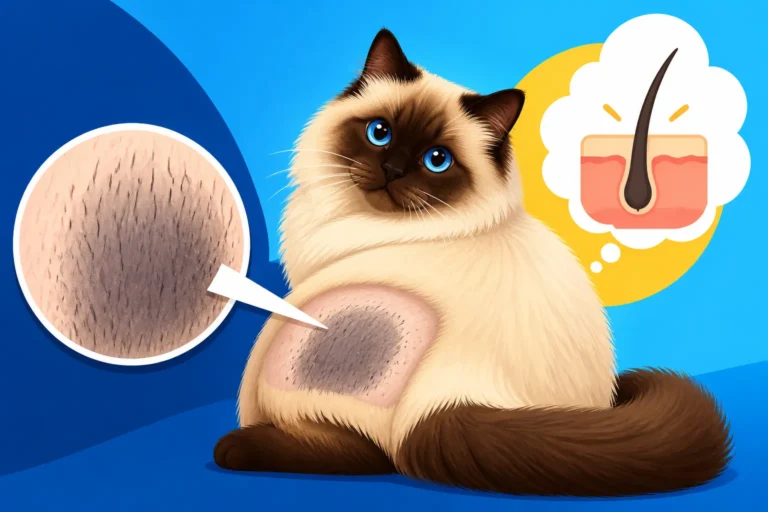
For cats prone to severe matting, or those living in particularly warm climates, a "lion cut" might be considered. This involves shaving the body short, leaving the head (like a lion's mane), paws ("boots"), and tail tip ("pom-pom") long. This dramatically reduces the grooming burden and can offer immense relief from heat and matting. However, it's a big decision, and it's important to understand When a Lion Cut Is the Right Answer for a Himalayan and what to expect during the regrowth period. The coat will grow back, but it can take How Long a Himalayan's Lion Cut Takes to Grow Out, and sometimes, as a fascinating side effect of their temperature-sensitive genes, Why a Shaved Patch Regrows Darker on a Himalayan in cooler areas.
Diet and Environmental Considerations for Coat Health
Beyond grooming, a high-quality diet is paramount for a healthy coat. Ensure your Himalayan is eating a nutritionally complete and balanced diet, preferably one with good sources of animal protein and healthy fats. Some owners find that adding a veterinary-approved omega oil supplement can further improve coat health and shine.
Maintaining a comfortable indoor environment, particularly regulating temperature, can also play a subtle role. While you won't halt coat growth, keeping your home at a stable, comfortable temperature helps prevent extreme seasonal shedding reactions and minimizes the urge for the coat to become excessively dense for insulation. Regular vacuuming also helps manage the sheer volume of shedding hair in your home, which is an undeniable reality of living with such a magnificently coated cat.
Disclaimer
This article is for general informational purposes only and does not constitute professional advice. Laws, prices and regulations vary by location and change over time. Consult a qualified professional for guidance on your specific situation.