Why a Himalayan’s Head Is Judged as a Persian’s
It's quite common for Himalayan cat owners to feel a little bewildered when they hear their beloved, color-pointed feline referred to as a "Colorpoint Persian," or to discover that their cat's exquisite features are evaluated against the Persian breed standard in the competitive show ring. This situation can be perplexing, especially when you cherish your Himalayan for its distinct charm and character. This comprehensive guide aims to clear up this historical and genetic intertwining, explaining in detail why, despite its unique coloration, a Himalayan's head is fundamentally judged according to the established Persian criteria, and what this enduring legacy means for everyone who adores this magnificent breed.
The Historical Roots of the Himalayan-Persian Connection
To truly understand why a Himalayan's head is judged as a Persian's, we have to journey back in time and explore the very origins of the breed. The Himalayan didn't just appear out of nowhere; it was a deliberate creation, a scientific experiment, and a passionate project that eventually led to its integration into one of the oldest and most revered cat breeds.
The Early Days: Creating the Colorpoint Persian
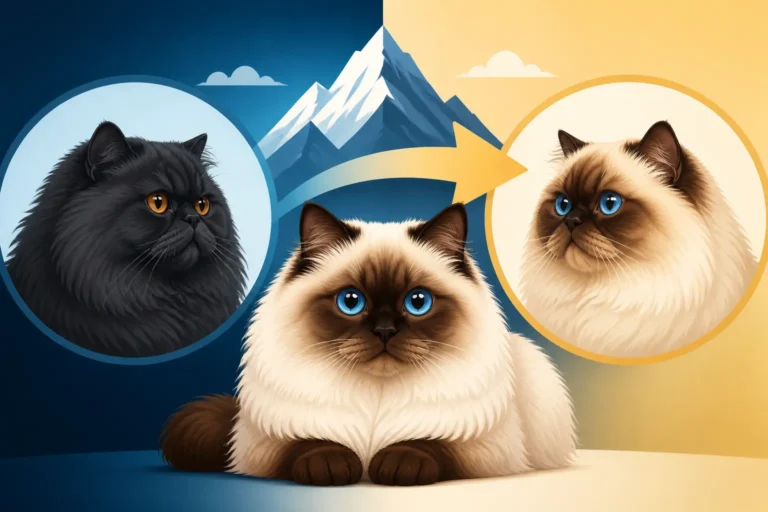
The story of the Himalayan begins with a fascinating blend of scientific curiosity and feline beauty. Back in the 1930s, researchers at Harvard University, specifically Dr. Clyde Keeler and Virginia Cobb, embarked on a genetic study to understand how certain traits were inherited in cats. Their groundbreaking work involved crossing Persians with Siamese cats, not initially to create a new breed, but to observe the inheritance of the Siamese colorpoint gene. What they discovered, of course, was a cat that combined the luxurious long coat and cobby body of the Persian with the striking blue eyes and point coloration of the Siamese. These early cats were often called "Siamese-Persians" or "Colorpoint Longhairs."
It wasn't long before cat enthusiasts recognized the incredible beauty and potential of these experimental felines. Dedicated breeders took up the mantle, meticulously breeding these cats to stabilize their appearance and temperament. The goal was always to achieve the full, opulent coat and robust body type of the Persian, but with the distinctive "points"—darker coloration on the extremities like the face, ears, paws, and tail—and piercing blue eyes that came from the Siamese lineage. The head shape, right from the start, was intended to mirror that of the Persian, as that was the foundational breed providing the structure and type.
The Pivotal Moment: CFA's Decision to Merge
The journey to breed recognition was complex. The Himalayan was first recognized as a distinct breed in the United States by the Cat Fanciers' Association (CFA) in 1957, largely thanks to the tireless efforts of breeders like Marguerita Goforth. For a period, Himalayans competed as their own separate breed, a testament to their unique appeal. However, a significant shift occurred in 1984 when CFA made a monumental decision: they officially folded the Himalayan into the Persian breed, designating it as the "Himalayan Division" of the Persian. This meant that while the colorpoint pattern was recognized as a distinct variant, the physical type – including the crucial head structure – would henceforth be judged under the overarching Persian standard.
This move was driven by several factors. Genetically, the Himalayan is a Persian carrying the recessive colorpoint gene. Breeders were also regularly outcrossing Himalayans to solid Persians to maintain and improve Persian type, especially the extreme flat-faced look that was becoming popular in the show ring. The rationale was that the only difference between a Himalayan and a solid Persian was the color pattern, not the fundamental body or head structure. Therefore, to ensure consistency in type and to reflect their genetic reality, the merger was deemed appropriate. This decision solidified the expectation that a Himalayan's head, body, and overall conformation should be indistinguishable from a traditional Persian, save for its specific coloring. You can read more about this in Why CFA Folded the Himalayan Into the Persian in 1984.
Different Registries, Different Rules: TICA's Approach
While CFA's decision in 1984 had a profound impact on the Himalayan's identity in the show world, it's important to note that not all cat registries followed suit. The International Cat Association (TICA), for example, maintains the Himalayan as a separate and distinct breed. This means that if you're showing a Himalayan under TICA rules, it will be judged against its own specific Himalayan breed standard, which, while very similar to the Persian standard in many aspects of type, still defines the breed as unique.
This split in registration and judging philosophies can be a bit confusing for new owners and even for experienced breeders who participate in multiple associations. Essentially, a Himalayan's paperwork might say "Persian" in one registry and "Himalayan" in another. However, even in TICA, the historical and genetic link to the Persian is undeniable, and the physical characteristics, particularly of the head, still overwhelmingly lean towards the Persian ideal. Whether it's called a Himalayan or a Colorpoint Persian, the expectation for a round head, small ears, and a specific facial structure remains remarkably consistent across the board, reflecting its strong Persian heritage. You can explore this further by looking at TICA Still Registers the Himalayan as a Breed of Its Own.
Deciphering the Persian Breed Standard for the Head
So, if a Himalayan's head is judged as a Persian's, what exactly does that mean? What are the specific criteria that judges are looking for when they examine this crucial part of the cat's anatomy? The Persian breed standard is incredibly detailed, painting a clear picture of the ideal head, which is then applied to the Himalayan.
The "Round Head" Ideal: Size, Shape, and Symmetry
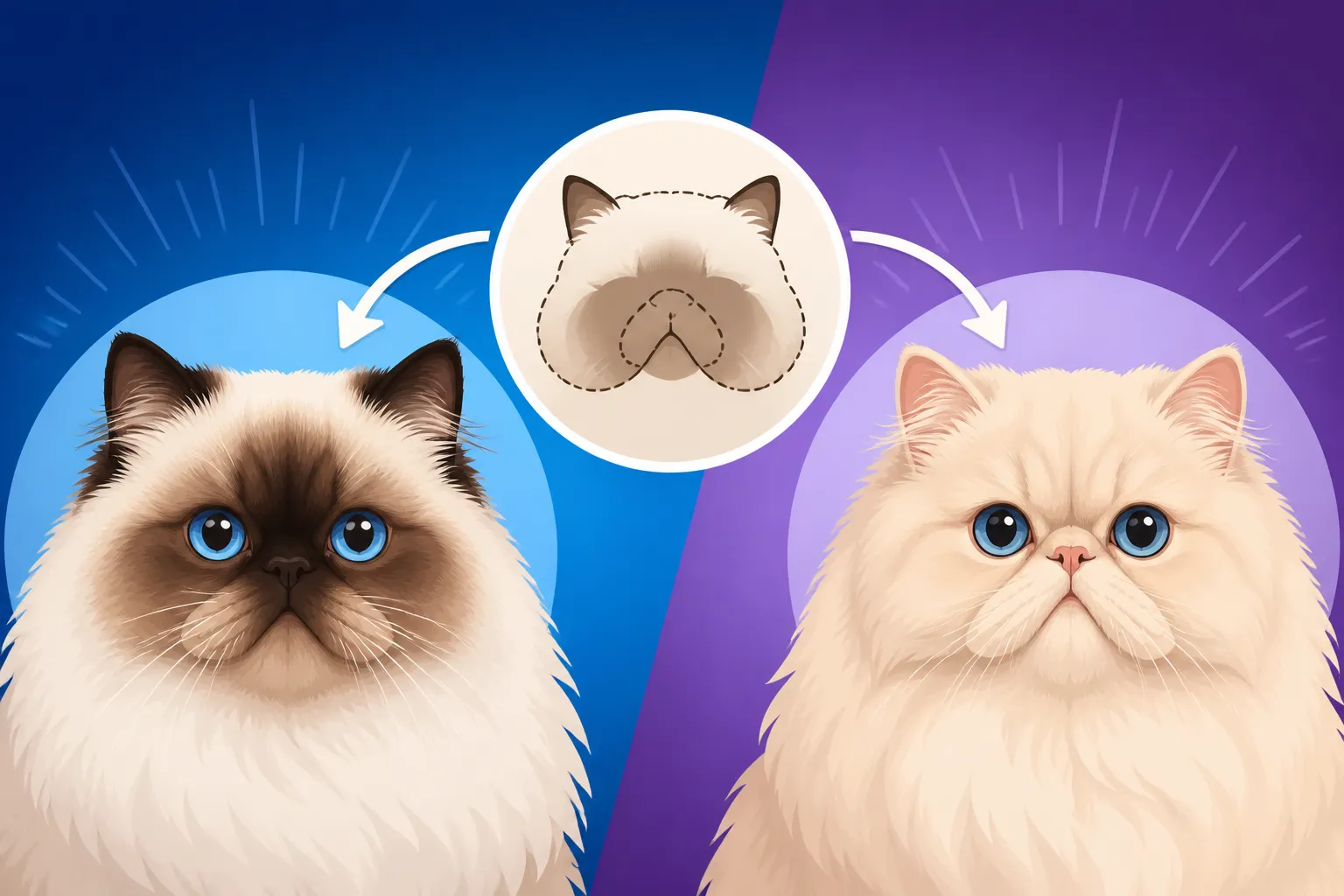
At the heart of the Persian standard for the head is the concept of a "round head." This isn't just a casual description; it's a precise measurement and aesthetic ideal. Judges look for a head that is massive and round, not elongated or narrow. When viewed from any angle, the overall impression should be one of perfect spherical harmony. The skull should be broad and smooth, without any abrupt planes or angularity. This roundness contributes to the breed's signature sweet, open expression.
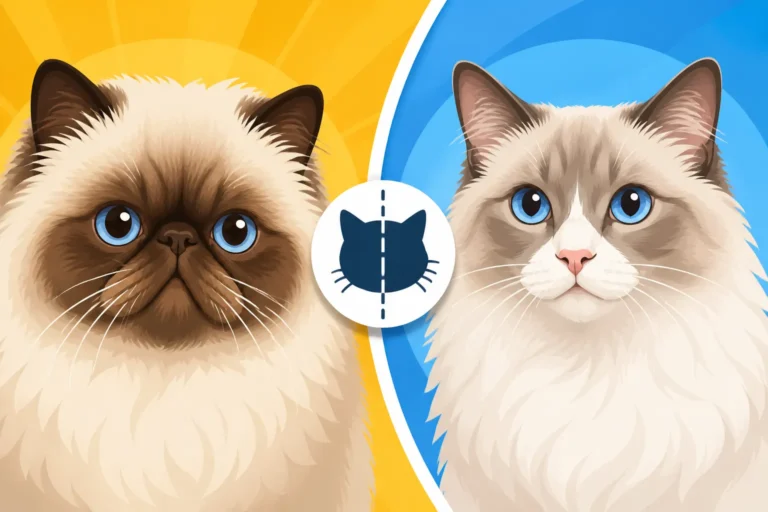
Symmetry is equally vital. Both sides of the head must be perfectly balanced, with no unevenness in the cheeks, forehead, or eye placement. Imagine drawing a line straight down the center of the cat's face – everything should mirror perfectly. The cheeks should be full and round, adding to the overall massiveness and softness of the face. An adult Himalayan, just like a Persian, should have a substantial head for its body size, fitting proportionally with its cobby, well-boned frame. This massive, round head is a hallmark of the breed and a key differentiator from other long-haired cats, such as the Ragdoll or Birman, which have longer, more wedge-shaped heads.
The Muzzle, Nose, and Chin: A Critical Trio
Beyond the overall roundness, the Persian standard delves into the intricacies of the muzzle, nose, and chin – features that are particularly impactful on the "flat-faced" aesthetic. The muzzle should be broad and full, creating a soft, rounded appearance. It should not be pointed or narrow. The chin is expected to be well-developed and strong, giving a proper bite alignment with the upper jaw. It should not recede or be weak, as this would compromise the overall balance of the face.
Perhaps the most defining feature, and often the most controversial, is the nose. The Persian standard calls for a "break" in the nose, meaning the nose leather (the visible part of the nose) should be aligned with the lower eyelids. In the most extreme show-type Persians and Himalayans, this break is very pronounced, resulting in a very flat face where the nose appears to be set extremely high between the eyes. The nostrils should be open and allow for clear breathing, a point that is absolutely critical for the cat's health. Judges meticulously check this, and a cat with pinched nostrils or obvious breathing difficulties would be faulted. This is why you'll often see breeders discuss How a Vet Grades a Himalayan's Nostrils. The length of the nose is also a factor, with a very short nose being preferred in the show ring.
Eye Shape, Placement, and Color: More Than Just Blue
For Himalayans, the eye color is non-negotiable: they must have blue eyes, a trait inherited directly from their Siamese ancestors. But beyond color, the Persian standard demands specific qualities for the eyes themselves. They should be large, round, and full, giving the cat a sweet, intelligent, and open expression. The eyes should be set wide apart, contributing to the broadness of the head, and level. Imagine a horizontal line drawn across the face – the inner and outer corners of both eyes should align with this line.
The placement is crucial for the overall balance and symmetry of the face. Eyes that are too close together, too far apart, or unevenly set can significantly detract from the ideal Persian look. The expression conveyed by the eyes is also considered; it should be gentle and placid, reflecting the breed's renowned calm temperament. Furthermore, the eyelids should fit snugly around the eye, without any excessive tearing or visible third eyelid, though tear staining is a common challenge that many Himalayan owners grapple with due to the flat face. Why a Himalayan's Required Blue Eyes Carry No Penalty in the show ring is a point of interest, emphasizing that this specific trait is celebrated, not penalized.
How Himalayan Features Align with Persian Expectations
Given that the Himalayan is judged as a Persian, it naturally follows that its physical attributes, especially those of the head, are expected to conform to the Persian ideal. This alignment is central to how the breed is understood and evaluated within the cat fancy.
The Persian Influence on the Himalayan's Cranium
The most obvious influence of the Persian parentage on the Himalayan's head is the sheer mass and roundness of the skull. A well-bred Himalayan will possess the same broad, dome-shaped head that is characteristic of the Persian. This cranial structure provides the foundation for all the other desirable facial features. From the moment a Himalayan kitten is born, breeders are looking for signs of this robust head shape. It's not just about aesthetics; a strong skull is indicative of good bone structure throughout the cat's body.
This inherent Persian influence means that a Himalayan with a noticeably narrower, longer, or more angular head would be considered "out of type" according to the standard. Judges are trained to spot deviations from this ideal roundness, whether it's a slightly pinched muzzle, a less-than-full cheek, or eyes that appear too close together for the broadness of the skull. The expectation is that the Himalayan wears the Persian head as its own, regardless of the vibrant point coloration that adorns its extremities.
The Unique Challenge of Pointed Coloration on a Persian Face
While the head structure is Persian, the Himalayan introduces a unique element: the colorpoint pattern. This means the face acts as a "mask," displaying the darker point color against the lighter body coat. This contrast is a key feature of the breed, and it interacts in interesting ways with the Persian facial structure. The mask should be well-defined and cover the entire face, extending up the forehead and around the eyes.
However, the flat-faced nature of the Persian head can sometimes present challenges for displaying this mask clearly. For instance, a very extreme flat face might have a shorter, more compact mask, while a slightly less extreme "doll face" might show a broader, longer mask. Regardless, the mask should ideally be symmetrical and blend smoothly with the head, without obscuring the underlying Persian structure. Breeders work hard to achieve excellent point contrast and color depth, ensuring the mask enhances, rather than detracts from, the beautiful Persian head beneath it. You can learn more about how breeders achieve this through articles like Caring for a Himalayan Whose Points Have Gone Dark.
Understanding the "Peke Face" vs. "Doll Face" in a Persian Context
The terms "Peke Face" and "Doll Face" are frequently used when discussing Himalayans, and they directly relate to the degree of "flatness" in the Persian-type head. The "Peke Face," or extreme-type, features a very flat face with the nose leather sitting high between the eyes, aligning with the lower eyelids. This is the look that has often been rewarded in the show ring for many years. The "Doll Face," on the other hand, presents a less extreme profile, with a discernible nose that extends slightly beyond the eyes, giving a more traditional or "old-fashioned" look. This profile is often described as having a visible nose. You might want to refer to What a Doll Face Himalayan's Profile Measures and What a Peke Face Himalayan's Profile Measures for a deeper dive into these measurements.
In the context of Persian judging, both "Peke Face" and "Doll Face" Himalayans are still judged against the Persian standard, but with varying emphasis depending on the specific standard's interpretation or the judge's preference. Historically, the trend in show Persians (and thus Himalayans) has leaned towards the more extreme "Peke Face" type, a preference that has driven breeding choices for decades. This has led to the development of specific structural adaptations. Even a "Doll Face" Himalayan is expected to have a broad, round head, proper eye placement, and a strong chin—all hallmarks of the Persian breed, just expressed with a less extreme facial compression. It's a spectrum within the Persian type, not a departure from it.
The Impact of Judging Standards on Breeding and Health
The adherence to the Persian judging standard for Himalayan heads has profound implications, not just for the show ring, but for the health and welfare of the breed. It influences breeding practices, impacts inherited traits, and shapes the advice given to owners.
The Drive for Extreme Type and Its Consequences
The pursuit of the "ideal" Persian head, particularly the extreme flat-faced "Peke Face" look, has been a significant driver in breeding programs for both Persians and Himalayans. While undeniably striking, this intense focus on a very specific aesthetic has, in some cases, led to health challenges. When the face becomes extremely flattened, the underlying bone structure and soft tissues can be affected.
This can result in brachycephalic airway syndrome, where the shortened facial bones lead to pinched nostrils, an elongated soft palate, and sometimes even a hypoplastic (underdeveloped) trachea. These issues can cause breathing difficulties, snoring (which Himalayans are notorious for, as discussed in Why a Himalayan Snores Louder Than Its Siamese Ancestors), and an increased risk of overheating, especially in warmer climates. The quest for the perfect "dome" and "break" has sometimes, inadvertently, prioritized form over function, leading to respiratory challenges that dedicated breeders are now actively working to mitigate by selecting for healthier profiles. You can often find products on Chewy that cater to cats with respiratory sensitivities, like air purifiers and specialized bowls designed to prevent facial contact.
Health Considerations Tied to Facial Conformation
Beyond breathing, the specific facial conformation demanded by the Persian standard can lead to other health concerns in Himalayans. The large, round, wide-set eyes, combined with the flat face, can make them prone to tear staining, as the tear ducts may not be able to drain properly, causing tears to overflow. This is often more noticeable on paler points, as highlighted in Why Tear Stains Are Worse on a Cream Bodied Himalayan. The inward rolling of the eyelids, known as entropion, is also a concern, where eyelashes can rub against the cornea, causing irritation and potentially ulcers.
Furthermore, the shortened jaw associated with the flat face can lead to dental problems. The teeth are often crowded and misaligned, increasing the risk of periodontal disease, tooth decay, and resorption. This means Himalayans often require more frequent dental care and can experience tooth loss earlier in life than other breeds. How Crowded a Himalayan's Lower Jaw Gets and Why a Himalayan Needs Dentals Earlier Than a Siamese delve into these specific issues. Responsible breeders are hyper-aware of these potential health issues and select breeding cats with open nostrils, healthy eyes, and good dental occlusion, striving for a balance between conformation and health.
What This Means for Everyday Himalayan Owners
For you, the everyday Himalayan owner, understanding these judging standards and their health implications is paramount. It means that while your cat might be incredibly beautiful and have that quintessential Persian face, you need to be prepared for the specific care requirements that come with it. Daily facial wiping, regular eye checks, and diligent dental hygiene are not just aesthetic choices; they are essential health practices. Products for eye care, like gentle wipes or specific washes, are readily available on sites like Chewy and can make a big difference in preventing irritation and staining.
It also means asking the right questions when looking for a kitten. A reputable breeder will prioritize health as much as, if not more than, adherence to extreme show standards. They should be transparent about the facial type of their breeding cats, provide health clearances, and ensure their kittens have open nostrils and clear eyes. Insist on seeing Which Two Certificates a Himalayan Breeder Owes You, which should include genetic testing for common health issues found in Persians and Himalayans. While the show world values a certain look, your priority as an owner is your cat's well-being and a happy, healthy life.
What Owners Should Know About Their Himalayan's "Persian" Head
As an owner, navigating the world of breed standards and health implications can feel overwhelming. However, knowing why your Himalayan's head is judged as a Persian's empowers you to provide the best care and appreciate your cat even more deeply.
Appreciating Your Cat Beyond Show Ring Ideals
It's easy to get caught up in the specifics of breed standards, especially when talking about something as iconic as the Himalayan's face. However, it's vital to remember that your cat is, first and foremost, a beloved companion. While a breeder might strive for a specific "type" that excels in the show ring, a wonderful pet Himalayan doesn't need to be a grand champion to bring immense joy into your life. The most important thing is that your cat is healthy, happy, and well-adjusted.
Many pet Himalayans have what might be considered a "doll face" profile, which often comes with fewer health complications related to extreme brachycephaly. These cats can still have beautifully round heads, large blue eyes, and plush coats, embodying the gentle and affectionate nature the breed is known for, without the more exaggerated features sometimes seen in show lines. Appreciate your Himalayan for its unique personality, its quiet conversational meows (a trait inherited from the Siamese side, but with much less volume!), and its loving disposition, rather than solely focusing on how perfectly its nose break aligns with the Persian standard.
Practical Care for a Brachycephalic Persian-Type Head
Regardless of whether your Himalayan has a more moderate "doll face" or a more extreme "Peke face," the fundamental care requirements for its brachycephalic (flat-faced) Persian-type head remain. This includes a dedicated daily routine for eye and facial hygiene.
Here's a quick rundown of essential care:
- Daily Facial Wipes: Use soft, damp cloths or specialized pet wipes (many varieties are available on Chewy) to gently clean the area around the eyes and nose fold. This prevents tear stains from hardening and helps to avoid skin irritation or infection in the folds. Dry the area thoroughly afterward.
- Nose Fold Care: If your Himalayan has a prominent nose fold, it can trap moisture and debris. Gently lift the fold and clean underneath it daily. Keeping this area dry is key to preventing dermatitis.
- Eye Health: Be vigilant for any signs of eye irritation, redness, excessive tearing, or squinting. These can indicate entropion or corneal ulcers and warrant a vet visit. Your vet might recommend specific eye drops or washes.
- Dental Hygiene: Due to crowded teeth, daily tooth brushing with a pet-specific toothbrush and toothpaste is highly recommended. Regular veterinary dental check-ups and professional cleanings under anesthesia will likely be needed more frequently than for other breeds.
- Environmental Considerations: Himalayans, particularly those with flatter faces, can overheat easily. Keep them in a cool environment, especially during warmer months. Avoid strenuous exercise during the hottest parts of the day.
Taking these steps ensures your Himalayan stays comfortable and healthy, even with the unique challenges presented by its Persian-derived head.
Finding a Breeder Who Prioritizes Health Over "Type"
If you're considering bringing a Himalayan into your home, finding a responsible and ethical breeder is the single most important step you can take to ensure you get a healthy kitten. A good breeder will prioritize the health and temperament of their cats above all else, even when striving for excellent breed type.
Here’s what to look for:
- Health Testing: They should provide clear documentation of genetic health testing for both parents, including PKD (Polycystic Kidney Disease) and PRA (Progressive Retinal Atrophy), which are common in Persian lines.
- Open Nostrils: Ask to see photos and videos of the kittens in profile, and ideally, observe them in person. Listen for any labored breathing. Kittens should have wide, open nostrils.
- Clear Eyes: Kittens should have bright, clear eyes with minimal tearing. Ask about any history of entropion in the lines.
- Temperament: A good breeder will socialize their kittens, ensuring they are friendly and well-adjusted.
- Transparency: They should be happy to answer all your questions, allow you to visit their cattery (or provide extensive video tours), and offer a health guarantee. They won't shy away from discussing potential breed-specific health challenges.
- Veterinary Care: They should have a strong relationship with their veterinarian and be able to provide records of the kitten's first vaccinations and health checks.
Ultimately, while the Persian standard dictates how a Himalayan's head is judged in the show ring, your focus as an owner should always be on the holistic well-being of your cherished feline companion. The history and standards inform us, but love and responsible care define the bond. Which Two Tests Belong on Every Himalayan Pedigree is an essential read for anyone considering a Himalayan kitten.
| Feature | Persian Standard Ideal (Applied to Himalayan) | Practical Implications for Owners |
|---|---|---|
| Head Shape | Massive, round, symmetrical | Contributes to overall appeal; requires good bone structure in breeding. |
| Muzzle/Chin | Broad, full, well-developed chin | Potential for crowded teeth; requires diligent dental care. |
| Nose/Profile | "Break" aligned with lower eyelids (flat face) | Risk of brachycephalic airway issues; regular facial cleaning is vital. |
| Nostrils | Wide open | Crucial for breathing; check for pinched nostrils in kittens. |
| Eyes | Large, round, full, wide-set, blue | Prone to tear staining; daily cleaning and regular vet checks for issues. |
| Ears | Small, rounded, set low and wide | Contributes to round head look; less specific care implications. |
Disclaimer
This article is for general informational purposes only and does not constitute professional advice. Laws, prices and regulations vary by location and change over time. Consult a qualified professional for guidance on your specific situation.