What Happens If a Himalayan’s Points Come In Wrong
It's absolutely heartbreaking when you've fallen in love with a tiny, fluffy Himalayan kitten, often picked for its potential point color, only to watch it grow and realize those colors aren't quite what you expected, or even what was promised. This isn't just a cosmetic issue; it can be a source of real frustration and disappointment for families who had a specific vision for their new companion. This guide will walk you through why a Himalayan's points might not develop as anticipated, what constitutes "wrong" points, and how both breeders and owners navigate these often unexpected outcomes.
The Marvel of Himalayan Point Genetics and Development
When you bring a Himalayan kitten into your home, you're not just getting a furry friend; you're becoming a participant in a fascinating genetic journey. Their signature "pointed" coat, with darker coloration on the extremities, is one of the most distinguishing and beloved features of the breed. However, this very characteristic is also prone to subtle variations that can sometimes lead to unexpected results. Understanding the underlying science can help demystify why those points might "come in wrong."
The Science Behind Point Color
The Himalayan's unique coat pattern is governed by a specific temperature-sensitive gene, often referred to as the "Himalayan gene" or colorpoint gene. This gene produces an enzyme that is only active at cooler body temperatures. What does this mean for your fluffy friend? It means that the parts of the cat's body that are naturally cooler – like the ears, nose, paws, and tail – will develop pigment and become darker, forming the "points." The warmer parts of the body, protected by the cat's core temperature, remain lighter, typically cream or white.
This genetic quirk is why What Color a Himalayan Kitten Is at Birth is always pale, almost white. They've been cozy and warm inside their mother's womb, where the color-developing enzyme was inactive. It's only after birth, when they are exposed to the cooler ambient temperature of the outside world, that their points slowly begin to develop and darken. This process continues throughout their lives, influenced by environmental factors and aging.
Predicting Point Color in Kittens
For breeders and prospective owners, predicting the exact shade and intensity of a Himalayan's points can be a bit of an art and a science. While a kitten's genetic makeup determines its potential point color (e.g., Seal Point, Blue Point, Chocolate Point, Flame Point, etc.), the environment plays a significant role in how that color expresses itself. A kitten from a proven line with strong, well-defined points is generally a good indicator of future development, but it's never an absolute guarantee.
Breeders rely on pedigrees and the known genetics of the parents to make educated guesses, but even with careful planning, nature sometimes has its own agenda. Things like ambient room temperature, diet, and even individual metabolism can subtly influence the final look. This is why most ethical breeders won't guarantee an exact shade or point depth, especially in very young kittens. They can usually tell you what color category the kitten falls into, but the nuances are still developing. How Many Weeks Before a Himalayan Kitten's Points Show is a common question, and it's fascinating to watch that color slowly bloom.
Common Ways Himalayan Points "Come In Wrong"
When someone talks about a Himalayan's points "coming in wrong," it's usually not a matter of a health defect, but rather a departure from the expected aesthetic or breed standard. It can be a genuine source of disappointment, especially if you had specific hopes for your cat's appearance, or if you were considering showing your Himalayan.
Incorrect Shade or Intensity
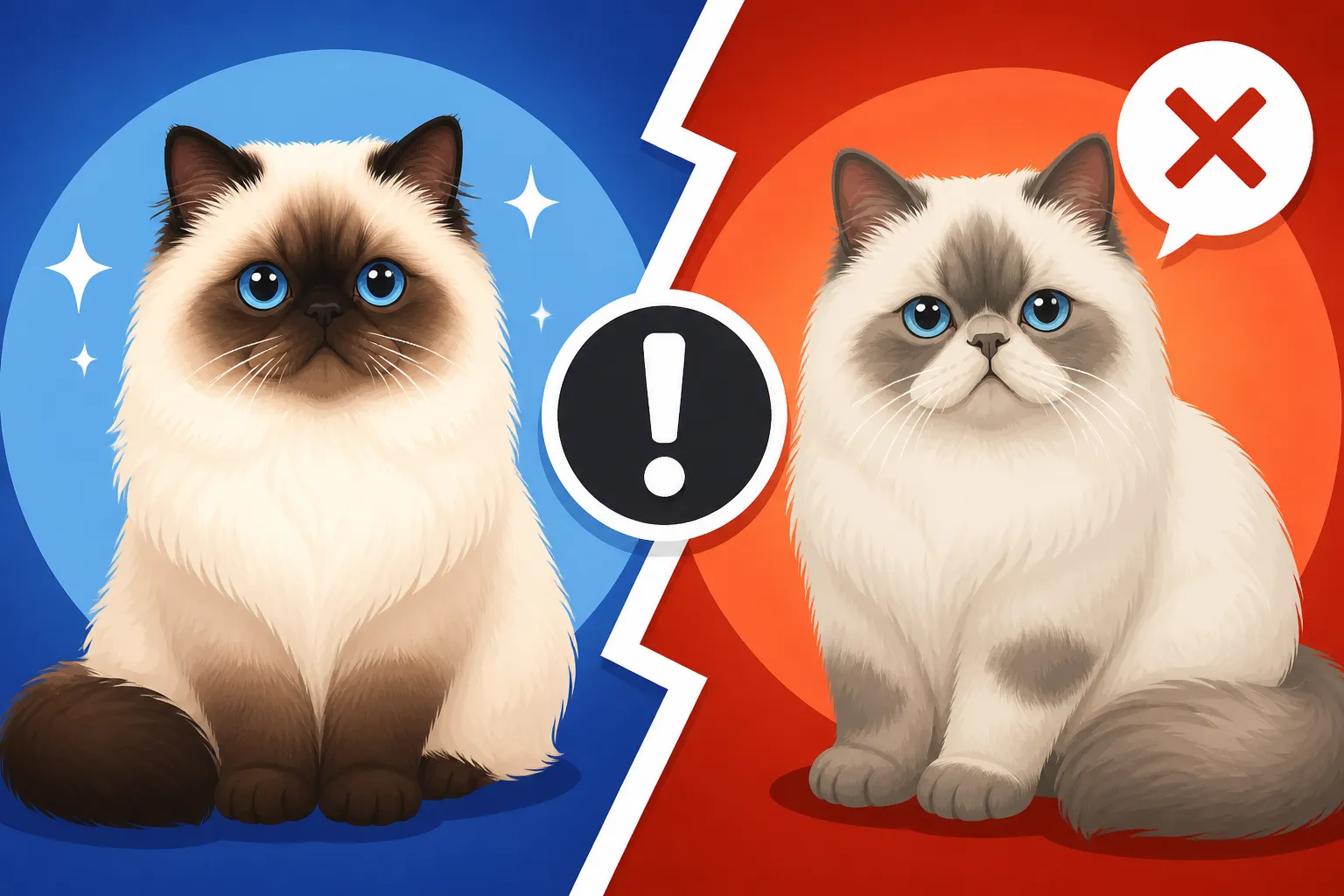
One of the most frequent ways points "come in wrong" is when the shade or intensity isn't what was anticipated. For example, you might have expected a deep, rich seal point, but your kitten's points mature to be a much lighter, almost dilute brown. Or perhaps a blue point develops a grayish cast instead of the clear, steely blue you envisioned. This can happen for a few reasons:
- Genetic Variation: Even within a carefully bred line, there can be genetic modifiers that subtly alter how the primary colorpoint gene expresses itself. A "hidden" dilute gene, for instance, could soften a seal point to a chocolate, or a blue to a lilac.
- Temperature Influence: While the gene is temperature-sensitive, the degree of darkening can vary. A kitten raised in a consistently warmer environment might develop lighter points than its genetic potential suggests, as the enzyme responsible for pigment production is less active. Conversely, a cat in a cooler environment might have darker, more expansive points, sometimes leading to a less distinct contrast between the body and points. This is why Caring for a Himalayan Whose Points Have Gone Dark often involves understanding environmental factors.
- Age: How Many Years a Himalayan's Points Take to Finish is a long journey. A Himalayan's points continue to darken throughout its life. What looks like a light or poorly contrasted point color in a young kitten might deepen significantly by the time they are two or three years old. Conversely, an old Himalayan can look almost solid in color because their entire coat has gradually darkened with age.
Unexpected Pattern or Markings
Beyond just the shade, sometimes the pattern itself might not meet expectations. While Himalayans are known for solid points, variations can occur. A common one is a "fever coat" in kittens, where stress or illness during early development can temporarily disrupt pigment production, leading to odd markings or an uneven coat. Although these usually resolve, they can be worrying initially.
Another scenario involves less defined "masking" on the face or blurring of the point lines. A truly well-bred Himalayan should have clear, distinct points with good contrast against the body coat. If the color bleeds too much into the body, or if the mask isn't well-formed, it can be considered a deviation from the ideal. In rare cases, some subtle "ghost" tabby markings might appear within the points, a hint of their Siamese ancestry that is usually bred out but can occasionally resurface.
Disqualification in the Show Ring
For those who purchase a Himalayan with aspirations of showing, "wrong" points can be a significant issue. Cat show standards are very precise about point color, contrast, and definition. If a Himalayan's points don't adhere to these strict guidelines, it can lead to disqualification or a significantly lower score in competition. This is where the term "wrong" truly carries weight, as it impacts the cat's show career.
For instance, How Judges Score a Himalayan's Point Contrast is a critical element. Judges look for a clear differentiation between the lighter body and the darker points. If the contrast is poor, or if the point color is mottled or uneven, the cat won't place well. Why a Poorly Contrasted Himalayan Loses in the Ring highlights how crucial this aesthetic aspect is for conformation shows. This doesn't make the cat any less lovely as a pet, of course, but it can be a crushing blow for a dedicated exhibitor who has invested significant time and money.
| Point Color Aspect | Expected (Ideal) | Unexpected ("Wrong" / Less Ideal) | Impact on Show Cat | Impact on Pet Cat |
|---|---|---|---|---|
| Shade/Intensity | Rich, deep, true to type (e.g., strong Seal) | Too light, dilute, muddy, or off-shade | Significant | None |
| Contrast | Clear, distinct differentiation from body coat | Blurry transition, minimal contrast, "sooty" body | High | None |
| Pattern Definition | Even, solid points; symmetrical mask | Uneven mask, ghost tabby markings, white patches | Moderate to High | Cosmetic only |
| Body Color | Clean, clear, pale body with minimal shading | Darker body coat, "fever coat" markings, yellowish | High | Cosmetic only |
| Eye Color | Deep, vivid blue | Pale blue, green tint, yellow tint (disqualifying) | Absolute | Can affect breeding |
Note: Eye color, while not a "point" color, is intrinsically linked to the colorpoint gene and can also "come in wrong" if it's not the required blue, which is a significant fault.
The Breeder's Perspective and Responsibilities
When a Himalayan's points don't develop as expected, it's often a situation that involves both the buyer and the breeder. Reputable breeders understand the genetic nuances and potential for variation, and their approach to these situations is a hallmark of their integrity and commitment to the breed.
Honest Communication and Contracts
A good breeder will always be upfront about the potential for variation in point color. They'll explain that How a Himalayan Kitten's Points Darken Month by Month is a gradual process and that the final shade isn't fully set until the cat is much older. Many breeders will only make an educated guess about point color, especially with rarer or more subtle shades like chocolate or lilac, until the kitten is a bit older and the points are more defined.
A well-drafted contract typically addresses expectations regarding appearance. It might state that while the breeder aims for a specific type and color, minor variations are possible and do not constitute a breach of contract unless they are disqualifying faults for show quality. This manages expectations from the start. A breeder might hold back on allowing a specific color reservation until points are clearly visible. How Far Ahead a Point Color Is Reserved in a Himalayan Litter often depends on how quickly those points are coming in and the confidence the breeder has in their development.
If there's a significant deviation—for instance, a kitten advertised as a Seal Point turns out to be a Red Point due to a misidentification of parentage or a rare genetic anomaly—a reputable breeder will typically work with the buyer. This might involve offering a partial refund, a discount on a future kitten, or in extreme cases, taking the kitten back if the buyer is genuinely unhappy and the issue is a clear misrepresentation. Always insist on Which Two Certificates a Himalayan Breeder Owes You to confirm parentage and health testing, which indirectly support color predictions.
Financial Implications for Breeders and Buyers
The financial implications of "wrong" points can be significant, particularly in the show world. A kitten intended for showing that develops faults in its point coloration will likely not achieve its potential, meaning the higher price paid for a "show quality" kitten might be lost. Why Point Color Sets a Himalayan's Price More Than Type in many breeding programs, so an unexpected color can impact perceived value.
For breeders, an unexpected color or poor point quality in a litter can mean they can't sell those kittens for their intended price, impacting their breeding program's profitability. It also affects their reputation if buyers feel misled. This is why careful genetic tracking and understanding of pedigrees are so crucial. How a Himalayan's Point Color Is Recorded is a meticulous process, tracing back generations to predict outcomes.
As a buyer, understanding that even the best breeders can't control every genetic roll of the dice is important. While it's disappointing, remember that the cat's health and temperament are far more important than a precise shade of point color. If you are concerned about potential health issues that might accompany certain genetic lines, having pet insurance from a reliable provider like Healthy Paws can offer crucial financial protection. Even if the points are 'wrong,' a healthy, happy cat is always right.
Living with Unexpected Point Colors
So, your adorable Himalayan's points didn't quite turn out to be the exact shade or intensity you had envisioned. Now what? The most important thing to remember is that a cat's color, while a beautiful characteristic, doesn't define its worth or its ability to be a loving companion.
Embracing Your Unique Himalayan
Every cat is an individual, and sometimes their unique appearance is part of their charm. If your Himalayan's points are a little lighter, a little darker, or have an unexpected nuance, it simply means your cat is one-of-a-kind. Embrace it! This is a wonderful opportunity to appreciate the natural variation within the breed and to love your cat for who they are, rather than for a specific aesthetic ideal.
Often, these "imperfections" are only truly noticeable to the trained eye of a breeder or judge. To the average person, your Himalayan will still be stunning with its long, luxurious coat and captivating blue eyes. Focus on their personality, their affectionate nature, and the joy they bring into your home. A cat's unconditional love isn't dependent on their exact shade of seal or blue. If you picked out a kitten based on a picture, but it ended up looking slightly different, know that it's still the same furry friend who will snuggle up to you.
Adjusting Expectations and Enjoying Your Pet
It's natural to have expectations, especially when you've invested time and emotion into choosing a specific breed like the Himalayan. However, learning to adjust those expectations when a kitten's points don't develop exactly as planned is part of the journey of pet ownership. Unless there's a health issue involved (which is a completely different scenario), an unexpected point color doesn't diminish the cat's quality of life or its ability to be a wonderful pet.
Instead of dwelling on what might have been, focus on providing the best possible care for your Himalayan. This includes a high-quality diet that supports a healthy coat and overall well-being, regular grooming, and plenty of love and playtime. You might find yourself browsing through Chewy for wide, shallow bowls designed for flat-faced breeds, or specialized combs to maintain that magnificent coat.
Remember that The Nine to Fifteen Years a Himalayan Usually Gets is a precious gift. Every moment you spend with your cat, regardless of their precise point coloration, builds a bond that is far more valuable than any ribbon or perfect shade. Focus on their playful antics, their quiet cuddles, and their unique meow. Those are the things that truly make a Himalayan special, not just the color of their ears.
Disclaimer
This article is for general informational purposes only and does not constitute professional advice. Laws, prices and regulations vary by location and change over time. Consult a qualified professional for guidance on your specific situation.