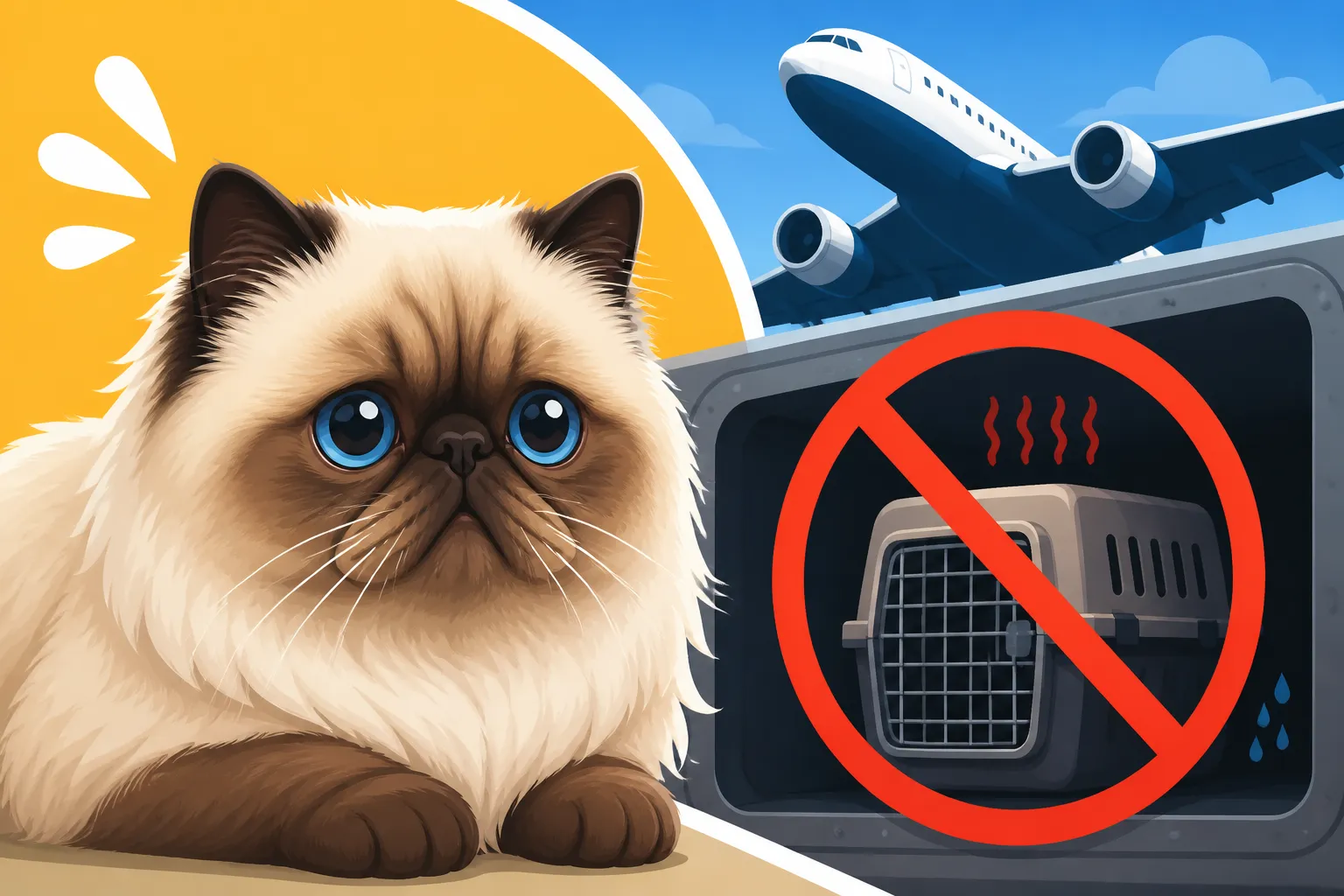
Why a Flat Faced Himalayan Should Never Fly in the Hold
For anyone who’s ever loved a Himalayan cat, the thought of them being anything but cozy and safe is absolutely heartbreaking. We know these beautiful, fluffy companions are more than just pets; they're family. So, when the idea of moving or traveling with them comes up, especially involving air travel, it can bring a wave of anxiety, particularly if you have a cherished flat-faced Himalayan. This guide is here to unravel the serious risks associated with flying a brachycephalic cat like your Himalayan in an airline’s cargo hold, and to help you understand why it's a practice best avoided for their health and well-being.
The Delicate Respiratory System of Your Flat-Faced Himalayan
Our Himalayans, with their stunning flat faces and soulful blue eyes, are undeniably captivating. But that unique facial structure, while endearing, comes with a set of physiological challenges that make air travel, particularly in the cargo hold, incredibly risky. It's not just a minor inconvenience; it's a fundamental difference in how their bodies process air and regulate temperature.
Understanding Brachycephalic Obstructive Airway Syndrome (BOAS)
"Brachycephalic" is a fancy word that simply means "short-headed," and it perfectly describes our beloved Himalayans. Their flattened faces mean they have compacted airways, which makes breathing a more significant effort for them than for cats with longer muzzles. This condition is often referred to as Brachycephalic Obstructive Airway Syndrome, or BOAS. Imagine trying to breathe deeply through a perpetually stuffy nose, even when you're just resting – that's a bit what life is like for them.
Their nostrils can be quite narrow, sometimes barely more than tiny slits, making it harder for sufficient air to enter their lungs. Beyond the nostrils, the issues continue internally with an elongated soft palate that can flap into the back of their throat, partially blocking the airway. Their tracheas (windpipes) can also be narrower than average, further complicating the flow of air. All these factors combined mean that even under normal, calm conditions, a flat-faced Himalayan might breathe with a discernible purr-like snuffle or Why a Himalayan Snores Louder Than Its Siamese Ancestors. Any kind of stress, exertion, or environmental change can quickly turn a mild snuffle into full-blown respiratory distress.
These cats compensate for their restricted airways by working harder to breathe, which can lead to rapid fatigue. When they’re relaxed, it might not be obvious, but any increase in oxygen demand or decrease in oxygen availability can quickly push them into trouble. How a Vet Grades a Himalayan's Nostrils can give you a better idea of your cat's specific airway challenges, but generally, the flatter the face, the more pronounced these issues tend to be.
The Realities of Temperature Sensitivity
Beyond breathing, Himalayans also struggle with temperature regulation, a problem exacerbated by their brachycephalic nature and thick, luxurious coats. Unlike us, cats don't sweat all over their bodies to cool down. They rely primarily on panting and evaporative cooling from their paw pads. For a Himalayan, panting is already less efficient due to their compromised airways. They simply cannot move enough air over their moist oral tissues to cool themselves effectively.
This means they Why a Himalayan Overheats Twice as Fast as a Siamese. A slight increase in ambient temperature that a non-brachycephalic cat might shrug off can quickly become dangerous for a Himalayan. You might notice them seeking out the coolest spots in your home, like a tile floor, even on a mildly warm day. Their thick Persian-derived coats, while beautiful, act like an insulating blanket, trapping heat close to their bodies and preventing efficient cooling. This combination of inefficient panting and a dense coat makes them incredibly susceptible to overheating, a condition that can escalate to heatstroke very rapidly and can be fatal.
Consider how quickly a car heats up on a sunny day – now imagine a cat that struggles to cool itself down, wearing a fur coat, in an environment where temperatures might fluctuate wildly. Even if the cargo area itself is temperature-controlled, delays on the tarmac or during loading and unloading can expose them to dangerously high or low temperatures, far outside their safe zone. The Temperature a Himalayan Starts to Struggle At is often lower than you might expect for other breeds.
Why the Cargo Hold Is a Hazardous Environment for Himalayans
The cargo hold of an airplane, despite efforts by airlines to maintain certain conditions, is simply not designed with the specific needs of a brachycephalic cat in mind. It's a space that presents multiple, severe threats to a Himalayan's delicate physiology.
Oxygen Deprivation and Air Pressure Changes
At cruising altitudes, the air pressure in an aircraft's cargo hold is lower than at ground level. While cabin pressure is maintained for human comfort, the cargo area may not be regulated to the same degree or with the same precision. This reduction in atmospheric pressure means there's less oxygen available in each breath. For a cat with a healthy respiratory system, this might be a mild adjustment. For a Himalayan, it's a critical challenge.
Their already compromised airways mean they're working harder for oxygen even at normal pressures. Introduce lower oxygen levels, and their bodies are pushed into overdrive. This can quickly lead to hypoxia, a dangerous state where their tissues and organs don't get enough oxygen. Symptoms can include rapid, labored breathing, blue-tinged gums, and collapse. In the isolated environment of a cargo hold, When a Himalayan's Open Mouth Breathing Needs a Vet might go unnoticed for far too long, leading to irreversible damage or even death before the plane even lands.
The sheer effort required to breathe in a low-pressure, low-oxygen environment can be overwhelming, causing extreme stress and panic, which in turn further increases their oxygen demand, creating a deadly feedback loop. It's a risk that is simply not worth taking for any flat-faced breed.
Unpredictable Temperatures: A Silent Threat
Even with "temperature-controlled" cargo holds, the reality of air travel is fraught with variables. Planes sitting on the tarmac, waiting for departure or after landing, can experience extreme temperature fluctuations. The cargo hold is not insulated to the same degree as the passenger cabin, and can quickly become a freezer in winter or an oven in summer.
Imagine your Himalayan, already struggling to cool down due to their thick coat and brachycephalic breathing, being exposed to direct sun on an asphalt runway. Or, conversely, consider them in freezing temperatures without adequate heating. These rapid, unpredictable changes can induce hyperthermia (overheating) or hypothermia (under-cooling) before the aircraft even takes off. How to Cool a Long Coated Himalayan in Summer becomes impossible in a metal container without human intervention.
Airlines often have temperature restrictions for pet travel, but these are for the entire duration of the journey, not necessarily accounting for every moment on the ground. A delay of even 30 minutes in direct sunlight can be catastrophic for a brachycephalic cat. This silent threat of extreme temperatures is one of the primary reasons why the cargo hold is so dangerous for our flat-faced feline friends.
Lack of Monitoring and Emergency Response
One of the most terrifying aspects of placing a beloved pet in the cargo hold is the complete lack of direct human supervision during the flight. Once that cargo door closes, your Himalayan is alone in a dimly lit, noisy environment, with no one to monitor their breathing, temperature, or distress signals.
If your cat experiences a respiratory crisis, overheats, or suffers a panic attack, there is no flight attendant or pet handler to intervene. Emergency medical attention is simply not available. By the time the plane lands and ground crew opens the cargo hold, it could be too late. The journey is stressful enough for any animal, but for a Himalayan with predisposed health risks, this isolation and inability to respond to an emergency turns a stressful situation into a life-threatening one.
Knowing that your cat is in distress, unable to be reached, is a profound and unbearable thought for any owner. This is precisely why animal welfare organizations and veterinarians strongly advise against this mode of transport for brachycephalic breeds.
Navigating Airline Regulations and Making Safer Choices
Given these inherent risks, it's not surprising that many airlines have taken steps to limit or outright ban brachycephalic breeds from their cargo holds. As responsible owners, understanding these regulations and exploring safer alternatives is paramount.
The Strict Rules Against Brachycephalic Breeds in Cargo
Most major airlines have recognized the significant health risks involved and have implemented strict policies regarding brachycephalic animals, including flat-faced cats like Himalayans. You'll find that Why Airlines Refuse a Flat Faced Himalayan is a common and necessary policy. They've seen the tragic outcomes and are trying to prevent further incidents. These rules aren't meant to be inconvenient; they're a direct response to the physiological vulnerabilities of these breeds.
Policies vary by airline, but many outright prohibit brachycephalic breeds in cargo. Others may have seasonal embargoes, refusing to transport them during hotter or colder months when temperature risks are highest. Some might require specific veterinary certifications or waivers, though even with these, the inherent risks remain. Always check with the specific airline well in advance, and read the fine print, because terms can change. Remember, their primary concern is the safe transport of passengers and goods, not necessarily providing a perfectly tailored environment for every pet, especially those with special needs.
Even if an airline technically allows it, that doesn't make it safe. Just because you can do something doesn't always mean you should, especially when your pet's life is on the line.
Prioritizing In-Cabin Travel or Alternative Transport
For your Himalayan, the safest option for air travel is always in the cabin with you, provided they meet the airline's size and weight requirements to fit comfortably under the seat in an approved carrier. Being able to see you, hear your voice, and have you monitor their condition can make an enormous difference to their stress levels and safety. Which Carrier Gives a Himalayan Enough Air is a critical consideration for in-cabin travel – look for carriers designed for brachycephalic pets, often wider and taller to allow more airflow. Brands available at pet supply retailers like Chewy often specify features for flat-faced pets.
If in-cabin travel isn't possible, then air travel in the cargo hold should be completely off the table for a flat-faced Himalayan. Instead, consider alternative methods of transport:
- Road Travel: This is often the least stressful option. Your cat can remain with you, you can control the temperature, and stops can be made for comfort breaks. This allows for constant monitoring and immediate response to any signs of distress.
- Professional Pet Transport Services: Some companies specialize in ground transport for pets, offering climate-controlled vehicles and experienced handlers who understand the specific needs of brachycephalic breeds. While potentially more expensive, it provides a safer, more humane alternative to cargo flights. Always vet these services thoroughly, checking references and ensuring they have experience with flat-faced breeds.
| Travel Method | Pros | Cons | Suitability for Flat-Faced Himalayan |
|---|---|---|---|
| Airline Cargo Hold | Potentially quicker for long distances | High risk of oxygen deprivation, overheating/hypothermia, extreme stress, no monitoring, limited emergency response. Many airlines prohibit brachycephalics. | Strongly Not Recommended/Unsafe |
| Airline In-Cabin | Owner proximity, direct monitoring, controlled environment, reduces stress. | Size/weight restrictions for carrier, limited availability, advanced booking required. | Preferred Option (if cat meets criteria) |
| Private Road Travel | Constant supervision, climate control, frequent breaks, familiar presence of owner. | Can be very long for cross-country trips, requires personal vehicle, pet may not enjoy car rides. | Highly Recommended (most controlled environment) |
| Professional Ground Transport | Experienced handlers, climate-controlled, direct supervision, door-to-door service. | Often more expensive, requires trust in a third party, journey duration can be similar to private road travel. | Highly Recommended (if in-cabin or private road travel are not options, vet thoroughly) |
Essential Preparations for Any Himalayan Journey
Regardless of how your Himalayan travels, careful planning and preparation are crucial. Their unique needs mean that a spur-of-the-moment trip could easily turn disastrous.
Consulting Your Veterinarian Before Travel
Before you even book a ticket or plan a road trip, a visit to your veterinarian is non-negotiable. They can assess your Himalayan's overall health, particularly their respiratory and cardiac systems. Discuss your travel plans in detail, including the mode of transport, duration, and any concerns you have. Your vet can advise you on whether travel is advisable at all for your specific cat, and if so, what precautions you should take.
They can also provide a health certificate, which is required by many airlines and even some states for travel. This certificate typically needs to be issued within a certain timeframe before travel. Discuss mild sedatives if your vet deems them appropriate and safe for in-cabin or road travel, keeping in mind that sedatives can depress respiratory function and are generally not recommended for cargo travel precisely because of the risks to brachycephalic breeds. Make sure you have copies of all your cat's medical records, including vaccination history and details of any pre-existing conditions. Having pet insurance, perhaps through a provider like Healthy Paws, is also a wise move, especially when traveling, as accidents or illnesses can occur unexpectedly, and vet care away from home can be costly.
Choosing the Right Gear for Comfort and Safety
The right equipment can significantly impact your Himalayan's comfort and safety during travel.
- Carrier Selection: For in-cabin air travel or road trips, select a carrier that is well-ventilated, sturdy, and large enough for your Himalayan to stand up, turn around, and lie down comfortably. For flat-faced cats, consider a carrier that offers maximum airflow and isn't too confining. You might find specialized carriers on Chewy designed for brachycephalic breeds. Ensure it's clearly labeled with your contact information, your cat's name, and a "Live Animal" sticker. Adding a soft, familiar blanket inside can provide comfort.
- Food and Water: Pack your cat's usual food to avoid digestive upset from a sudden change. For flat-faced cats, shallow, wide bowls are ideal, as their faces can get quite messy in deeper dishes. Consider a spill-proof water dispenser for the carrier, or offer water frequently during stops on road trips. Freeze a small amount of water in a bowl for the carrier to provide a slow-melt source of hydration.
- Cooling Measures: For road trips, having a cooling mat or a frozen water bottle wrapped in a towel can help keep your Himalayan comfortable, especially if it's warm. Make sure the vehicle's air conditioning is always on and directed toward your cat's area. Why a Flat Faced Himalayan's Carrier Needs More Air is not just a comfort factor; it's a health imperative.
- Emergency Kit: A small kit with their regular medications, first aid supplies, a familiar toy, and some cleaning wipes (for those inevitably messy faces and ruffs!) can be a lifesaver.
Traveling with a Himalayan requires extra vigilance and thoughtful planning due to their unique physical traits. While we want to include our beloved companions in every aspect of our lives, sometimes the most loving thing we can do is to prioritize their safety and well-being over our convenience. Flying a flat-faced Himalayan in the cargo hold is a risk that simply isn't worth taking.
Disclaimer
This article is for general informational purposes only and does not constitute professional advice. Laws, prices and regulations vary by location and change over time. Consult a qualified professional for guidance on your specific situation.