Whether Any Registry Recognizes a Doll Face Himalayan
It's incredibly common for prospective Himalayan cat owners, and even those who've loved these beautiful felines for years, to feel a bit lost in the terminology surrounding their facial structures. You've heard "Doll Face" and "Peke Face," and you want to know if one is more "official" or recognized than the other when it comes to pedigrees and breed registries. This guide is here to untangle that confusion, explaining why certain terms are popular in the enthusiast community, but rarely appear on official paperwork, and what that means for you and your beloved cat.
The Heart of the Matter: Doll Face Recognition in Registries
The core question of whether any registry formally recognizes the "Doll Face" Himalayan is a really important one, because it speaks to a fundamental difference between how everyday cat lovers describe their pets and how breed standards operate. It can feel like you're speaking two different languages!
What "Doll Face" Truly Means to Owners
For many, the term "Doll Face" evokes the classic, softer, more traditional look of the Himalayan cat. Think back to those beautiful, fluffy cats of yesteryear with a discernable nose length, a sweet expression, and lovely round eyes. Owners often use "Doll Face" to describe a Himalayan that has a less extreme facial flattening, meaning their nose is a bit more prominent and their profile has a gentle curve rather than an abrupt stop. It's a look that many people find incredibly appealing, conjuring images of storybook cats. It suggests a balance, a face that is still distinctly Persian (which Himalayans are, let's be honest, just a colorpoint variant of), but without the profound brachycephaly that has become more prevalent in show lines over the decades. This distinction is so significant that for many buyers, Doll Face or Peke Face Is the Himalayan Buyer's Real Decision.
This preference for a "Doll Face" often stems from a desire for a cat that looks like the Himalayans of old, before the breed standards began to favor a much flatter facial structure. People gravitate towards this look because it often implies fewer potential health challenges associated with extreme brachycephaly, such as breathing difficulties or tear staining. It’s a term of endearment and a descriptive convenience for those of us who appreciate the subtle differences in Himalayan profiles.
The Official Stance: Why Registries Don't Use the Term
Here's the rub: while "Doll Face" is a widely used and understood term among breeders and enthusiasts, you won't find it explicitly written on any official pedigree or in the breed standards of major cat registries like the Cat Fanciers' Association (CFA) or The International Cat Association (TICA). Why? Because breed standards are designed to be precise, objective documents that describe an ideal physical type, often using anatomical terms rather than subjective descriptors.
Registries focus on a single, unified standard for the Persian breed, which includes the Himalayan as a colorpoint division. Their goal is to define the ideal structure for show cats, promoting consistency in breeding programs. This standard typically describes the head as round, with full cheeks, a short, broad nose, and a break between the eyes. While the degree of "flatness" has evolved over time, the terms "Doll Face" and "Peke Face" are not part of the official lexicon because they represent informal distinctions rather than formally recognized variations within the breed standard itself. Instead, the standard describes an ideal shape, and breeders strive to meet that ideal. This is part of the ongoing discussion about Why CFA Folded the Himalayan Into the Persian in 1984, which impacts how these cats are classified and judged.
The standards describe the degree of flatness desired, using terms like "short nose with a definite break" or "domed forehead." They don't differentiate between a "Doll Face" and a "Peke Face" as separate, recognized types. It's all part of the same Persian head standard.
Deeper Dive into Himalayan Facial Structures
To truly understand why "Doll Face" isn't an official term, we need to look at the broader spectrum of Himalayan facial structures and how breed standards are actually written. It’s a fascinating journey into feline genetics and showing history.
The Spectrum of Profiles: From Traditional to Extreme
When you look at Himalayans, you'll see a range of facial profiles. At one end, you have what many call the "traditional" or "Doll Face" look – a cat with a slightly longer nose, a more gradual slope to their forehead, and a distinct muzzle. These cats often have an undeniably sweet expression, and their breathing tends to be less labored. For those who appreciate this older style, What a Doll Face Himalayan's Profile Measures can be a key indicator of their preference.
On the other end of the spectrum, you find the "extreme" or "Peke Face" profile. These cats have a much flatter face, with the nose leather sitting almost flush with the eyes, and a very pronounced "break" in their profile. Their eyes are typically very large and round, giving them a captivating, wide-eyed look. This aesthetic became increasingly popular in the show ring, leading to a shift in breeding goals over time. It’s a significant difference, and understanding What a Peke Face Himalayan's Profile Measures helps to highlight the contrast. The differences aren't just cosmetic; they can have real implications for the cat's day-to-day life and health.
How Official Standards Define the Ideal Himalayan Face
Official cat registries, like the CFA, generally adhere to a single standard for the Persian breed, which encompasses Himalayans. This standard describes the head as massive and round, with great breadth. The face should be round, with full cheeks. The nose should be short, snub, and broad, with a definite "break" (an indentation where the nose meets the forehead) situated between the eyes. The chin should be full and well-developed, and the eyes large, round, and set far apart.
The key takeaway here is that the standard aims for a specific degree of flatness and roundness, but it doesn't then subdivide this into "Doll Face" or "Peke Face." The standard simply defines the "ideal" Persian head, and breeders strive to produce cats that fit that description as closely as possible. Over time, interpretations of this "ideal" have led to the prevalence of the flatter-faced show type. The emphasis in the ring is on conforming to these precise descriptors, which is why Why Show Himalayans Drifted Toward the Flatter Face is a common observation in the breed's history. When you look at What Your Himalayan's Certificate Actually Says, you'll see references to "Persian," and "Colorpoint" or "Himalayan Division," but never a specific face type.
The Real-World Impact of Facial Type on Your Cat
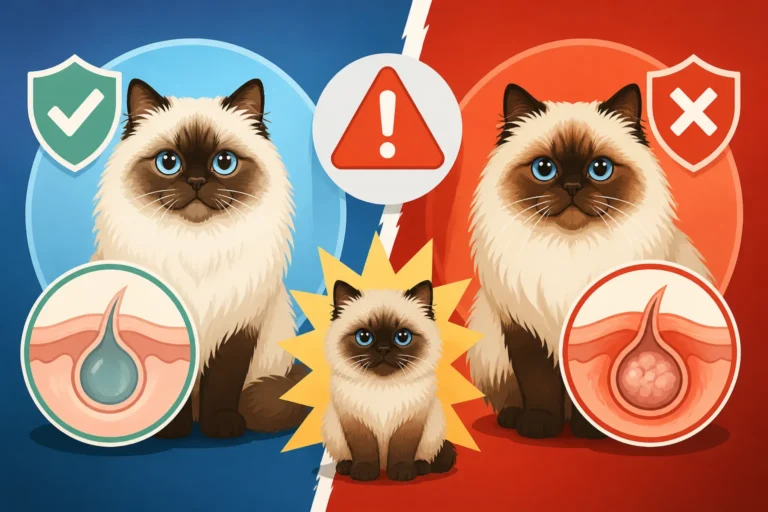
While the registries might not differentiate with specific terms, the physical realities of facial structure do have a real impact on your cat's life. Cats with more extreme brachycephaly (flatter faces) can sometimes experience a range of health issues. These can include stenotic nares (narrow nostrils), an elongated soft palate, and even issues with tooth alignment due to a shortened jaw. How a Vet Grades a Himalayan's Nostrils is a practical example of how these structural differences are assessed in a clinical setting.
On the other hand, a "Doll Face" Himalayan, with its slightly longer muzzle, often experiences fewer of these brachycephalic-related issues. They may breathe more easily, have less tear staining because their tear ducts can drain more effectively, and experience fewer dental problems because their teeth aren't as crowded. It’s not a guarantee, of course, as every cat is an individual, but the correlation is something many discerning owners and veterinarians are keenly aware of. These are considerations that every cat owner, whether their cat is a cherished pet or a show champion, should take seriously.
Navigating the Purchase: What to Ask Your Breeder
So, if "Doll Face" isn't on the official papers, how do you find one if that's your preference? It comes down to asking the right questions, understanding breeder practices, and looking beyond just the official terminology.
Understanding Pedigrees and Certifications
When you're looking for a Himalayan kitten, a reputable breeder will always provide you with a pedigree and registration papers from a recognized body. These papers will list the cat's lineage, its official breed (Persian, Colorpoint Division, or Himalayan, depending on the registry), and often details about its parents' health clearances. What they won't typically specify is "Doll Face" or "Peke Face." Instead, they will confirm the cat is indeed a Himalayan (or a Persian in the Colorpoint division) and provide proof of its ancestry. This documentation is crucial for understanding the cat's heritage, but it won't directly address the nuance of facial structure in the way a buyer might hope.
It's vital to insist on seeing these papers, not just for the breed name, but for the health testing information. For instance, knowing Which Two Certificates a Himalayan Breeder Owes You means you're equipped to ask about health screenings like PKD (Polycystic Kidney Disease) testing, which is paramount for this breed.
Why "Doll Face" Often Commands a Premium
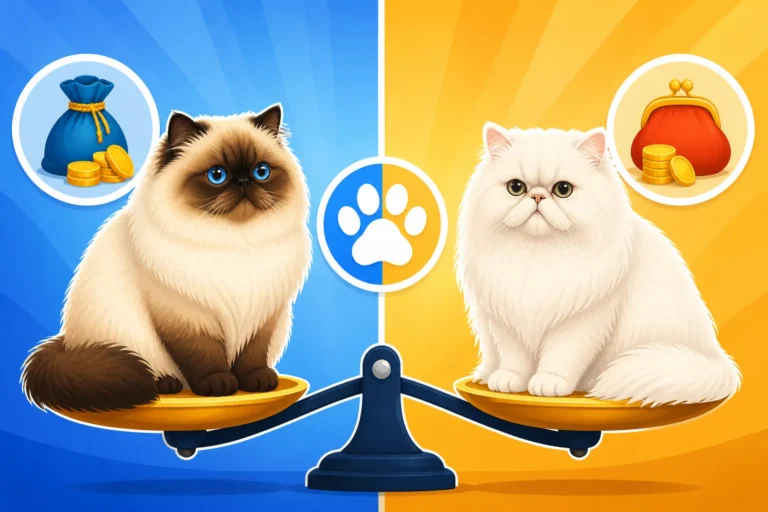
Despite not being an official term, "Doll Face" Himalayans often command a premium price in the pet market. There are a few reasons for this:
- Perceived Health Benefits: Many buyers believe, often correctly, that a less extreme facial structure leads to fewer breathing and eye issues, meaning potentially lower vet bills and a more comfortable life for the cat. This peace of mind is valuable.
- Aesthetic Preference: As discussed, the "classic" look is highly desired by many who want a Himalayan that resembles the cats from earlier generations. Breeders who consistently produce this look are meeting a specific market demand.
- Breeding Challenges: It can sometimes be harder for breeders to consistently produce the "Doll Face" look if their lines have been heavily influenced by the flatter-faced show standards. Selective breeding to maintain a less extreme profile might involve more effort or a smaller pool of suitable breeding cats.
Because of this demand, Why a Doll Face Himalayan Commands a Premium is a common point of discussion among potential owners. Responsible breeders who prioritize health and structure will be transparent about their cats' profiles and any associated health considerations.
Health Considerations and Responsible Breeding
When choosing a Himalayan, especially if you have a preference for a particular face type, it is paramount to prioritize health above all else. A responsible breeder will talk openly about the health of their lines and explain any potential considerations related to facial structure. They should be able to show you the parents, or at least photos, and discuss the nuances of their breeding program.
Remember, even a "Doll Face" Himalayan can still inherit genetic conditions common to the breed, such as Polycystic Kidney Disease (PKD) or Progressive Retinal Atrophy (PRA). Make sure to ask Which Two Tests Belong on Every Himalayan Pedigree to ensure you're getting a kitten from a healthy line. A good breeder will also provide a health guarantee. Don't be shy about asking for specific information about the parents' breathing, tear staining history, and dental health. They should also provide a vet check for the kitten before you take it home. This due diligence ensures that you are bringing home a healthy, happy companion, regardless of what label is placed on its beautiful face.
Table: Comparison of "Doll Face" (Common Usage) vs. Official Registry Standard
| Aspect | "Doll Face" (Common Usage) | Official Registry Standard (e.g., CFA Persian) |
|---|---|---|
| Nose Length | Noticeable length, distinctly protruding | Short, snub, broad |
| Profile Break | Gentle, less pronounced indentation between eyes | Definite "break" (indentation) between eyes |
| Muzzle | More discernable, slightly longer | Not explicitly defined as "muzzle," focus on roundness and flatness of face |
| Eye Shape/Set | Large, round, sweet expression | Large, round, full, set far apart, brilliant copper (for solid Persians) or blue (for Himalayans) |
| Official Term? | No, informal term for a traditional look | No, not a recognized term. Focus is on degree of flatness within one standard. |
| Health Implication (General Trend) | Generally fewer brachycephalic-related issues | Varied, depending on individual interpretation and breeding goals (can lead to flatter faces). |
Living with Your Himalayan: Care Beyond the Face Type
Ultimately, whether your Himalayan has a "Doll Face" or a "Peke Face" in your heart, the day-to-day joy and responsibility of ownership remain. These magnificent cats need consistent care, love, and attention to thrive.
Tailoring Daily Care to Your Cat's Unique Needs
Every Himalayan, regardless of its specific facial profile, requires dedicated daily care. Their magnificent long coats are prone to matting and need regular combing. This isn't just about aesthetics; mats can pull on the skin, cause discomfort, and even lead to skin infections. Your daily grooming routine should include a thorough comb-through, paying special attention to areas like the armpits, britches, and ruff. How Long a Himalayan's Daily Comb Takes is often more than new owners anticipate, but it's a non-negotiable part of their care.
Beyond the coat, their faces demand attention too. Himalayans are prone to tear staining, which can become particularly noticeable on their pale bodies. Daily wiping of their eyes and the folds around their nose is essential to prevent irritation and infection. Stocking up on grooming essentials and specialized bowls from a reputable online retailer like Chewy can save you a lot of hassle. You might even find yourself on a first-name basis with a professional groomer, as Why a Himalayan Owner Ends Up on First Name Terms With a Groomer is a common experience.
Consider specially designed feeding bowls too. Cats with flatter faces might struggle with deep, narrow bowls, often pushing food out or soiling their ruff. Wide, shallow dishes or angled bowls can make mealtime much more comfortable and cleaner. Finding the right diet is crucial, especially for cats with unique facial structures. A soft, palatable food can be easier for these cats to manage.
Proactive Health Management for a Long, Happy Life
Regardless of facial type, all Himalayans benefit from proactive health management. Regular veterinary check-ups are non-negotiable. Your vet can assess their breathing, dental health, and overall well-being. Early detection of potential issues, especially those related to their brachycephalic features, can make a significant difference in their quality of life. How Often a Tested Himalayan Still Needs Checking highlights the ongoing need for vigilance even if a cat comes from tested lines.
When budgeting for a Himalayan, regardless of its face type, considering pet insurance from providers like Healthy Paws can offer peace of mind. It can help cover unexpected veterinary costs, which can sometimes be higher for breeds with specific predispositions. These proactive steps, combined with a loving home environment, will ensure your Himalayan lives its happiest, healthiest life, whether you call its face "Doll" or simply "perfect."
Disclaimer
This article is for general informational purposes only and does not constitute professional advice. Laws, prices and regulations vary by location and change over time. Consult a qualified professional for guidance on your specific situation.