Why a Fast Dog Overwhelms a Himalayan
It’s a common scenario that can quickly turn a dream of a harmonious multi-pet household into a daily struggle: you adore your serene Himalayan cat, a creature of quiet dignity, but the introduction of a bouncy, fast-paced dog has thrown your home into disarray. Many owners find their laid-back feline friend utterly overwhelmed by canine exuberance, leading to stress for both pets and people. This guide is here to shed light on the core reasons why fast dogs can be such a mismatch for Himalayans and offer practical, empathetic strategies to help everyone coexist peacefully.
The Himalayan's Inherited Pace: A Study in Serenity
Himalayan cats are truly unique, blending the striking colorpoint pattern of the Siamese with the luxurious coat and placid temperament of the Persian. When we talk about their activity levels, it's really the Persian side that dominates, giving them a gentle, calm disposition that is often at odds with the boundless energy of many dog breeds. They are not built for sustained bursts of speed or endless rounds of chase.
The Persian Influence on Himalayan Activity Levels
Think of a Himalayan as a cat designed for comfort and contemplation. Their ancestors, the Persians, were bred for their beauty, their luxurious coats, and their serene presence. These traits carried over strongly into the Himalayan, meaning they naturally prefer lounging in a sunbeam, gracefully padding from one soft surface to another, or enjoying a quiet cuddle session. They simply don't possess the inherent drive or physical capacity for the kind of high-octane play that many dogs, especially those from working or sporting lines, thrive on. A typical day for a Himalayan might involve several naps, a few gentle grooming sessions, and perhaps a short, deliberate stroll around the house. They value routine and tranquility above all else, making sudden, fast movements from a dog a source of genuine alarm rather than an invitation to play.
The Echo of the Siamese Voice, Not Its Energy
While Himalayans inherited the distinctive "points" (darker coloration on the extremities) and the blue eyes of their Siamese ancestors, they fortunately, for those seeking peace, left much of the Siamese's legendary vocal prowess and boundless energy behind. You might hear a sweet, conversational chirp or a soft meow, but rarely the insistent, demanding yowls that can characterize a Siamese. Likewise, their activity levels are dialed down considerably. They kept the beautiful visual traits but filtered out the hyperactive genes. This means that while they might engage in short bursts of play, it’s usually on their terms and quickly followed by a retreat to a favorite The Himalayan Is a Lap Cat That Answers Back spot for a well-deserved nap. They are not chasing butterflies or scaling curtains with the same zest as a Siamese might; their joy comes from quiet companionship, not athletic feats.
How a Himalayan Interprets "Play"
For a Himalayan, "play" is a refined art, not a full-contact sport. It often involves batting gently at a feather wand, slowly stalking a toy mouse, or perhaps a brief, dignified pounce. Their play sessions are typically short-lived and low-intensity. They might bat a toy under a sofa, then patiently wait for you to retrieve it, rather than launching into a frantic chase. A game of fetch, which many dogs adore, is usually lost on a Himalayan. They'd much rather observe from a comfortable perch than participate in a high-speed pursuit. When a fast dog attempts to initiate play with exuberant barking, quick lunges, or playful nips, a Himalayan often perceives this as an alarming invasion of personal space and a threat, not an invitation. Their instinct isn't to join in the joyful chaos but to seek refuge and quiet.
Physical Limitations: Why a Himalayan Can't Keep Up
Beyond their calm demeanor, Himalayans have several distinct physical characteristics that inherently limit their ability to keep pace with an energetic dog. These aren't just preferences; they are structural realities that make sustained activity difficult, and sometimes even dangerous.
The Challenges of a Brachycephalic Airway
One of the most defining features of many Himalayans, especially those bred for the "Peke-face" or extreme type, is their brachycephalic (flattened) face. While undeniably charming, this facial structure comes with a significant trade-off: compromised airways. Their shortened muzzles, smaller nostrils, and often elongated soft palates mean they simply cannot take in as much air as cats with longer noses, let alone a dog built for running. This makes them prone to overheating and struggling for breath during even moderate activity. You'll notice they pant much sooner than other cats or dogs. This respiratory limitation is a major reason Why a Himalayan Overheats Twice as Fast as a Siamese and why a fast-paced game with a dog can quickly become a serious health concern for them. It's not that they don't want to play; it's that their bodies physically prevent them from doing so vigorously without discomfort or risk.
Cobby Body, Short Legs, and Luxurious Coat
Himalayans are renowned for their "cobby" body type – a compact, heavily boned build with short, thick legs. This sturdy physique, while contributing to their adorable, plush appearance, is not designed for agility or speed. They aren't sprinters or jumpers. Combine this with their incredibly dense, long, flowing double coat, which acts like a built-in winter sweater, and you have a cat that is prone to overheating quickly. This heavy coat, beautiful as it is, also makes them feel much warmer, much faster than a short-haired cat or even many dog breeds. Trying to run or exert themselves with a thick coat means their body temperature rises rapidly, making them seek cooler spots and stillness. Their short legs mean they'll always be several strides behind a longer-limbed dog, and their dense build makes sudden changes in direction or quick escapes much more challenging. This body type also explains Why a Himalayan Stays on the Floor and the Sofa for the most part, preferring low-impact movement.
Limited Agility and Reflexes
Given their cobby build and shortened airways, Himalayans simply don't possess the lightning-fast reflexes or acrobatic agility of many other cat breeds, let alone a quick dog. They are not going to scale a bookshelf in a single bound or execute a perfect aerial flip to escape a playful chase. Their movements are more deliberate, measured, and often, well, slow. If a dog makes a sudden lunge or bounds towards them, a Himalayan’s natural response is typically to freeze or slowly try to move away, rather than darting out of the way with speed. This lack of swift evasive action can leave them feeling trapped and vulnerable when faced with a persistently playful, fast dog who doesn't understand their physical limitations. They are excellent at observing and quietly judging, but less so at quick, physical reactions.
Temperamental Differences: Seeking Calm in Chaos
Beyond the physical, the very essence of a Himalayan cat's personality is geared towards peace and predictability. They are creatures of habit and comfort, and anything that disrupts that can be deeply unsettling.
The Himalayan's Preference for Predictable Environments
Himalayans thrive on routine and a calm, predictable environment. They love their designated napping spots, their meal times, and the quiet rhythm of a peaceful home. Changes in routine, loud noises, or sudden, unexpected movements can cause them significant stress. A fast dog, by its very nature, often brings unpredictability: sudden barking, zooming through rooms, knocking things over, or initiating spontaneous play. For a Himalayan, this isn't just annoying; it can feel like a constant state of low-level anxiety. They don't adapt quickly to chaos; they withdraw from it. They might even develop stress-related behaviors like over-grooming or hiding if their environment becomes consistently too boisterous. How a Himalayan Reacts When Its Routine Breaks can give you an idea of how much they value consistency.
How Noise and Sudden Movements Affect a Himalayan
The world of a fast dog is often a loud one, filled with enthusiastic barks, excited yelps, the clatter of claws on hard floors, and the occasional boisterous whine. These sounds, coupled with sudden dashes and playful leaps, can be utterly overwhelming for a Himalayan. Remember, many Himalayans already contend with noisy breathing due to their facial structure, and adding external commotion only heightens their sensory input. Why a Himalayan Snores Louder Than Its Siamese Ancestors due to their brachycephalic conformation already means their soundscape is different. They prefer soft voices, gentle footsteps, and long stretches of quiet. A dog's playful bark, intended innocently, can sound like an aggressive roar to a cat that prefers silence. Their calm demeanor is often mistaken for indifference, but inside, they are acutely aware of their surroundings.
Retreat, Not Confrontation: A Himalayan's Coping Mechanism
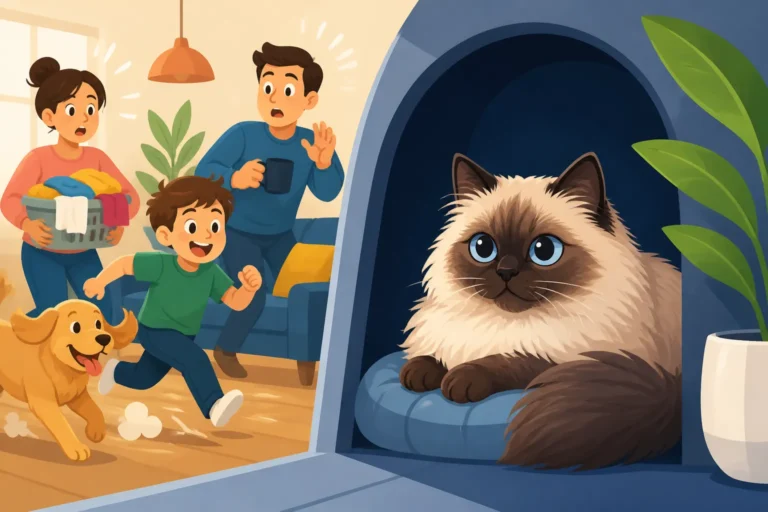
When faced with an overwhelming situation, a Himalayan's instinct is almost always to retreat rather than to engage. They are not known for their aggressive tendencies; in fact, they are more likely to Why a Himalayan Walks Away Rather Than Scratch if they feel threatened or annoyed. This means that if a fast dog corners them or persistently tries to engage them, the Himalayan won't lash out aggressively. Instead, they will try to find a safe, quiet hiding spot. This might be under a bed, in a closet, or on a high shelf they've carefully navigated to. This retreat isn't a sign of cowardice; it's their intelligent way of de-escalating a situation that feels too intense for their gentle nature. The problem arises when such escape routes are limited, making them feel trapped and anxious.
Strategies for Harmony: Managing the Mix
Bringing a fast, energetic dog into a home with a Himalayan requires thoughtful planning and consistent effort. The goal isn't to change the Himalayan's fundamental nature, but to create an environment where both pets feel safe, respected, and content.
Creating Safe Havens and Escape Routes
The absolute top priority is to ensure your Himalayan has multiple, easily accessible escape routes and safe zones where the dog simply cannot reach them. This is non-negotiable. Think vertically: cat trees (sturdy ones, perhaps even Why a Himalayan's Cat Tree Should Be Waist High at Most to accommodate their less agile form), shelves, or the top of a dresser. Provide cozy beds or cubbies in these elevated spots. You can also use pet gates, readily available from retailers like Amazon, to create dog-free rooms where your Himalayan can eat, sleep, and use their litter box in peace. These physical barriers are crucial for giving your cat a sense of control and security. A catio, securely attached to the house, could also offer a safe outdoor space for your Himalayan, away from canine exuberance, as they really are not built for being Why a Himalayan Has No Business Outdoors at All.
Supervised Interactions and Controlled Play
Never leave an energetic dog and a Himalayan unsupervised until you are absolutely certain of their compatibility, and even then, always err on the side of caution. When they are together, it should always be supervised. Use a leash for the dog if necessary to manage its energy and prevent sudden lunges. Encourage calm, quiet interactions. Reward the dog for gentle behavior around the cat, and reward the cat for staying relaxed. Consider separate playtimes: vigorous play sessions for the dog outdoors or in a designated dog-only area, and quiet, gentle play with your Himalayan using feather wands or laser pointers (used responsibly). Understand How Much More Play a Himalayan Wants Than a Persian is still significantly less than a high-energy dog. If the dog is prone to herding or chasing, work with a professional trainer to redirect these natural instincts away from your cat.
Choosing Compatible Dog Breeds and Training the Existing Dog
If you are considering adding a dog to a Himalayan household, careful breed selection is paramount. Opt for dog breeds known for their calm, gentle temperaments and lower energy levels. Breeds like Greyhounds (retired racers are often surprisingly calm couch potatoes), Basset Hounds, or even older, more sedate dogs from shelters can be excellent choices. Avoid breeds known for high prey drives, boundless energy, or intense herding instincts. For an existing dog, focused training is key. Teach commands like "leave it," "stay," and "off" (meaning off the cat or off furniture the cat is on). Positive reinforcement is crucial. Reward calm behavior around the cat with treats and praise. Enroll in obedience classes to help your dog channel its energy constructively. Remember, it's about teaching your dog respect for the cat's space and tranquility. You're aiming for a dynamic where Which Dogs Will Not Chase a Himalayan Off Its Chair, allowing your cat to maintain its serene composure without fear.
| Trait | Himalayan Cat | Fast, High-Energy Dog |
|---|---|---|
| Activity Level | Low to moderate; prefers lounging and short play bouts | High; requires frequent vigorous exercise |
| Body Type | Cobby, heavily boned, short legs, long coat | Often lean, athletic, long legs, varied coat |
| Breathing | Brachycephalic, prone to overheating and labored breathing during exertion | Efficient, designed for sustained activity |
| Agility | Limited; deliberate movements, not quick or acrobatic | High; agile, fast, quick reflexes |
| Temperament | Calm, docile, values routine and quiet | Often boisterous, playful, eager for action |
| Noise Level | Quiet, soft vocalizations | Can be vocal (barking, yelping) |
| Coping with Stress | Retreats, hides, seeks quiet solitude | May become more anxious, destructive, or vocal |
Disclaimer
This article is for general informational purposes only and does not constitute professional advice. Laws, prices and regulations vary by location and change over time. Consult a qualified professional for guidance on your specific situation.