Why Food Is the Only Lever With a Himalayan
It can be incredibly frustrating when you're trying to get your beloved Himalayan cat to cooperate, whether it's for a grooming session, a vet visit, or even just to maintain a consistent daily routine, and they seem utterly indifferent to your pleas. You might try calling their name, dangling a feather wand, or offering a gentle pet, only to be met with a slow blink or a regal, unmoving stare. This guide is here to shed light on a fundamental truth for many Himalayan owners: food is often the most powerful, and sometimes the only, lever you have to motivate these charming, laid-back felines.
The Himalayan's Unique Motivation: A Culinary Connection
Himalayans, with their stunning long coats, deep blue eyes, and famously calm demeanor, often seem to exist in a state of serene contentment. They are masters of the art of relaxation, preferring a cozy lap or a sunbeam to strenuous acrobatics. This inherent nature means their internal reward system often leans heavily towards comfort and satisfaction, and for many, nothing quite hits the spot like a delicious treat or a promptly served meal. It's not that they don't love you, of course they do, but their primary drives are different from a high-energy breed.
A History of Comfort and Routine
Think about the origins of the Himalayan. They are, at heart, a Persian with the striking color points of a Siamese. From their Persian lineage, they inherit a profound love for comfort, predictability, and a somewhat more sedentary existence. While the Siamese contribution brought a voice and a spark of intelligence, it didn't completely override the Persian's preference for a quiet, comfortable life. For a cat that cherishes routine above almost everything else, food becomes a central, immovable pillar of their day.
Imagine a busy household where schedules are a bit erratic. An energetic cat might find entertainment in the chaos, but a Himalayan often craves the steady rhythm of life. Knowing that their meals will arrive at a specific time, or that a special treat will appear after a certain activity, provides them with a sense of security and control in their world. This predictability builds trust, and food becomes a tangible representation of that trust. Unlike some breeds that might be driven by the thrill of the hunt or vigorous play, a Himalayan's motivation is often rooted in the simple, profound satisfaction of a good meal. While their Siamese ancestors might have introduced a livelier streak, it rarely manifests as a frantic need for activity. How Much Livelier the Siamese Half Made the Himalayan can shed more light on this balance.
Physicality and Play: Why Food Wins Over Frolic
Let's be realistic about a Himalayan's physical capabilities and preferences. These are not cats built for marathons or gravity-defying leaps. Their distinctive "cobby" body, heavy bone structure, and luxuriously long, dense coat mean they can overheat rather quickly. Their unique brachycephalic, or flattened, face, while adorable, can sometimes lead to breathing challenges, making sustained, vigorous play uncomfortable or even undesirable. You might notice them panting after even a short burst of activity. Why a Himalayan Pants After Five Minutes of Play is a common observation.
Because intense physical exertion isn't usually their forte, other forms of motivation, like a prolonged game of chase-the-laser, often take a backseat to the more immediate and comfortable reward of food. Why expend precious energy when a delicious reward can be obtained with far less effort? Food offers an instant, undeniable gratification that doesn't tax their unique physiology. This isn't laziness; it's a perfectly logical adaptation to their physical characteristics. If you're wondering when to wind down a play session, understanding their limits is key. When to End a Himalayan's Play Session is a helpful read for discerning those signals.
Leveraging Food for Training and Routine
Given their strong connection to food, it stands to reason that positive reinforcement, with treats as the primary incentive, is your most effective tool for guiding your Himalayan's behavior. It's about making them want to do what you're asking, rather than trying to force or coerce them.
Positive Reinforcement: The Path to Cooperation
When it comes to teaching a Himalayan anything, whether it's tolerating a nail trim or coming when called, a positive reinforcement approach is almost always the most successful. They respond incredibly well to rewards, especially when those rewards are highly palatable. Trying to scold or punish a Himalayan is usually counterproductive; it's more likely to make them retreat and become less cooperative than to change their behavior in a positive way.
The key is to use small, high-value treats – something truly irresistible. Think tiny pieces of cooked chicken, salmon, or specialized cat treats. The goal is to create an immediate, positive association with the desired action. For instance, if you want your Himalayan to sit still for a quick brush, offer a treat the moment they settle. Repeat this consistently, and they'll quickly understand that cooperation leads to delicious rewards. Many owners find a good supply of these treats on platforms like Amazon, ensuring they always have their "levers" ready. If you're curious about what kinds of treats might work best for specific situations, What a Himalayan Will Take to Sit Through a Comb offers practical advice.
Establishing Predictable Routines with Food
Himalayans are creatures of habit, and their love for routine can be powerfully reinforced by food. Consistent meal times are paramount for their emotional well-being and can serve as anchors in their daily lives. If your Himalayan knows precisely when they can expect their breakfast and dinner, it reduces anxiety and builds a deep sense of security.
You can extend this principle to other routines as well. For example, if you need to administer medication, always follow it immediately with a favorite treat. If you're trying to get them comfortable with their carrier for vet visits, place a special treat inside the carrier daily, even when you're not going anywhere. This helps them associate the carrier with positive experiences. Imagine the peace of mind knowing that your Himalayan expects to be fed at the same hour every day; it genuinely helps them feel safe and content. Why a Himalayan Expects to Be Fed at the Same Hour dives deeper into this. Conversely, a late meal can cause genuine distress for these routine-loving cats. Why a Late Meal Unsettles a Himalayan for Hours highlights just how important adherence to their feeding schedule is.
Practical Applications: Grooming, Health, and Environment
Beyond basic training, using food as a motivator is incredibly practical for the daily care and overall well-being of your Himalayan. Their unique needs, especially concerning grooming and health, often require consistent cooperation that food can facilitate.
Making Grooming a Treat-Filled Experience
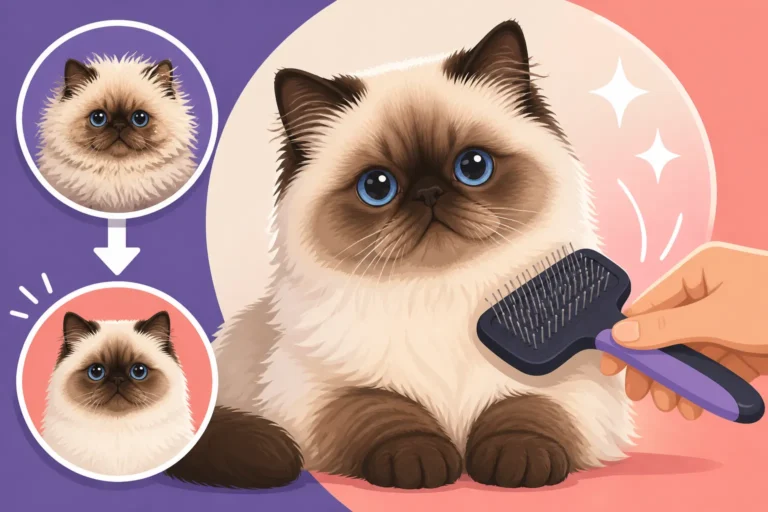
Daily grooming is not optional for a Himalayan. Their long, luxurious coat is prone to matting, and neglecting it can lead to serious skin issues and discomfort. However, getting a cat to willingly endure a daily comb can be a challenge. This is where food becomes your best friend.
Start by introducing the comb very gently, perhaps just a quick touch. Immediately follow with a treat. Slowly increase the duration of the brushing, always pairing it with a reward. You're building a positive association, turning what could be a chore into a pleasant interaction. If you start this process when they are kittens, they will be much more accepting as adults. Getting a Himalayan Kitten Used to the Comb is a fantastic resource for early training, and understanding how to Teaching a Himalayan to Lie Still for Its Daily Comb is crucial for long-term success. Consistency and high-value treats are key to ensuring grooming isn't a battle, but a shared moment of calm and reward.
Food as a Comfort in New Situations or for Medical Care
Life inevitably throws curveballs, whether it's a new environment, a visit to the vet, or the need for medication. Himalayans, being creatures of routine and comfort, can find these situations incredibly stressful. Food can act as a powerful tool to mitigate that stress.
When preparing for a vet visit, leave the carrier out for several days, placing treats and maybe even some of their regular food inside. This desensitizes them to the carrier, associating it with positive things. At the vet, a few high-value treats can help distract them during examinations or vaccinations. If your Himalayan needs daily medication, hiding it in a delectable treat or a small dollop of wet food is often the easiest way to ensure they take it without a fuss (always check with your vet first to ensure the medication can be given with food). In stressful moments, having that special treat on hand can be a game-changer. Keeping a Himalayan Calm When It Panics offers further strategies for managing anxiety, where food can play a significant role.
Here's a quick comparison of different motivators for your Himalayan:
| Motivator Type | Himalayan Response | Best Use Cases | Considerations |
|---|---|---|---|
| Food/High-Value Treats | High – Immediate, satisfying, creates strong positive associations | Training, grooming, establishing routine, comfort during stress | Requires careful portion control to avoid weight gain, allergy awareness |
| Play/Interactive Toys | Moderate – Enjoy short bursts, but can overheat quickly | Brief, low-intensity play sessions, mental stimulation | Limited by physical stamina, not ideal for sustained behavioral change |
| Affection/Praise | Moderate – Builds bonding and reassurance, appreciated when calm | Reinforcing desired calm behaviors, general interaction | Less direct for motivating specific actions, often subtle acceptance |
| Environmental Enrichment | Low to Moderate – Prefers comfort over exploration | Cozy beds, window perches, safe, quiet spaces | Less active engagement, caters more to their sedentary nature |
Challenges and Considerations When Using Food as a Lever
While food is an incredibly effective tool, it's not without its considerations. It's important to use this "lever" wisely and responsibly to ensure your Himalayan stays healthy and well-adjusted.
Managing Weight and Diet
One of the biggest challenges when using food as a primary motivator for a Himalayan is their natural propensity to gain weight. Their low activity levels combined with a love for treats can quickly lead to extra pounds, which can exacerbate existing health issues and even shorten their lifespan. It's a common issue: Why a Cobby Himalayan Gains on a Portion Another Cat Burns highlights how efficiently their bodies use calories.
To combat this, portion control is absolutely crucial. Treats should be small, perhaps broken into even smaller pieces, and accounted for in their daily caloric intake. Discuss with your veterinarian what constitutes a healthy weight for your specific cat and adjust their food accordingly. High-quality, protein-rich treats are generally a better choice than empty calories. Understanding How Many Calories an Adult Himalayan Burns a Day can help you tailor their diet effectively, ensuring treats are a beneficial motivator rather than a health risk.
Avoiding Food Aggression and Over-Dependence
While using food is effective, you want to avoid creating a situation where your cat becomes overly dependent on treats or exhibits food aggression. This is rare with Himalayans due to their generally placid nature, but it's still worth being mindful.
Ensure that food rewards are given for specific, desired behaviors, not simply for demanding attention. Hand-feeding treats can foster bonding, but make sure it's part of a positive interaction, not in response to begging or nipping. Occasionally varying the type of treat or even offering praise as a secondary reward can help ensure that food remains a powerful tool without becoming the only thing they respond to. It’s about building a partnership where food reinforces cooperation, rather than becoming a source of demand.
Disclaimer
This article is for general informational purposes only and does not constitute professional advice. Laws, prices and regulations vary by location and change over time. Consult a qualified professional for guidance on your specific situation.