Why a Himalayan Does Better on Two Fixed Meals
One of the biggest struggles we face as Himalayan cat parents is understanding their unique needs, especially when it comes to something as fundamental as mealtime. It’s easy to assume all cats are the same, especially if you’ve had more active or less fluffy breeds in the past, but Himalayans operate on a completely different metabolic and behavioral clock. This guide will walk you through why a structured, two-meal-a-day approach is not just a preference, but a vital part of keeping your beloved Himalayan healthy, happy, and well-groomed, avoiding many common pitfalls associated with their specific physique and temperament.
The Himalayan's Sedentary Nature and Unique Calorie Needs
Let's be honest, our beautiful Himalayans aren't exactly athletes, are they? While they might have bursts of playful energy, they are, by and large, rather sedate creatures compared to a high-energy Siamese or an adventurous Abyssinian. They inherited a wonderful, calm demeanor, but also a body type that is not built for burning through calories like a furnace. This quiet lifestyle means their energy requirements are significantly lower than many other cat breeds you might be familiar with.
Think about your own Himalayan: where do you usually find them? Probably curled up in a sunny spot, draped elegantly over the back of the sofa, or perhaps making a royal statement in their favorite armchair. This delightful tendency to be a "lap cat that answers back" means they simply don't expend as much energy running, jumping, and exploring as their more athletic feline counterparts. Their compact, cobby build, coupled with those adorably short legs, means they're built for comfort, not for scaling tall cat trees. You'll find that their play sessions tend to be shorter, often ending with a sudden flop onto their side as if the exertion was just too much. How Many Hours a Day a Himalayan Is Actually Awake might surprise you! This lower activity level directly translates to needing fewer calories to maintain a healthy weight. If you've ever wondered Why a Cobby Himalayan Gains on a Portion Another Cat Burns, this is precisely why. Their bodies are just incredibly efficient at holding onto every calorie.
The Pitfalls of Free-Feeding for a Himalayan
Given their naturally lower activity levels, allowing a Himalayan to free-feed – meaning food is available 24/7 – can be a recipe for disaster. It's a common practice, especially for busy owners, but it rarely serves a Himalayan well. The biggest and most immediate risk is, without a doubt, obesity. A little extra fluff might seem charming, but for a Himalayan, being overweight introduces a cascade of health complications that can severely impact their quality of life.
The Dangers of Extra Weight
An overweight Himalayan faces a unique set of challenges directly linked to their breed characteristics. Their already flattened faces, which can sometimes lead to Why a Himalayan Snores Louder Than Its Siamese Ancestors, become even more compromised with extra fat around their airways. This can worsen existing breathing difficulties, making them pant more easily after even minimal activity or struggle in warmer temperatures. The Temperature a Himalayan Starts to Struggle At is often lower for an overweight Himalayan.
Beyond breathing, consider their long, luxurious coat. While beautiful, it's a constant grooming challenge. An overweight Himalayan often struggles to reach its hindquarters and back, leading to severe matting in areas like their britches and flanks. These mats aren't just cosmetic; they pull at the skin, can cause pain, and are breeding grounds for skin infections. I've seen many owners heartbroken when their beloved cat needs to be sedated for a full "lion cut" because the mats became too severe for regular grooming. Why an Overweight Himalayan Cannot Reach Its Britches is a very real problem.
Furthermore, those charming short legs and cobby body weren't designed to carry excess weight. This puts undue strain on their joints, potentially leading to or exacerbating arthritis as they age. An obese Himalayan is also at a higher risk for conditions like diabetes, which is a stressful and costly condition to manage.
Missed Health Cues
Another crucial disadvantage of free-feeding is the inability to monitor your cat's appetite. A sudden decrease in food intake can be one of the first, and sometimes only, indicators that a cat isn't feeling well. Cats are masters at hiding illness, and a Himalayan's placid expression can make it even harder to tell. If food is always available, you might not notice for days that your cat is barely touching it. This delay in detecting a problem can mean the difference between an easily treated condition and a much more serious one. A fixed meal schedule forces you to pay attention, to truly observe if your cat is eating with gusto or just picking at their food.
The Undeniable Benefits of Fixed Meals
Switching to a structured meal plan with two fixed meals a day can be a game-changer for your Himalayan's health and your peace of mind. It addresses many of the challenges inherent to the breed, promoting better physical health, mental well-being, and a stronger bond between you and your feline companion.
Precision Portion Control and Weight Management
This is perhaps the most significant benefit. With fixed meals, you have complete control over how much your Himalayan eats. You can accurately measure out their daily caloric intake based on their age, activity level, and ideal weight, preventing overeating and making weight management much simpler. For a breed prone to gaining weight easily, this is absolutely critical. Imagine trying to get your Himalayan to lose weight when a full bowl is always there tempting them; it's practically impossible.
By serving precise, measured portions at specific times, you can help your Himalayan maintain a lean, healthy body weight. This reduces the strain on their joints, lessens the risk of respiratory issues, and allows them to groom themselves properly, keeping that magnificent coat in top condition. Working with your vet to determine the exact calorie needs can be incredibly helpful, especially when trying to figure out How Many Calories an Adult Himalayan Burns a Day.
Improved Digestion and Routine
Cats are creatures of habit, and Himalayans especially thrive on routine. They are known for Why a Himalayan Minds Its Routine More Than Its Address, so a predictable meal schedule provides a sense of security and stability. Knowing exactly when their next meal is coming can reduce anxiety and even prevent begging behavior, as they learn to anticipate their feeding times.
A fixed schedule also aids in digestion. When a cat eats at regular intervals, their digestive system has a chance to process food efficiently. This can lead to better nutrient absorption and more regular bowel movements. For Himalayans, who might have a slightly less robust digestive system due to their complex breed history, this consistency is a huge plus.
The Opportunity for Bond Building and Health Checks
Mealtime becomes a special event when it's not a constant buffet. It's a chance to interact with your cat, to watch them eat, and to reinforce your bond. As you place their bowl down, you might get a sweet head boop or a soft chirp of appreciation, a characteristic that hints at What Is Left of the Siamese Voice in a Himalayan.
More importantly, it’s a built-in daily health check. As mentioned before, if your Himalayan suddenly loses interest in a meal, or starts eating noticeably slower, it's a red flag. You'll pick up on these subtle changes immediately when you're serving fixed meals, allowing for prompt veterinary attention if needed. This proactive approach can make a huge difference in catching potential health issues early, which is paramount for the long-term well-being of a cat like a Himalayan who can mask discomfort so well. You'll be attuned to things like Why Extra Thirst in a Himalayan Points at Its Persian Half if you're regularly monitoring their food and water intake.
Implementing a Successful Fixed Meal Plan
Transitioning to a fixed meal schedule might seem daunting if your Himalayan has been free-feeding for a while, but with patience and consistency, it's absolutely achievable. Here's how to make it work.
Gradual Transition is Key
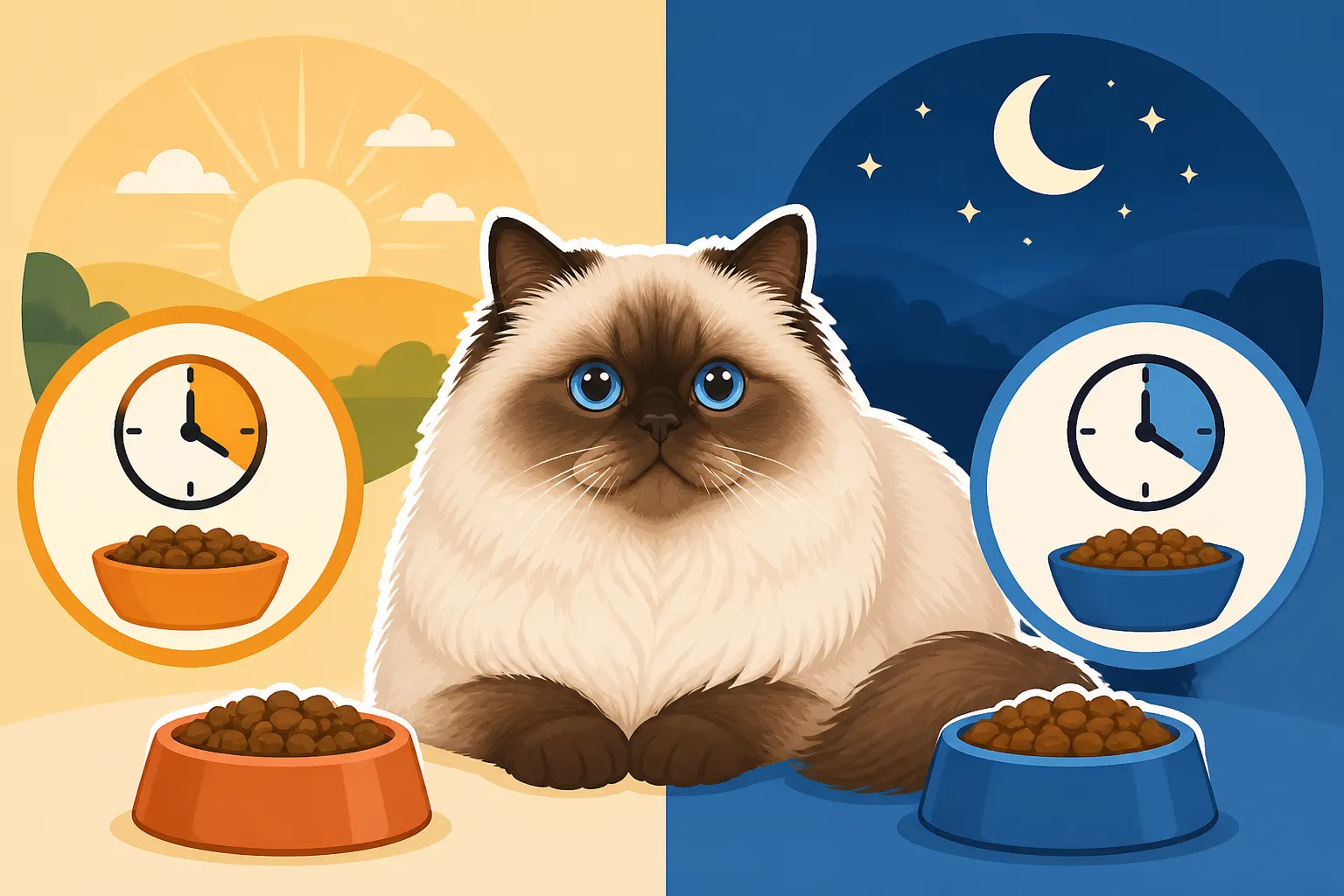
Don't just yank the food away overnight. That would be stressful for your cat and likely lead to refusal. Instead, start by implementing scheduled "feeding windows." For instance, put the food down for 30-45 minutes in the morning and again in the evening. If your cat doesn't eat it all, pick it up until the next feeding time. Over a week or two, gradually shorten these windows until your cat learns to eat their portion within a reasonable timeframe, typically 15-20 minutes.
During this transition, ensure fresh water is always available. You might even consider a wide, shallow water bowl or a fountain, as Whether a Himalayan's Flat Face Reaches a Fountain can sometimes be an issue with deeper dishes.
Choosing the Right Food and Bowl
The type of food you offer is as important as how you offer it. Given a Himalayan's crowded mouth and often flattened face, the size and shape of kibble can make a big difference. Many Himalayans find it easier to eat wet food or a larger, flatter kibble that they can scoop with their tongue rather than crunching small, round pieces. Brands available on sites like Chewy and Amazon often have specific formulas for "flat-faced breeds" that feature unique kibble shapes designed for easier pick-up. Consider wet food options too, as Why Wet Food Is Easier for a Himalayan to Take.
The bowl itself matters immensely for a brachycephalic breed. Deep, narrow bowls can be frustrating and uncomfortable, bending their whiskers and making it hard to reach the food without pushing it out. Opt for wide, shallow bowls, or even elevated dishes, which can significantly improve their eating experience. Which Bowl Shape a Flat Faced Himalayan Can Use is often a wide, ceramic saucer-like dish that prevents whisker fatigue and allows them to reach their meal without squishing their nose.
Sticking to a Consistent Schedule
Consistency is paramount. Try to feed your Himalayan at roughly the same times each day. Cats, especially Himalayans, thrive on predictability. If you have a busy or varying schedule, try to establish a morning and evening routine that works for most days. For example, feeding right after you wake up and then again shortly after you get home from work. Using an automatic feeder that dispenses food at set times can be a lifesaver for maintaining consistency, even if your personal schedule is a bit chaotic. Many reliable models can be found on Amazon.
Monitoring and Adjusting
Once you've established a fixed meal plan, continue to monitor your Himalayan's weight, coat condition, and overall demeanor. Their energy needs can change with age, activity level, or if they develop health issues. Regular weigh-ins (a digital kitchen scale can work wonders for smaller cats, or a trip to the vet for larger ones) will help you keep track. If your cat is gaining or losing weight unexpectedly, consult your vet for advice on adjusting portion sizes.
A consistent meal schedule is one of the kindest and most impactful things you can do for your Himalayan. It addresses their unique physical characteristics, supports their health, and strengthens the special bond you share.
| Aspect | Free-Feeding | Two Fixed Meals |
|---|---|---|
| Weight Management | High risk of obesity, difficult to control | Easy portion control, promotes healthy weight |
| Digestion | Irregular, potential for overeating | Regulated, efficient nutrient absorption |
| Health Monitoring | Difficult to detect appetite changes early | Immediate detection of changes, early intervention |
| Grooming Issues | Overweight cats struggle to self-groom, mats | Healthy weight enables better self-grooming |
| Behavioral Impact | Can lead to obsessive food focus, stress | Creates predictability, reduces anxiety |
| Bonding Opportunity | Minimal interaction around food | Dedicated interaction, reinforces bond |
| Dental Health | Overweight cats may have more dental issues due to altered mouth shape or other secondary factors. | Easier to manage dental health with regulated intake and potentially specific dental foods. |
| Flat Face Challenges | Exacerbates breathing difficulties if overweight | Helps maintain optimal weight, reducing respiratory strain |
Disclaimer
This article is for general informational purposes only and does not constitute professional advice. Laws, prices and regulations vary by location and change over time. Consult a qualified professional for guidance on your specific situation.