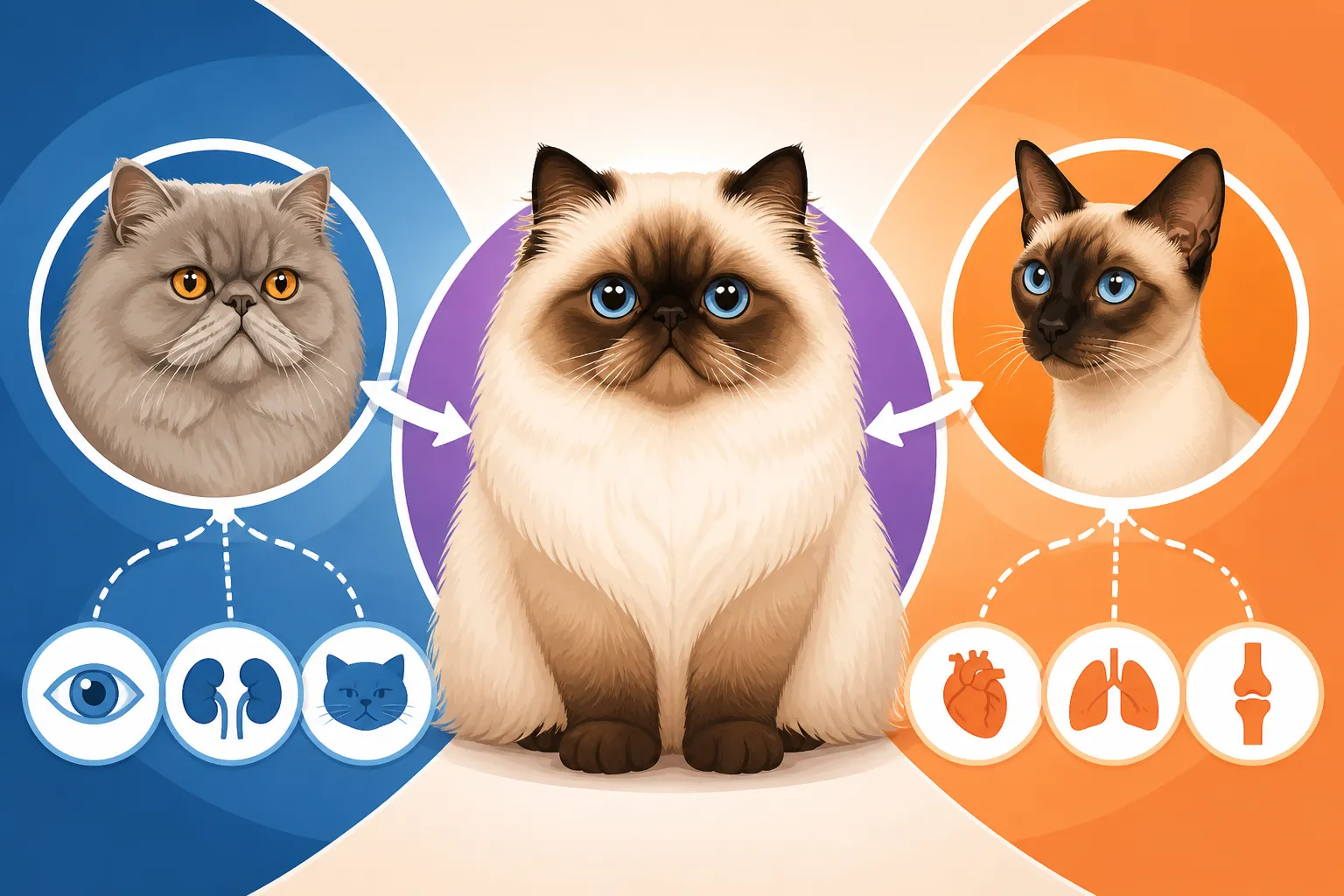
Which Diseases a Himalayan Inherits From Each Parent Breed
It's incredibly common for people to fall in love with the majestic looks and gentle demeanor of a Himalayan cat, often without fully realizing the intricate genetic tapestry that makes them so unique. What many new owners don't always consider is that this beauty comes with a distinct set of health predispositions, directly inherited from both their Persian and Siamese ancestors. This guide will walk you through the specific diseases your beloved Himalayan might inherit from each side of their family tree, helping you prepare for potential health challenges and provide the best care possible.
Understanding the Himalayan's Unique Genetic Blend
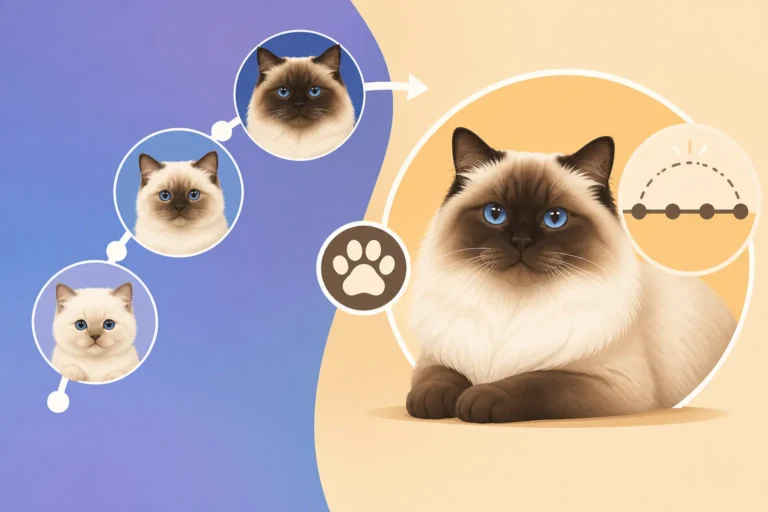
The Himalayan cat, with its stunning color points and luxuriant long coat, is a true designer breed, intentionally created by crossing Persians and Siamese cats. This deliberate blending of two distinct breeds means Himalayans inherit characteristics—both desirable and challenging—from both sides of their family tree. They get their plush fur and cobby body from the Persian, and their striking blue eyes and point coloration from the Siamese. But beyond the visible traits, this genetic heritage also dictates a predisposition to certain health conditions that are unfortunately common in either or both parent breeds. Understanding this dual inheritance is the first step in providing comprehensive care.
The Persian Influence: Longhair, Flat Face, and Potential Health Traits
The Persian contribution to the Himalayan breed is perhaps the most obvious when you look at their iconic features. That glorious long, flowing coat, the sturdy, cobby body, and especially that distinctive flat face are all hallmarks of the Persian. While undeniably charming, these very traits are often linked to specific health vulnerabilities. The brachycephalic (flat-faced) structure, for instance, is a primary concern. This shortened skull dramatically alters the anatomy of the face and head, affecting everything from breathing to dental health.
Beyond the physical appearance, Persians are known carriers of certain genetic diseases that have been passed down to Himalayans. These aren't always immediately apparent, but they can significantly impact a cat's quality of life and lifespan. When considering a Himalayan, it's crucial to remember that you're essentially getting a long-haired, color-pointed Persian in terms of many core health predispositions. Breeders who understand and test for these Persian-derived conditions are doing a great service to the breed. It’s also worth noting that the classic 'doll face' Persian influence, with a slightly more pronounced nose, tends to mitigate some of these issues compared to the more extreme 'peke face' varieties, so understanding What a Doll Face Himalayan's Profile Measures can be quite insightful.
The Siamese Contribution: Point Color, Blue Eyes, and Underlying Genetics
While the Persian gives the Himalayan its luxurious build and distinct facial structure, it's the Siamese that imbues it with its captivating point coloration and piercing blue eyes. This is thanks to the temperature-sensitive albino gene, which allows pigment to develop only in cooler extremities like the ears, paws, tail, and face. But the Siamese influence isn't just skin deep, or rather, fur deep. Historically, Siamese cats, like many purebreds, also have their own set of genetic predispositions, though these tend to be less severe than those from the Persian side when it comes to the Himalayan.
The Siamese side did contribute more than just point coloration and bright blue eyes; it also brought a particular vocal quality and a more active temperament than the stoic Persian. When we talk about What the Siamese Side Gave a Himalayan Besides Points, we're also touching on aspects like their intelligence and sometimes higher energy levels, which can influence their overall well-being. While specific debilitating diseases from the Siamese side are less frequently cited for Himalayans compared to Persian-linked issues, the genetic mixing still creates a complex health profile that needs careful consideration from breeders and owners alike.
Kidney Concerns: The Persian Legacy in Himalayans
One of the most significant health concerns for Himalayan owners is kidney disease, predominantly due to their Persian heritage. Polycystic Kidney Disease, or PKD, is a condition that has plagued Persian lines for decades, and unfortunately, it passed directly to the Himalayan breed. This is a progressive and often silent disease that can lead to kidney failure if not properly managed. It's a sobering reality, but one that responsible breeders and informed owners can tackle head-on.
Polycystic Kidney Disease PKD: A Deep Dive into the Persian Connection
Polycystic Kidney Disease (PKD) is a truly devastating inherited condition where cysts form in the kidneys, gradually growing in size and number over time, ultimately destroying normal kidney tissue. This disease is an autosomal dominant trait, which means a cat only needs to inherit one copy of the faulty gene from either parent to develop the disease. This is why PKD1 Came Down the Persian Side of a Himalayan and became so prevalent. The cysts are present from birth, starting microscopic and slowly enlarging, sometimes not causing clinical signs until the cat is middle-aged or older.
For Himalayan cats, the Persian lineage is the direct source of the PKD gene. It's crucial for any potential Himalayan owner to understand the importance of genetic testing for PKD. There's a simple DNA test available, typically a cheek swab, that can definitively determine if a cat is clear, a carrier, or affected. A breeder should always be able to provide clear documentation that both parents of a kitten are PKD negative. This proactive testing has dramatically reduced the incidence of PKD in responsible breeding lines, but the risk still exists if breeders are not diligent. If you're looking at a kitten, asking for proof that How a Himalayan Is Swabbed for the Persian Kidney Gene and tested is absolutely essential.
Recognizing the Signs and Managing PKD in Himalayans
The insidious nature of PKD is that cats often show no symptoms for many years, even as the cysts are growing. When symptoms do appear, they are typically those associated with general kidney failure: increased thirst and urination, weight loss, poor appetite, lethargy, and sometimes vomiting. By this point, a significant amount of kidney function may already be compromised. Regular veterinary check-ups are vital, especially for Himalayans, to monitor kidney health through blood and urine tests, which can detect subtle changes.
While there is no cure for PKD, management focuses on slowing the progression of the disease and supporting kidney function. This often involves a special renal diet, which is typically lower in protein, phosphorus, and sodium, and may include supplements. Ensuring constant access to fresh water is also critical, and some cats may eventually require subcutaneous fluids at home. Regular monitoring, usually every six months or annually, through blood work and possibly ultrasound scans, helps your vet track the disease progression. While it's a difficult diagnosis, with careful management and a dedicated owner, many Himalayans with PKD can still enjoy a good quality of life for an extended period. This is where comprehensive pet insurance like Healthy Paws can truly make a difference, covering ongoing specialist care and medications that can be financially draining without it.
Eye Health: Blending Persian Sensitivity with Siamese Blue Eyes
The Himalayan's stunning blue eyes are undoubtedly one of their most enchanting features, a direct gift from their Siamese lineage. However, their ocular health is also deeply influenced by their Persian ancestry, leading to a combination of potential vulnerabilities. The extreme facial structure, specifically, can create challenges unique to the breed, ranging from genetic predispositions to issues directly caused by their facial anatomy.
Progressive Retinal Atrophy PRA: What the Persian Side Can Bring
Progressive Retinal Atrophy (PRA) is another inherited eye condition that can be traced back to the Persian side of the Himalayan family tree. This is a degenerative disease of the retina, the light-sensitive tissue at the back of the eye, which eventually leads to blindness. Unlike some conditions, PRA is often gradual, allowing cats to adapt to their diminishing vision over time. The condition typically affects both eyes and can manifest at various ages, though many cats show signs by around three to five years old, and can be fully blind by five, as explored in How Retinal Atrophy Blinds a Himalayan by Five.
There are different forms of PRA, and genetic testing is available for some specific mutations. Responsible breeders should screen their breeding cats for PRA to prevent passing the gene to future generations. While a blind cat can still lead a full and happy life, especially in a consistent indoor environment, knowing about this possibility helps owners prepare and adapt their homes to support their cat's changing needs. An annual eye exam with a veterinary ophthalmologist, particularly for breeding cats, is highly recommended to detect early signs of retinal degeneration.
Entropion and Tear Staining: Flat Face Challenges from Persian Genes
The flatter face of the Himalayan, inherited from the Persian, creates a perfect storm for several eye-related issues beyond PRA. One common problem is entropion, a condition where the eyelid rolls inward, causing the eyelashes and fur to rub against the cornea. This constant irritation is incredibly uncomfortable, can lead to corneal ulcers, infections, and even vision impairment if left untreated. Symptoms include excessive tearing, squinting, redness, and pawing at the eyes. Surgical correction is often necessary and highly effective.
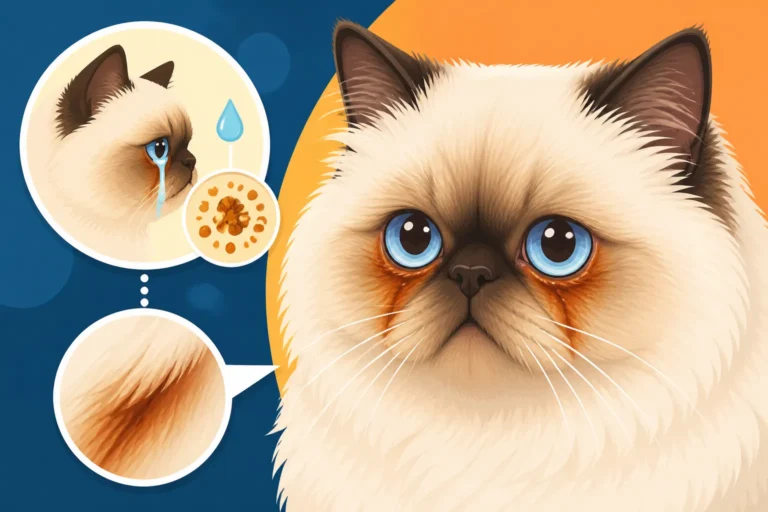
Another visually prominent issue is tear staining. The combination of prominent, round eyes and shortened tear ducts (or ducts that are simply angled incorrectly due to the flat face) often means tears overflow onto the fur around the eyes and nose. This moisture, especially on a pale coat, can create a breeding ground for yeast and bacteria, leading to unsightly reddish-brown stains, skin irritation, and even infection in the deep folds. While largely cosmetic, chronic tear staining can be a sign of underlying issues like blocked tear ducts or mild irritation. Regular cleaning with appropriate wipes and solutions, alongside veterinary checks, is essential for managing this daily reality for many Himalayans. These daily routines are critical, as discussed in Why a Himalayan's Tears Run Onto Its Ruff.
Respiratory and Dental Issues: The Brachycephalic Persian Challenge
The most visually striking feature of many Himalayans is their flattened face, a direct inheritance from their Persian ancestors. While endearing, this brachycephalic (short-headed) conformation is the root cause of a number of significant health problems, particularly affecting their breathing and dental health. Owners need to be acutely aware of these potential challenges to ensure their cat's comfort and well-being.
Brachycephalic Airway Syndrome: Breathing Difficulties from a Flatter Face
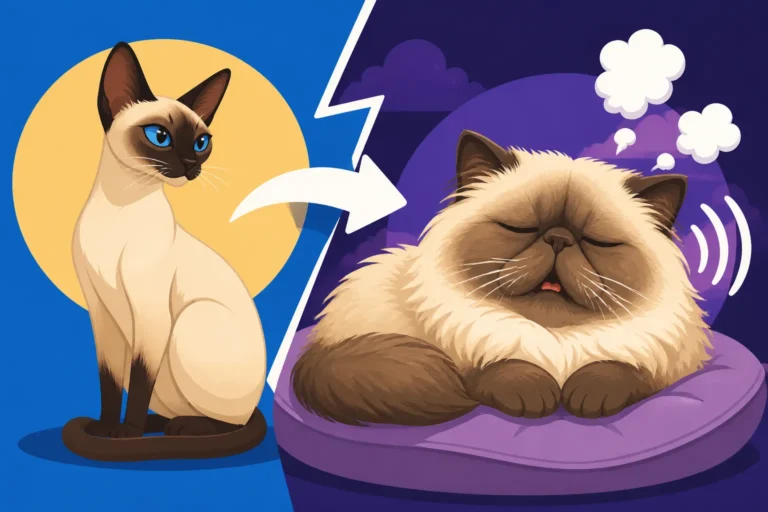
The shortened skull and flattened muzzle of a brachycephalic cat lead to a collection of anatomical abnormalities collectively known as Brachycephalic Airway Syndrome (BAS). This syndrome includes narrowed nostrils (stenotic nares), an elongated soft palate that obstructs the airway, and sometimes a hypoplastic (underdeveloped) trachea. These issues make it difficult for Himalayans to breathe normally, often resulting in noisy breathing, snoring (especially loud compared to their Siamese ancestors, as noted in Why a Himalayan Snores Louder Than Its Siamese Ancestors), snorting, and increased panting, especially during exercise or in warm weather.
These breathing difficulties significantly impact a Himalayan's quality of life. They are more prone to overheating because they struggle to cool themselves efficiently through panting. Severe cases can lead to oxygen deprivation, collapsing trachea, and even sudden death during stress or overexertion. Vets often grade a Himalayan's nostrils to assess the severity of breathing restriction, as discussed in How a Vet Grades a Himalayan's Nostrils. In some instances, surgical intervention to widen the nostrils or shorten the soft palate can dramatically improve a cat's ability to breathe. It’s a serious concern that owners must monitor, recognizing that even seemingly minor snoring can indicate an underlying struggle.
Dental Crowding and Jaw Structure: Consequences of the Shortened Muzzle
The consequences of the Himalayan's flattened face aren't limited to breathing; they also extend into their oral health. With a significantly shortened jaw, there simply isn't enough space for all 30 teeth to fit properly. This leads to dental crowding, misalignment, and rotation of teeth, which are unfortunately very common in the breed. This creates numerous nooks and crannies where food particles and bacteria can accumulate, making Himalayans particularly susceptible to periodontal disease, tooth decay, and gingivitis.
These dental issues often begin at a younger age compared to other breeds, meaning Why a Himalayan Needs Dentals Earlier Than a Siamese. Owners might notice bad breath, difficulty eating, dropping food, or pawing at the mouth. Regular veterinary dental check-ups, often requiring anesthetic to thoroughly clean and inspect the crowded teeth, are critical throughout a Himalayan's life. Some cats may even require extractions of severely misaligned or unhealthy teeth to prevent pain and further complications. Proactive oral hygiene, including daily brushing if the cat tolerates it, is vital to mitigate these issues, though the anatomical challenges make it a constant battle.
Other Hereditary Conditions from Both Sides
While PKD, PRA, and brachycephalic issues are often the most highlighted concerns for Himalayans, their mixed genetic background means they can also be predisposed to other conditions found in either the Persian or Siamese lines. Responsible ownership means being aware of these broader possibilities, even if they are less common or less directly linked to their iconic features.
Hypertrophic Cardiomyopathy HCM: A Concern Across Many Breeds
Hypertrophic Cardiomyopathy (HCM) is the most common form of heart disease in cats, characterized by a thickening of the heart muscle, particularly the walls of the left ventricle. This thickening makes it harder for the heart to pump blood effectively. HCM is seen across many cat breeds, including both Persians and Siamese, making it a potential concern for Himalayans as well. While not as directly tied to their specific breed features as, say, brachycephalic syndrome, its prevalence in ancestral lines means it's still something to be aware of.
Symptoms can include lethargy, loss of appetite, difficulty breathing, and sometimes sudden collapse or even death due to blood clots or heart failure. Unfortunately, many cats show no outward signs until the disease is quite advanced. Diagnosis typically involves an echocardiogram (an ultrasound of the heart) performed by a veterinary cardiologist. While there's no cure, medications can help manage symptoms, improve heart function, and reduce the risk of complications. Regular wellness exams and listening for heart murmurs can be early indicators, prompting further investigation. Given the potential cost of managing chronic conditions like HCM, having a pet insurance plan from a provider like Healthy Paws can provide immense peace of mind.
Hip Dysplasia: A Lesser-Known Risk in Cobby Builds
Hip dysplasia is a condition where the hip joint doesn't form correctly, leading to instability and degenerative joint disease (arthritis). While more commonly associated with larger dog breeds, hip dysplasia can occur in cats, particularly those with a cobby, heavy-boned body type, which Himalayans inherit from their Persian side. While not as prevalent as in some canine breeds, it's a condition that can cause significant pain and mobility issues.
Cats with hip dysplasia might show signs of lameness, reluctance to jump or play, stiffness, or pain when handled. However, cats are masters at hiding pain, so subtle changes in activity or gait might be the only clue. Diagnosis usually involves physical examination and X-rays. Treatment often includes pain management, anti-inflammatory medications, weight management (to reduce stress on the joints), and sometimes even surgery in severe cases. Maintaining a healthy weight for your Himalayan, combined with appropriate nutrition, can help manage or prevent the progression of joint issues.
Here's a quick overview of key inherited conditions:
| Condition | Primary Parent Breed Influence | Main Symptoms | Diagnostic Tests | Management / Treatment |
|---|---|---|---|---|
| Polycystic Kidney Disease (PKD) | Persian | Increased thirst/urination, weight loss, lethargy (late stage) | DNA test, Ultrasound | Renal diet, fluid therapy, medications |
| Progressive Retinal Atrophy (PRA) | Persian | Gradual vision loss, dilated pupils, night blindness (progressing to full blindness) | Ophthalmic exam, ERG, DNA test | Environmental adaptation (no cure) |
| Brachycephalic Airway Syndrome | Persian | Noisy breathing, snoring, panting, exercise intolerance | Physical exam, endoscopy, X-rays | Weight management, surgery (stenotic nares, soft palate), environmental control |
| Entropion | Persian | Squinting, excessive tearing, redness, corneal irritation | Ophthalmic exam | Surgical correction, eye drops |
| Dental Crowding | Persian | Bad breath, difficulty eating, gingivitis, tooth loss | Dental exam (under sedation), X-rays | Dental cleanings, extractions, daily brushing |
| Hypertrophic Cardiomyopathy (HCM) | Both (Genetic predisposition) | Lethargy, difficulty breathing, coughing, sudden collapse (can be asymptomatic) | Echocardiogram, X-rays, ECG | Medications to manage heart function, reduce clot risk |
| Hip Dysplasia | Persian | Lameness, reluctance to jump, stiffness, pain in hips (can be subtle) | Physical exam, X-rays | Weight management, pain relief, physical therapy, surgery (rarely) |
Proactive Health Management for Your Himalayan
Owning a Himalayan cat is a truly rewarding experience, but it also comes with a responsibility to understand and proactively manage their specific health predispositions. Being informed and working closely with your veterinarian are the cornerstones of ensuring your furry companion lives a long, comfortable, and happy life. This proactive approach can make all the difference, potentially extending The Nine to Fifteen Years a Himalayan Usually Gets.
The Importance of Genetic Testing and Ethical Breeding
The single most impactful action a potential Himalayan owner can take is to choose a kitten from a reputable breeder who prioritizes health and performs comprehensive genetic testing. For Himalayans, this specifically means testing for PKD and, ideally, PRA. A reputable breeder will openly share the genetic test results of the parent cats, ensuring you're bringing home a kitten free from these inherited diseases. They'll show you certifications and be transparent about their breeding practices. If a breeder is evasive or claims testing isn't necessary, it's a red flag. Always insist on seeing proof that both parents are clear.
Ethical breeding goes beyond just genetic testing. It also involves carefully selecting breeding pairs to improve health, temperament, and conformation, minimizing the incidence of conditions like severe brachycephaly. Such breeders will often have a waiting list, interview potential owners, and provide comprehensive health guarantees. Supporting these breeders is vital for the long-term health and well-being of the Himalayan breed, as it incentivizes responsible practices and slowly eliminates detrimental genes from the gene pool.
Lifelong Veterinary Care and Early Intervention
Even with the best genetic background, lifelong, consistent veterinary care is non-negotiable for a Himalayan. Regular wellness check-ups, typically annually for adult cats and more frequently for kittens and seniors, allow your vet to monitor your cat's overall health, catch potential issues early, and provide preventive care. For Himalayans, these check-ups should pay particular attention to their respiratory system, eyes, mouth, and kidneys, with specific blood values often tracked as they age, as detailed in Which Blood Values a Himalayan's Kidney History Demands.
Early intervention is key for many of the conditions Himalayans are prone to. For instance, addressing dental crowding with regular cleanings or managing tear staining with daily face wipes can prevent more serious problems down the line. If you notice any changes in your cat's breathing, eating habits, eye discharge, or activity levels, don't hesitate to contact your vet. It's easy for a cat, especially one as stoic as a Himalayan, to hide illness behind an expressionless face, as outlined in Why a Himalayan Hides Illness Behind an Expressionless Face, making your attentive observation even more crucial. Investing in pet insurance, such as a plan from Healthy Paws, can be incredibly beneficial here, ensuring you can afford the best possible care, including specialized diagnostics and treatments, without financial stress. Being proactive and vigilant is the best way to ensure your beautiful Himalayan enjoys a healthy and fulfilling life by your side.
Disclaimer
Please note that this guide provides general information and should not replace professional veterinary advice. Every cat is an individual, and health concerns can vary. Always consult with a qualified veterinarian for any health issues or before making any decisions regarding your cat's care.