When a Himalayan Kitten’s Face Finishes Developing
Bringing home a fluffy, tiny Himalayan kitten is an absolute joy, but it's also a time filled with questions, especially when it comes to their distinctive little faces. You might find yourself gazing at your new companion, wondering when those adorable, somewhat undefined features will mature into the classic, regal Himalayan look you adore. It can be a little nerve-wracking to watch them grow, hoping their unique facial structure develops beautifully and without issue. This comprehensive guide will walk you through the fascinating journey of a Himalayan kitten's facial development, highlighting key milestones and what to expect as they transition from a tiny fluffball to a magnificent adult.
The Subtle Art of Himalayan Facial Development
When you first see a newborn Himalayan, their face is hardly what you might expect. They’re born looking quite similar to any other kitten, small and rather indistinct, with only the barest hints of the unique features that will eventually define their breed. It’s a process that unfolds over many months, requiring patience and a keen eye to observe the subtle transformations. Understanding this journey can help new owners appreciate each stage of their kitten’s growth.
From Newborn Nubs to Distinct Features
Right after birth, Himalayan kittens have faces that are soft, round, and somewhat unformed. Their noses are tiny nubs, their eyes are still closed, and their muzzles are usually quite prominent, giving them a more "conventional" cat-like appearance. There's no immediate indication of the "flatness" or "roundness" that will come to define the breed's profile. This initial phase is all about rapid growth and development of basic senses, with facial structure taking a backseat for a few precious weeks. You might be surprised at how generic they look, which can sometimes cause a little anxiety if you're eagerly anticipating those hallmark Himalayan traits.
As the weeks progress, you’ll start to notice subtle shifts. Their little heads begin to take on a slightly broader appearance, and the initial roundness of their faces becomes a bit more pronounced. While their eyes are still closed, the underlying bone structure is slowly, almost imperceptibly, forming. This is a period of foundational development, where the soft cartilage and tiny bones are laying the groundwork for the more dramatic changes to come. It’s a wonderful time to simply enjoy their kittenhood, knowing that the distinctive face you're waiting for is already in the making beneath all that baby fluff.
The Influence of Genetics: Doll Face vs. Peke Face
Himalayan cats are known for two primary facial profiles: the "doll face" and the "peke face." These terms describe the degree of flatness or recession of the nose and muzzle. A "doll face" Himalayan typically has a more traditional, slightly longer muzzle with a visible nose break, while a "peke face" or "extreme" Himalayan has a significantly flatter face, with the nose leather sitting almost flush with the eyes. These profiles are largely determined by genetics, and while they might not be obvious at birth, the genetic blueprint is already hard at work shaping your kitten's future look. Breeders specifically aim for one or the other, or sometimes a moderate type, and this choice profoundly impacts how the kitten's face develops.
The way these genetic traits manifest is a gradual process. You might hear breeders talk about the "set" of the nose or the "doming" of the skull even in very young kittens, but to the untrained eye, these are extremely subtle cues. For those interested in understanding the specifics, learning What a Doll Face Himalayan's Profile Measures compared to What a Peke Face Himalayan's Profile Measures can offer a deeper insight into the nuances. While you won't see a fully formed peke face on a 4-week-old kitten, the underlying bone structure is already aligning itself according to its inherited destiny. It's a reminder that genetics plays the biggest role in shaping their distinctive beauty.
Key Milestones in a Himalayan Kitten's Facial Growth
Observing a Himalayan kitten's face as it develops is a journey of small, daily changes that coalesce into significant transformations over time. Each stage brings new features to the forefront, refining what was once a soft, generalized kitten face into the specific profile of a Himalayan. It's a process that truly highlights the unique genetic artistry of the breed.
The First Few Weeks: Opening Eyes and Emerging Noses
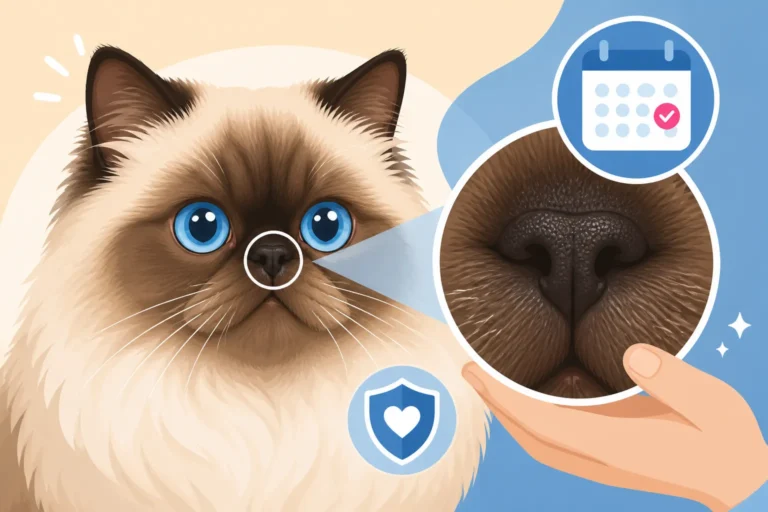
The first few weeks are a time of foundational change. Around 7 to 10 days old, your kitten's eyes will begin to open, revealing those stunning, piercing blue eyes that are a hallmark of the Himalayan breed. While they might appear cloudy at first, they will soon clear, and the depth of their blue will start to become apparent. At this stage, the nose leather is still quite soft and often a light pink, gradually darkening to match their point color as they mature. The general shape of the head remains quite rounded, reflecting their youth, but the underlying skull is steadily growing and taking on more characteristic breadth.
During this period, the very first hints of their eventual facial structure become subtly visible. The nose might start to appear a little shorter or more recessed than a typical domestic shorthair kitten's, especially if they are genetically predisposed to a flatter face. This is a critical period for bonding and gentle handling, allowing them to get used to human touch around their delicate faces. While still largely baby-like, these early weeks are where the initial blueprint of their adult appearance begins to surface, often delighting owners who are eager to see their future champion's face emerge.
Three to Six Months: The "Awkward Teen" Phase
As your Himalayan kitten moves into the three to six-month age range, their facial development often enters what many owners affectionately call the "awkward teen" phase. During this time, they experience rapid growth spurts, not just in body size but also in their skull and facial bones. It's common for their features to look a little disproportionate, with perhaps a nose that seems too small for their growing head, or eyes that appear slightly too wide-set. This is entirely normal, as different parts of the skull grow at varying rates before they finally harmonize. You might notice the muzzle area becoming more defined, or the "stop" – the indentation between the eyes where the nose begins – becoming more apparent.
Their point colors, which are essential to the Himalayan's aesthetic, also become much clearer and richer during these months. The mask on their face will deepen significantly, giving more contrast to their features. This phase is crucial for the development of their bite and jaw alignment, which can sometimes be crowded in flatter-faced breeds. It’s important to monitor their breathing during play, as some kittens may begin to show early signs of potential airway issues common in brachycephalic breeds. While their face might not yet be perfectly balanced, it's a period of intense development that sets the stage for their mature appearance, and When a Himalayan Kitten's Persian Profile Sets is often a topic of discussion among breeders during this stage.
Six to Twelve Months: Nearing Adulthood
By the time your Himalayan kitten reaches six to twelve months old, their facial structure will have made significant strides towards its adult form. The rapid growth of the earlier months starts to slow down, allowing the features to catch up and integrate more harmoniously. You'll notice that the overall shape of their head becomes more rounded and broad, with a much more defined and settled appearance. The nose leather will have taken on its final, distinct color, and the depth of their eye color will be truly stunning. This is when many owners feel their kitten is truly beginning to look like the majestic Himalayan they envisioned.
The "filling out" process begins in earnest during this period. The bones of the skull are close to their full size, and the muscles and soft tissues around the face start to develop, giving the face a more substantial and mature look. The darkening of their points is also quite dramatic now; How Many Weeks Before a Himalayan Kitten's Points Show often becomes a distant memory as their rich coloration fully emerges. While there might still be minor adjustments, the major architectural work on their face is largely complete by their first birthday. It’s a wonderful time to capture photos, as their unique beauty is really shining through.
When the Himalayan Face Truly Reaches Its Full Potential
Even after a year, a Himalayan's face isn't entirely "finished." Like a fine wine, it continues to mature, subtle refinements adding depth and character over the subsequent months. This prolonged development is part of what makes the breed so captivating, as you get to witness their beauty evolve over an extended period.
The Twelve to Eighteen Month Window: Full Maturity
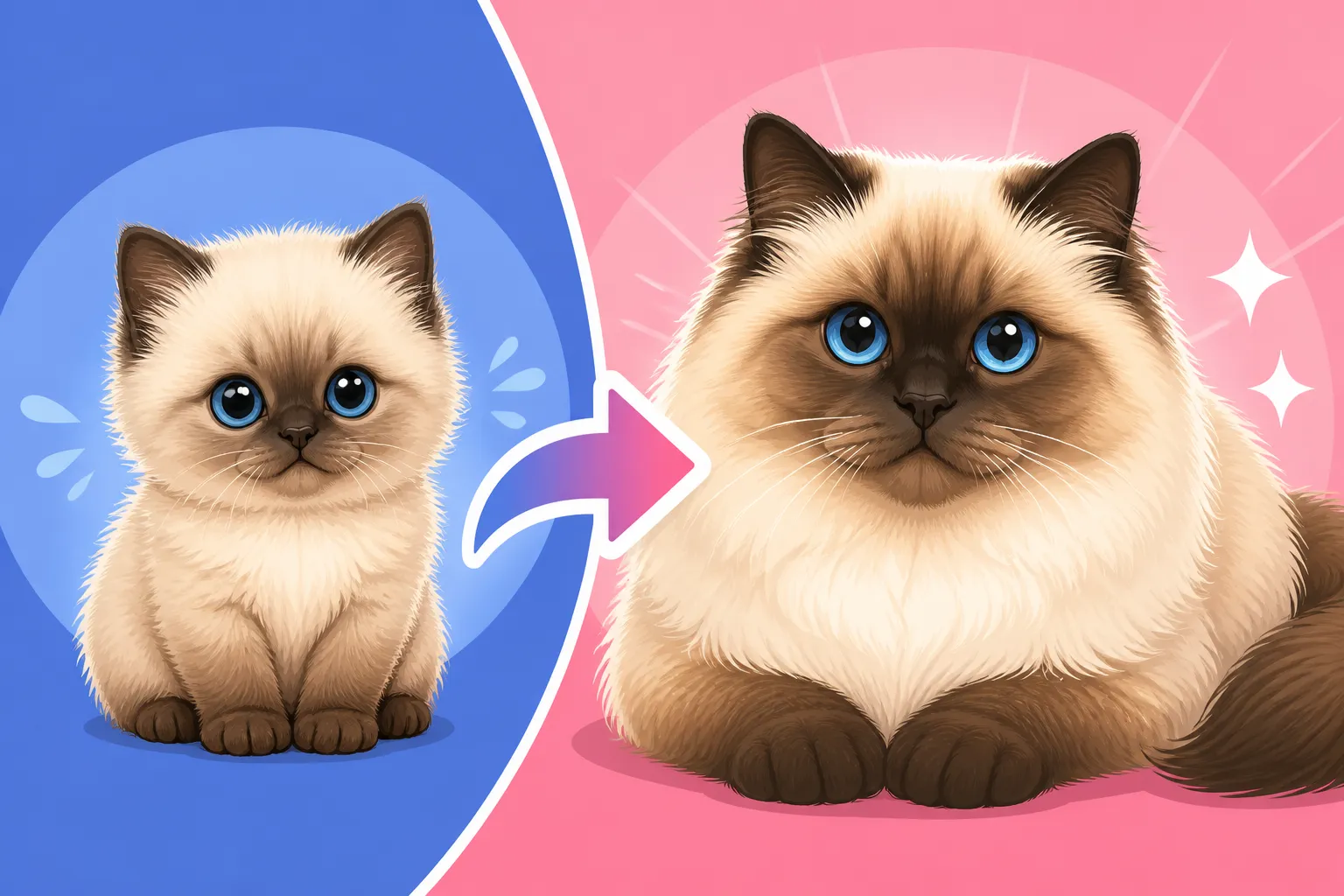
While many cats are considered adults by one year of age, a Himalayan's facial development, particularly the full "filling out" and refinement of its features, often continues until they are between 12 and 18 months old. Some even suggest that the face can continue to develop subtly up to two years. During this period, the skull bones complete their final calcification, and the musculature around the cheeks and jaw fully develops. This contributes to the characteristic broad, rounded head and full-cheeked appearance that is so prized in the breed. The face becomes more settled, gaining a luxurious, almost plush quality that enhances their noble expression.
It's during this window that the subtle nuances of their genetic profile, whether What a Doll Face Himalayan's Profile Measures or What a Peke Face Himalayan's Profile Measures, truly solidify. The balance between their eyes, nose, and muzzle achieves its final harmony. Owners often describe seeing their cats "grow into their faces," as all the pieces of the puzzle finally click into place. This is also when their coat reaches its full density and length, framing their magnificent face with a glorious ruff. Patience during this extended development phase is key, as the final result is always worth the wait.
Factors Influencing Final Facial Appearance
While genetics lay the foundational blueprint for a Himalayan's face, several other factors can influence how well and beautifully that face ultimately develops. Nutrition, for instance, plays a critical role. A high-quality diet rich in essential nutrients, vitamins, and minerals supports healthy bone growth, muscle development, and coat quality, all of which contribute to the overall facial aesthetics. Kittens fed a sub-optimal diet may not achieve their full genetic potential in terms of size or facial structure.
Environmental factors, such as temperature, can also subtly impact the appearance of a Himalayan's face, primarily through their unique point coloration. Since Himalayans are a pointed breed, colder temperatures can lead to darker points, including the facial mask. This can sometimes make the features appear more pronounced. Additionally, general health and well-being are paramount. Regular veterinary check-ups and prompt treatment for any health issues are vital. Consider pet insurance from providers like Healthy Paws early on; it can be incredibly helpful for ensuring your kitten receives the best possible care throughout these crucial developmental stages, protecting both their health and their developing beauty. After all, How Many Years a Himalayan's Points Take to Finish is tied directly to their overall health.
What to Expect and When to Be Concerned
Bringing a Himalayan into your home means embracing their unique characteristics, and understanding the normal range of development is crucial. While their facial development is largely predictable, there are moments when a keen owner might need to seek veterinary advice.
Normal Variations vs. Potential Issues
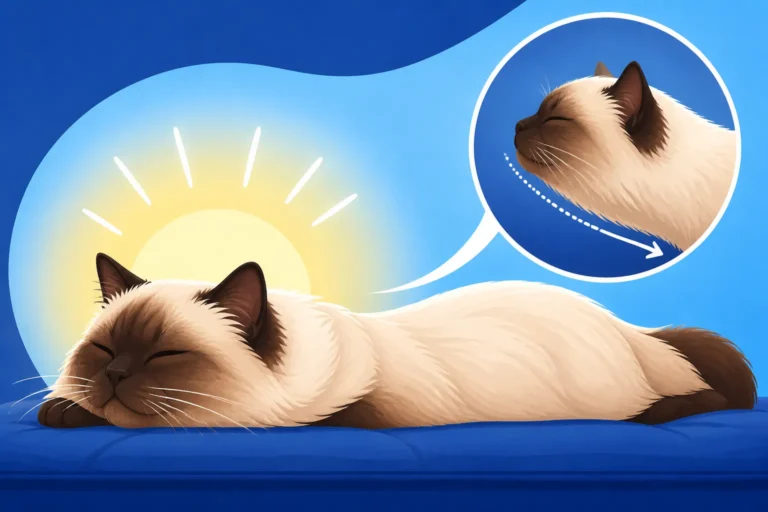
As your Himalayan's face develops, you might notice slight asymmetries or periods where one feature seems more pronounced than another. For instance, sometimes one eye might appear slightly larger, or the nose bridge might look a bit off-center. In most cases, these minor variations are temporary and resolve as the kitten grows and their skull fully forms. It's part of the natural, dynamic process of growth. However, there are specific signs that warrant a closer look by a veterinarian. If your kitten shows persistent difficulty breathing, characterized by loud snoring (beyond the normal Himalayan purr), open-mouth breathing when not exercising, or gasping, it could indicate an airway issue. What a Well Built Himalayan's Breathing Sounds Like is a good benchmark.
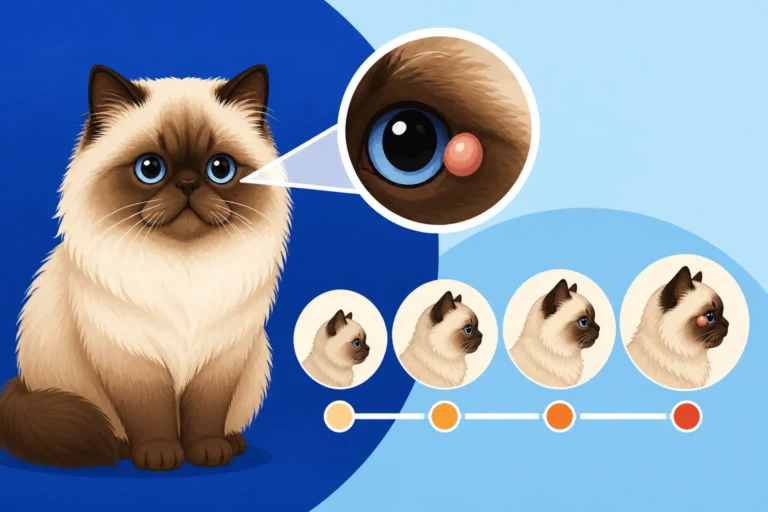
Excessive tearing, constant dampness around the eyes, or signs of irritation like redness or swelling are also red flags. While some tear staining is common in flat-faced breeds, particularly those with a lot of white fur around their eyes, it shouldn't be accompanied by pain or severe discomfort. You should also pay attention to how well they are eating and if they drop food frequently, which could signal jaw or dental issues. If you have any serious concerns, don't hesitate to reach out to your vet. Having pet insurance from a reliable provider like Healthy Paws can give you peace of mind, knowing that you're covered if these issues require veterinary intervention. A good vet will be able to tell you How to Judge a Himalayan Kitten's Nostrils at Twelve Weeks and assess their overall facial health.
Living with a Developing Face: Practical Care Tips
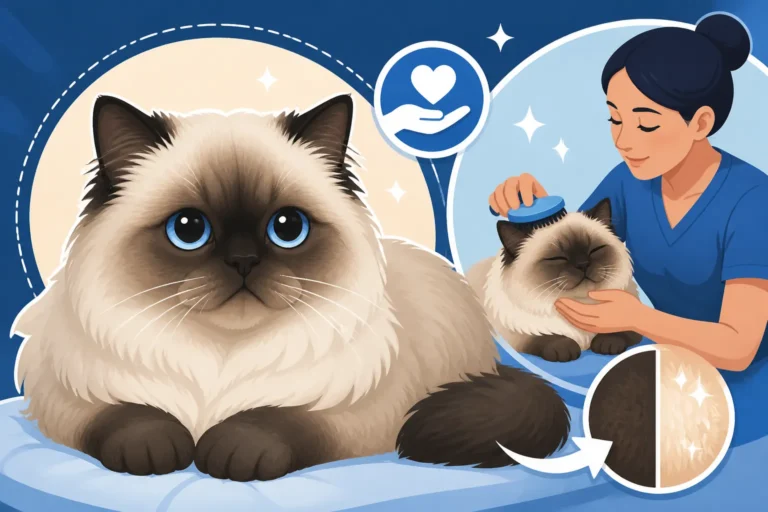
Caring for a developing Himalayan face involves a bit more attention than an average cat, primarily due to their unique brachycephalic features and luxurious coat. Daily face cleaning is paramount. Their flattened faces and tear ducts can lead to tear staining and dampness in their facial folds, which can become a breeding ground for bacteria if not kept clean and dry. Gently wiping their face and around their eyes with a damp, soft cloth or specific cat eye wipes morning and evening is crucial. Pay particular attention to the folds around their nose. Persistent Why a Himalayan's Eyes Water All Day should always be addressed.
Choosing appropriate feeding bowls is also vital. Deep bowls can be challenging for a flat-faced cat to eat from comfortably, potentially leading to food accumulating on their chin and ruff. Wide, shallow bowls, or even elevated dishes, are often much better. This prevents them from bending their whiskers back uncomfortably and allows them to access food without strain. Which Bowl Shape a Flat Faced Himalayan Can Use is a factor many new owners overlook. Regular vet check-ups are also essential, not just for vaccinations, but for monitoring their facial development, ensuring their airway is healthy, and checking for any dental crowding that might require intervention down the line. Remember, Why a Himalayan Kitten's First Exam Includes Its Palate is part of a thorough check, as breeders and vets aim to ensure proper development. Investing in good habits early, and considering pet insurance like Healthy Paws to cover future vet costs, will help ensure your Himalayan grows into a healthy, happy adult. And if you notice them snoring significantly louder than expected, which can happen with their unique facial structure, it's worth a chat with your vet to check for any underlying issues, especially given Why a Himalayan Snores Louder Than Its Siamese Ancestors.
Himalayan Kitten Facial Development Milestones
| Age Range | Key Facial Developments | What to Look For | Potential Concerns (Vet Check) |
|---|---|---|---|
| Newborn to 2 Weeks | Eyes open, nose leather soft and pink, round head. | General kitten roundness, no distinct features. | Severe asymmetry, obvious deformities. |
| 3 to 6 Weeks | Subtle hints of nose recession, eye color deepens slightly. | Emerging "stop" (nose break), clearer blue eyes. | Eyes not opening, persistent cloudiness, discharge. |
| 2 to 3 Months | Head becomes broader, face starts to "round out," points darken. | More defined muzzle, visible developing facial mask. | Breathing difficulties during rest or mild play, excessive tearing. |
| 3 to 6 Months | Rapid skull growth, "awkward" proportions, points significantly darker. | Nose and jaw growth, face often looks less harmonious temporarily. | Chronic sneezing, loud congested breathing, difficulty eating. |
| 6 to 12 Months | Features balance out, head more rounded, mask nearly complete. | Face takes on adult proportions, coat framing the face. | Continued breathing issues, persistent eye irritation or discharge. |
| 12 to 18+ Months | Final "filling out," subtle refinement of features, full density. | Mature, plush facial expression, full ruff development. | Any new onset of severe breathing issues, significant tear staining with irritation. |
Disclaimer
The information provided in this article is for general informational purposes only and does not constitute veterinary advice. Always consult with a qualified veterinarian for any health concerns or before making any decisions related to your pet's health and treatment.