Feeding a Himalayan That Cannot Reach Into a Deep Bowl
It's a sight many Himalayan cat parents know all too well: you put down a fresh bowl of delicious food, only to watch your beloved feline struggle. They might push kibble to the side, leave smears of wet food on their chin, or just look utterly frustrated as they try to get a comfortable bite. This isn't your cat being finicky; it's a very real challenge stemming from their unique facial structure. This comprehensive guide will delve into why traditional deep bowls just don't work for Himalayans and equip you with practical solutions to make mealtime a joy again for your flat-faced friend.
Understanding the Himalayan's Unique Face and Jaw
The Himalayan cat, with its stunning long coat and striking blue eyes, inherited a distinctive facial structure from its Persian lineage. This isn't just a charming aesthetic; it's a brachycephalic (literally "short-headed") characteristic that profoundly impacts how they interact with the world, especially when it comes to eating. Understanding this anatomy is the first step to solving mealtime woes.
The Distinct Brachycephalic Features
Himalayans, particularly those bred to the more "Peke-face" standard, possess a dramatically shortened skull, a pushed-in nose, and a broad, rounded head. Think of how a Persian looks, and you're halfway there. While incredibly endearing, this facial configuration means their airways are compressed, and their oral cavity is different from a typical cat. Their jaws are often shorter and wider, and their teeth are still the same number as any other cat, but they're squeezed into a much smaller space. This crowding can lead to dental issues, but it also directly affects their ability to grasp and chew food effectively. The prominent nose fold, a charming wrinkle on their face, can also become an unexpected barrier, getting in the way as they try to reach into a bowl. What a Peke Face Himalayan's Profile Measures goes into more detail about how these facial characteristics are measured.
How This Anatomy Impacts Eating Mechanics
Imagine trying to eat your dinner without being able to fully open your mouth or having your nose constantly in the way. That's a bit like what a Himalayan experiences. Cats are natural lappers and grazers; they use their tongues to scoop liquids and small pieces of food, or their front teeth to pick up larger morsels. For a Himalayan, this natural motion is significantly altered. Their flattened face makes it difficult to extend their tongue fully or to get their entire mouth around kibble. Instead of a clean scoop, they often resort to pushing food around with their nose or paw, or simply smearing wet food rather than neatly consuming it. This isn't clumsy eating; it's an adaptation to a physical challenge, leading to more effort and less efficient food intake.
The Whisker Factor and Sensitivity
A cat's whiskers, or vibrissae, are far more than just cute facial adornments. They are highly sensitive sensory organs, deeply rooted in nerve endings, that help cats navigate their environment, detect changes in airflow, and gauge distances. For a Himalayan, these sensitive whiskers are a critical part of their sensory world. When a Himalayan's whiskers constantly brush against the sides of a deep, narrow food bowl, it creates a phenomenon known as "whisker fatigue." This isn't just a minor annoyance; it's a deeply uncomfortable and even stressful sensation, akin to a person constantly bumping their elbows. This persistent discomfort can make mealtime an unpleasant experience, leading your cat to eat less, push food out of the bowl to avoid contact, or even refuse to eat altogether, despite being genuinely hungry.
The Struggle with Traditional Cat Bowls
For most cats, a standard deep bowl works perfectly fine. For a Himalayan, however, it quickly becomes an obstacle course. What seems like a simple container designed for food can turn into a source of daily frustration and mess for both the cat and its owner.
Why Deep Bowls Are a Physical Barrier
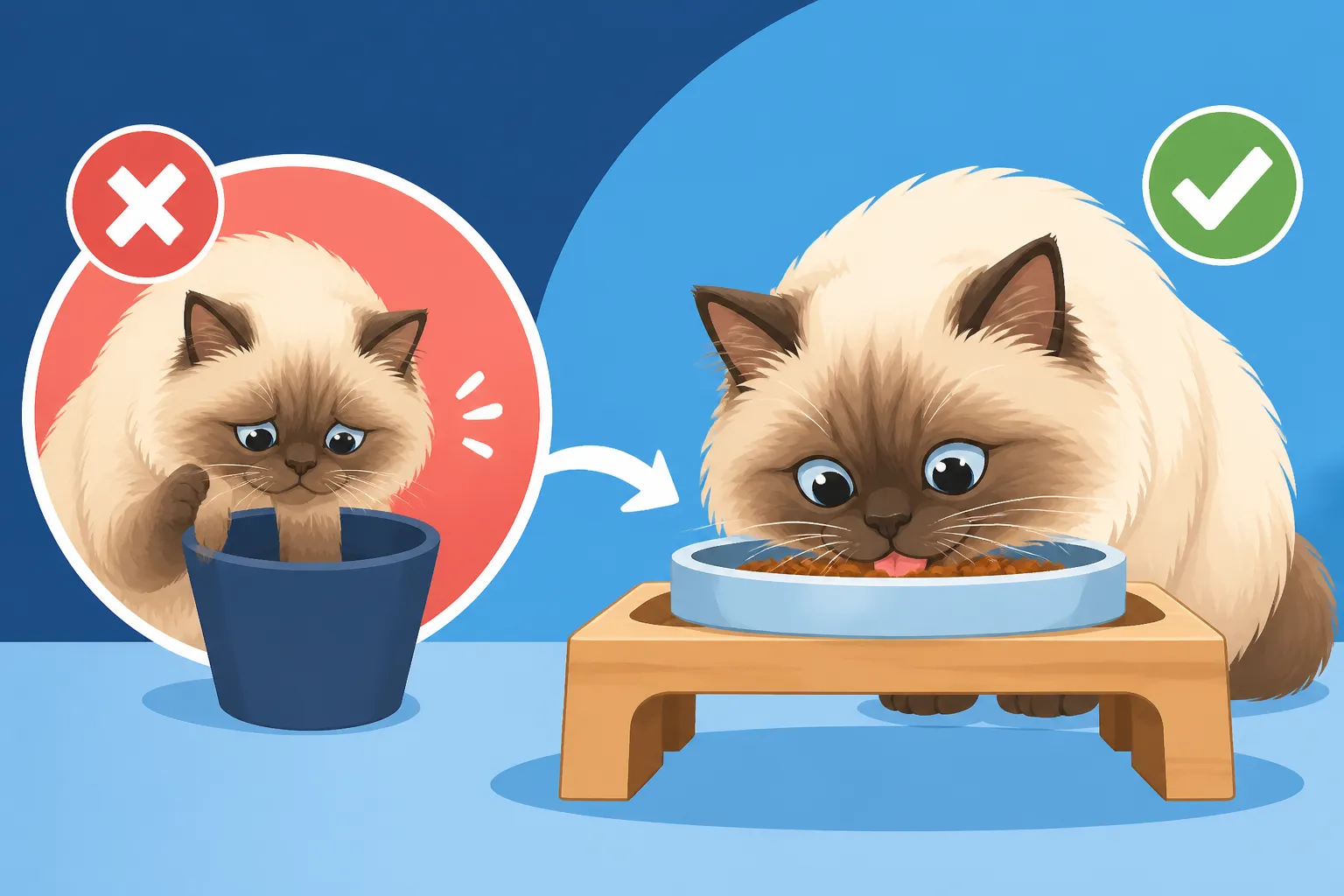
When you picture a cat eating from a deep bowl, you likely imagine them dipping their head in. For a Himalayan, this simple act is fraught with difficulty. Their short muzzle and flattened face mean they have to contort their necks into unnatural angles just to get their mouth near the food. Even then, the high sides of the bowl physically impede their access, often pushing their delicate nose folds against the rim or forcing their whiskers into painful contact. They can't comfortably reach the bottom or corners of the bowl, especially as the food level drops. This leads to a lot of wasted effort, partially eaten meals, and food left behind simply because it's too hard to retrieve. It’s like trying to eat soup out of a tall, narrow vase; you know the food is there, but reaching it is a significant chore. Why a Himalayan Pushes Food Out of a Round Bowl further illustrates how their anatomy leads to these feeding behaviors.
Recognizing Signs of Eating Difficulty
Your Himalayan will tell you they're struggling, even if it's not with loud meows. Keep an eye out for these subtle, yet clear, indicators:
- Paw-feeding: They might try to scoop food out of the bowl with a paw and eat it from the floor.
- Food pushed to the edges: Instead of eating directly from the center, they'll work hard to push kibble against the side of the bowl, hoping to get a better angle.
- Messy eating: Food left on their chin, smeared around their mouth, or scattered on the floor around the bowl. This isn't just untidiness; it's a sign they can't get a clean bite.
- Reluctance or slowness: They approach the bowl cautiously, eat very slowly, or simply walk away after only a few bites, even if they were clearly hungry beforehand.
- Head shaking or rubbing: After eating, they might shake their head or rub their face against furniture, trying to dislodge uncomfortable food particles or relieve irritation.
These behaviors aren't just quirks; they're distress signals that your cat's mealtime experience is less than ideal. Why a Himalayan Drops Food Onto Its Ruff is another common sign of this struggle.
The Hygienic Challenges and Potential Health Risks
Beyond the frustration, using the wrong bowl can lead to significant hygiene issues and even health problems for your Himalayan. Their long, luxurious ruff, a hallmark of the breed, is a magnet for food particles and moisture. Wet food, in particular, can easily become caked onto the fur around their chin and chest. If not cleaned immediately, this can create a breeding ground for bacteria, leading to skin irritation, foul odors, and matting. The deep folds around their nose and mouth, which are already prone to dampness and potential skin fold dermatitis, can also trap food debris, exacerbating these issues. Over time, persistent dampness and irritation can lead to infections and unsightly rust-colored stains that are incredibly difficult to remove, especially on lighter-colored Himalayans. Why Tear Stains Are Worse on a Cream Bodied Himalayan explains how easily their pale fur shows these marks. This makes the daily face-wiping routine, which we'll discuss later, an even more critical part of their care.
Ideal Bowl Shapes and Materials for Himalayans
The good news is that solving your Himalayan's feeding struggles can be as straightforward as choosing the right kind of bowl. The market is full of options, but for a flat-faced cat, specific features are non-negotiable for comfort and cleanliness.
The Importance of Shallow and Wide
When it comes to feeding a Himalayan, the golden rule is "shallow and wide." Forget deep bowls; you want something that allows your cat to access their food without having to bury their face or contort their neck. A shallow dish means the food is readily available at the surface, reducing the need for them to dig or strain. The wide opening is equally crucial. It accommodates their broad face and, more importantly, ensures their sensitive whiskers don't constantly bump against the sides. This eliminates whisker fatigue, making mealtime a much more comfortable and stress-free experience. Imagine dining from a comfortable plate instead of a narrow cup; that's the difference a shallow, wide bowl makes for your Himalayan. Many pet supply stores, like Chewy and Amazon, offer excellent selections specifically designed for brachycephalic breeds. For more specific guidance, check out Which Bowl Shape a Flat Faced Himalayan Can Use.
Considering Tilted and Raised Bowl Options
While shallow and wide are paramount, incorporating a slight tilt or raising the bowl can further enhance your Himalayan's dining comfort.
- Tilted Bowls: These bowls have a slanted design, ensuring that food naturally collects at the lowest point, making it even easier for your cat to reach without pushing it around. The tilt often also means the back of the bowl is higher, preventing food from spilling out the back as your cat eats. This can be particularly helpful for wet food, as gravity helps keep it accessible.
- Raised Bowls: Elevating the food bowl off the floor can significantly improve your cat's posture during meals. For older Himalayans, or those with joint issues like arthritis, bending down to floor level can be painful. A raised bowl allows them to eat with a more natural, upright neck position, reducing strain on their spine and neck. The ideal height will vary depending on your cat's size, so you may need to experiment to find the sweet spot that offers comfortable access without being too high to cause neck extension. These can often be found as part of a feeding station.
Best Materials for Health and Cleanliness
The material of your cat's food bowl is just as important as its shape, impacting both hygiene and durability.
- Stainless Steel: This is often considered the gold standard. Stainless steel bowls are incredibly durable, resisting chips and cracks. They are non-porous, meaning they don't harbor bacteria, odors, or food particles, making them exceptionally easy to clean and sanitize. They are also dishwasher safe and typically quite heavy, so they won't slide around easily during mealtime. You can find a vast array of stainless steel options on retailers like Amazon or Chewy.
- Ceramic: High-quality ceramic bowls, with a smooth, glazed finish, are another excellent choice. Like stainless steel, they are non-porous, easy to clean, and heavy enough to stay put. The smooth surface is gentle on your Himalayan's face and whiskers. However, always ensure the ceramic is lead-free and regularly check for chips or cracks, as these can create areas for bacteria to grow.
- Avoid Plastic: While inexpensive and readily available, plastic bowls are generally not recommended for cats, especially Himalayans. Plastic is porous and scratches easily, creating tiny crevices where bacteria can thrive, even after washing. This can contribute to feline chin acne and other skin irritations, particularly problematic for a cat with existing facial folds. Plastic bowls are also lightweight and tend to slide around, adding to mealtime frustration.
Regardless of the material you choose, daily washing with hot, soapy water is essential to maintain optimal hygiene and prevent bacterial buildup.
| Bowl Type | Pros for Himalayans | Cons for Himalayans |
|---|---|---|
| Deep Bowls | (Few to none for Himalayans) | Difficult to reach food; causes whisker fatigue; messy |
| Shallow & Wide | Easy access to food; prevents whisker fatigue; less mess | May still require bending neck (if not raised) |
| Tilted Bowls | Food collects for easier access; good for wet food | Can be difficult to find in truly wide designs |
| Raised Bowls | Improves neck posture; good for older cats/arthritis | Needs to be the right height; base can be bulky |
| Stainless Steel | Durable; non-porous; easy to clean; hygienic | Can be noisy if cat pushes it; can be lightweight if not rubber-bottomed |
| Ceramic | Non-porous; heavy; attractive; hygienic | Can chip or break; check for lead-free glaze |
| Plastic | Inexpensive; lightweight | Porous; scratches easily; harbors bacteria; causes chin acne; slides |
Optimizing the Feeding Experience
Choosing the right bowl is a huge step, but the overall feeding experience involves more than just the container. Thoughtful placement, appropriate food choices, and consistent routines all play a vital role in ensuring your Himalayan enjoys every meal.
Strategic Bowl Placement
Where you place your Himalayan's food and water bowls might seem like a small detail, but it can significantly impact their comfort and willingness to eat. Cats, by nature, prefer to eat in a quiet, low-traffic area where they feel safe and secure. Placing their bowls in a bustling hallway, next to a noisy appliance, or in a spot where other pets or children frequently pass by can make them feel vulnerable and stressed. They need to be able to focus on their meal without feeling constantly on alert.
Furthermore, always keep food bowls away from the litter box. Cats are meticulously clean animals, and they instinctively avoid eating near their elimination areas. This isn't just a preference; it's a fundamental instinct for hygiene. If you have multiple cats, consider having separate feeding stations to reduce any potential competition or stress, allowing each Himalayan to dine at their own pace without feeling rushed or threatened. Why a Himalayan Will Not Cross the House to a Box highlights their discerning nature regarding essential stations.
Tailoring Food Type and Consistency
The type and consistency of food you offer can make a world of difference for a Himalayan with a flat face.
- Wet Food is Your Friend: Many Himalayan owners find that wet food is inherently easier for their cats to eat. Its soft, moist texture means it can be licked up more readily, requiring less effort to pick up and chew than hard kibble. This reduces strain on their crowded jaws and minimizes the mess that often comes with dry food getting stuck in their facial folds.
- Kibble Considerations: If your Himalayan prefers kibble, or if you feed a mix of wet and dry, pay close attention to the shape and size of the dry food. Look for kibble that is flatter, wider, or irregularly shaped, rather than small, perfectly round pellets. These shapes can be easier for their short jaws to grasp. Some brands specifically design kibble for brachycephalic breeds, keeping their unique mouth mechanics in mind. You can also try adding a little water or low-sodium chicken broth to kibble to soften it, making it easier to chew and swallow, and providing an added boost of hydration.
Portion Control and Meal Frequency
Himalayans, with their generally laid-back disposition and often lower activity levels compared to some other breeds, can be prone to weight gain. Why a Cobby Himalayan Gains on a Portion Another Cat Burns is a real concern. This makes portion control and a structured feeding schedule particularly important.
- Measured Meals: Instead of free-feeding, which allows constant access to food, consider feeding two fixed meals a day. This allows you to precisely measure their portions, ensuring they receive the appropriate caloric intake for their age, weight, and activity level. It also helps you monitor their appetite and catch any changes that might indicate a health issue.
- Freshness Matters: Fixed meal times also mean the food isn't sitting out all day getting stale or attracting pests. Many Himalayans, like other cats, can be quite particular about the freshness of their food. Offering fresh, palatable meals at consistent times reinforces a positive association with eating and helps maintain a healthy routine. For guidance on calorie needs, How Many Calories an Adult Himalayan Burns a Day provides useful context.
Addressing Associated Grooming and Health Issues
While the primary goal is comfortable eating, the Himalayan's unique facial structure means that mealtime difficulties often spill over into other areas of their care, particularly grooming and overall health. Proactive management is key to preventing bigger problems down the line.
Preventing Food Stains and Matting on the Ruff
Even with the most perfectly shaped bowl, a Himalayan's long, flowing ruff and delicate chin fur are prone to getting wet and soiled during meals. This isn't just an aesthetic issue; persistent dampness and food residue can lead to skin irritation, bacterial growth, and the formation of painful mats. These mats, once tightly formed, pull on the skin and can be incredibly uncomfortable for your cat.
To combat this, a daily post-meal clean-up routine is essential. Gently wipe your Himalayan's face, chin, and the fur around their mouth with a soft, damp cloth or a pet-safe facial wipe. Pay particular attention to any facial folds, ensuring they are clean and dry to prevent fold dermatitis. After wiping, a quick, gentle comb through the ruff and chin fur can help prevent mats from forming. Some owners even opt for a very subtle trim of the fur around the chin area to keep it shorter and easier to manage, but this should be done carefully or by a professional groomer. Remember, How Wet Food Ends Up in a Himalayan's Ruff, so this attention to detail is vital.
Navigating Dental Care for Crowded Jaws
The brachycephalic facial structure that makes eating challenging for Himalayans also contributes to significant dental issues. Their short jaws mean that their teeth are often crowded and misaligned, creating perfect pockets for food particles and plaque to accumulate. This crowding can lead to accelerated tartar buildup, gum disease, and ultimately, painful tooth decay and loss at a much younger age than in other breeds. How Crowded a Himalayan's Lower Jaw Gets illustrates the inherent problem.
While specialized bowls help with ingestion, they don't solve the underlying dental anatomy. Regular veterinary check-ups that include a thorough oral examination are paramount. Your vet can identify early signs of dental disease and recommend professional dental cleanings, which often require anesthesia. At home, consider incorporating dental-specific treats or water additives, but always consult your vet before introducing new products. Even offering softer wet food can ease the burden on their compromised teeth. The goal is to be proactive, preventing pain and infection that could further impact their ability to eat. Why a Himalayan Needs Dentals Earlier Than a Siamese because of these specific challenges.
Monitoring Weight and Hydration Levels
Eating difficulties can have a direct impact on your Himalayan's overall health, affecting both their weight and hydration. If they consistently struggle to eat comfortably, they might not consume enough calories, leading to unintended weight loss. Conversely, if owners become overly concerned and offer too many treats or extra meals, an already sedentary Himalayan can quickly become overweight. Both extremes can lead to serious health problems.
It's also crucial to ensure your Himalayan has constant access to fresh, clean water in a wide, shallow bowl, just like their food dish. Their flattened face can make drinking from deep or narrow water bowls equally challenging, potentially leading to chronic dehydration. Why a Himalayan Soaks Its Ruff Drinking from less-than-ideal bowls, which can further dampen their chin fur. Consider a pet water fountain, but choose one with a wide, open reservoir that doesn't require them to duck their head deep inside. Hydration is especially vital for a breed that can be predisposed to kidney issues, like those inherited from their Persian side. Regular monitoring of their body condition and drinking habits, combined with annual veterinary check-ups where they are consistently weighed, as detailed in Why a Himalayan Is Weighed at Every Visit, will help catch any concerns early.
Troubleshooting Common Feeding Problems
Even with the perfect setup, owning a Himalayan means you might encounter specific feeding quirks and challenges. Being prepared with solutions can save a lot of stress for both you and your cat.
When Your Himalayan Shows Reluctance to Eat
There are few things more worrying than a cat who refuses to eat. While choosing the right bowl can solve many issues, sometimes a Himalayan will still show reluctance. First and foremost, if your cat suddenly stops eating, or has a significant decrease in appetite for more than 24 hours, it's always best to consult your veterinarian immediately. A change in appetite is often the first sign of an underlying medical issue, and Himalayans are particularly adept at hiding illness behind their naturally placid expression. Why a Himalayan Hides Illness Behind an Expressionless Face is a critical insight for owners.
Once medical issues are ruled out, consider environmental factors. Himalayans are creatures of routine and can be sensitive to change. Has their feeding location moved? Is there a new pet or person in the house? Is there increased noise or activity during meal times? Try offering different food textures – perhaps a pate if they usually eat chunks, or vice-versa. Gently warming wet food can enhance its aroma, making it more appealing. Sometimes, simply sitting near them during mealtime can offer reassurance.
Dealing with the Inevitable Mess
Let's be honest, even with the best shallow, wide bowl, a Himalayan can still be a bit of a messy eater. Their facial structure sometimes means they can't quite get all the food into their mouths, leading to spills, smears, and crumbs on the floor. Accepting that some mess is just part of the Himalayan charm can save you a lot of grief.
However, you can mitigate the mess. Placing a washable placemat or a silicone mat with a raised lip under their bowls can catch stray kibble and keep the feeding area tidy. If your cat's ruff is constantly getting soaked or caked with food, a professional groomer can give a very subtle, hygienic trim around the chin and chest area. This isn't a full lion cut, but a small adjustment that can make daily cleaning easier. And, as we discussed, consistent cleaning of their face and fur immediately after meals is paramount to prevent staining and skin irritation. Remember, the goal isn't necessarily a spotless eater, but a comfortable and healthy one.
Successfully Introducing New Bowls or Feeding Methods
Cats are creatures of habit, and introducing a new bowl or changing their feeding routine can be met with suspicion and outright rejection. Patience and a gradual approach are your best allies. Don't expect your Himalayan to instantly embrace a new, ergonomically designed bowl, no matter how much sense it makes to you.
Start by placing the new bowl next to their old, familiar bowl. Put a few highly enticing treats in the new bowl, or a small portion of their favorite wet food. Let them explore it at their own pace. You might even try placing the old bowl inside the new, larger, wider one for a few days so they get used to the feel. If you're switching food types or consistency, always do so gradually, mixing a small amount of the new food with their old food and slowly increasing the proportion over several days or even a week. Forcing a change too quickly can lead to a food strike, which is stressful for everyone. The key is to make the new experience positive and non-threatening, allowing them to adjust on their own terms.
Long-Term Care Considerations for the Flat-Faced Himalayan
Caring for a Himalayan with a flat face is a lifelong commitment that evolves as they age. From regular veterinary care to adapting their routines, understanding these long-term considerations ensures your furry companion enjoys a healthy and comfortable life.
Regular Veterinary Care and Oral Health Screenings
Given their unique facial structure, Himalayans are predisposed to certain health challenges that require diligent monitoring. Routine veterinary visits are not just for vaccinations; they are critical opportunities for comprehensive health screenings. Your veterinarian should pay particular attention to your Himalayan's oral health, conducting thorough examinations for any signs of dental disease, gum inflammation, or misaligned teeth. Early detection of issues in their crowded jaws, as discussed previously, can prevent significant pain and more invasive treatments later on.
Beyond their mouths, your vet will assess their breathing, monitor their weight, and generally ensure their overall well-being. Don't hesitate to specifically discuss their eating habits and any difficulties you've observed, as this information can provide crucial clues about their health. Regular check-ups allow for proactive management of potential breed-specific conditions, ensuring your Himalayan stays as healthy and comfortable as possible for years to come.
Adapting Feeding Routines as Your Cat Ages
Just like humans, cats' needs change as they age. An older Himalayan might develop conditions such as arthritis, which can make bending down to a floor-level bowl increasingly painful. For these senior cats, investing in a good quality raised and tilted feeder becomes even more important, allowing them to eat in a more comfortable, upright posture. Their teeth might also be more worn or they could have lost some due to dental disease, making soft, wet food an absolute necessity.
Their senses can also diminish; an older cat's sense of smell might not be as sharp, making food less appealing. Gently warming wet food can enhance its aroma and make it more enticing. Conversely, some older cats may experience cognitive decline, which means consistency in their feeding schedule and location becomes even more vital to prevent confusion and anxiety. Monitoring their weight, as they can be prone to both obesity and muscle wasting in their golden years, is also critical. What an Old Himalayan Will Still Get Up For often includes mealtime, so making it accessible is key.
The Importance of a Calm and Consistent Feeding Environment
Himalayans are known for their calm, even-tempered personalities, and they thrive on routine and tranquility. Their meal times should be a predictable, stress-free part of their day, a sacred ritual if you will. Sudden changes in their feeding location, variations in meal times, or excessive noise and activity around their bowls can disrupt their sense of security and lead to stress-related eating issues.
Maintaining a consistent schedule and a quiet feeding environment reinforces positive associations with mealtime, encouraging them to eat comfortably and confidently. If you anticipate a change in your household, such as moving furniture or having guests, try to introduce these changes gradually and maintain your cat's feeding routine as much as possible. A consistent, peaceful dining experience isn't just about food intake; it contributes significantly to your Himalayan's overall emotional well-being and contentment, allowing your beloved flat-faced companion to enjoy many years of happy, comfortable mealtimes. Why a Himalayan Minds Its Routine More Than Its Address truly emphasizes their preference for consistency.
Disclaimer
This article is for general informational purposes only and does not constitute professional advice. Laws, prices and regulations vary by location and change over time. Consult a qualified professional for guidance on your specific situation.