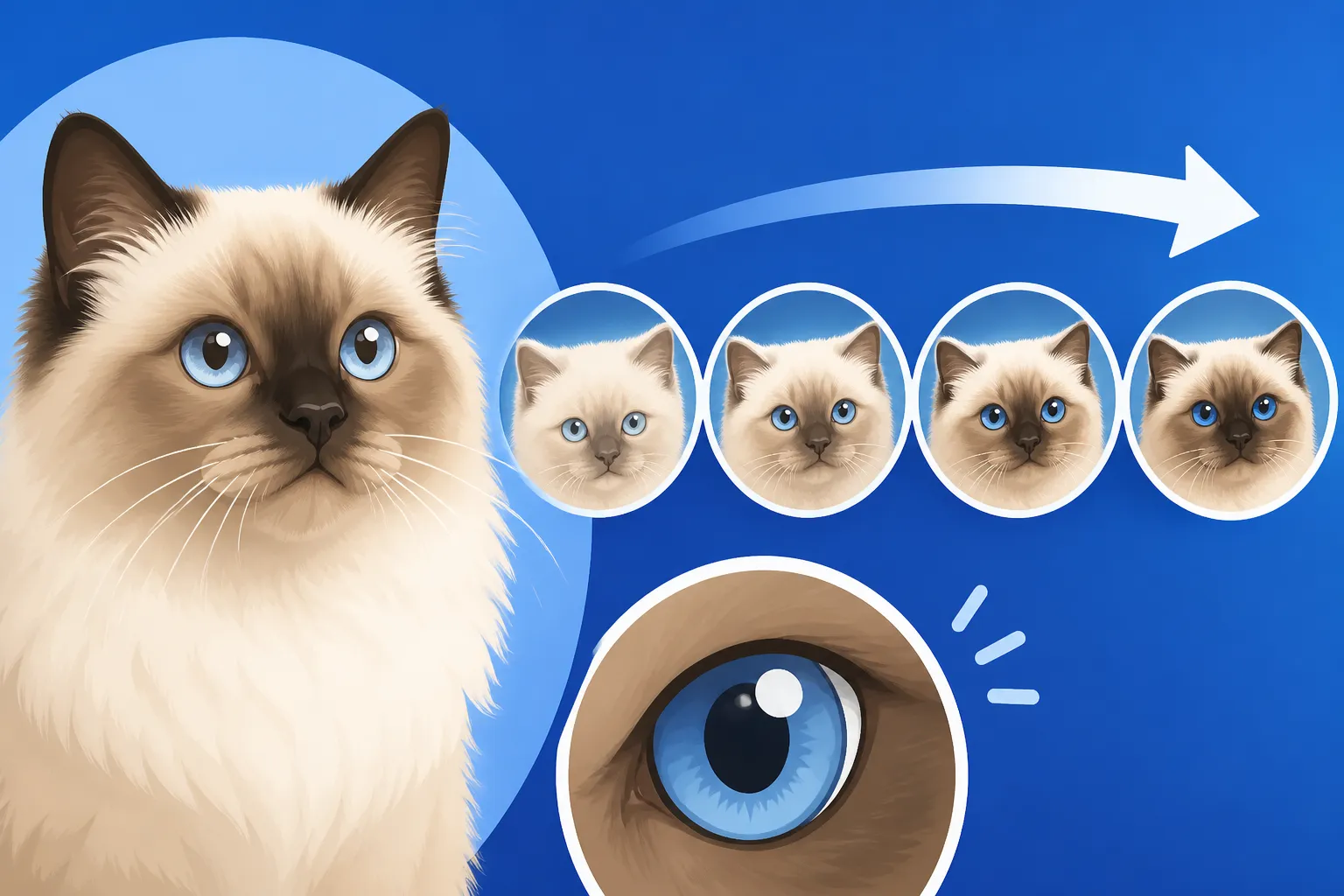
How Many Weeks a Himalayan’s Blue Takes to Deepen
It’s a common moment for new Himalayan parents: you bring home this adorable, fluffy, almost entirely white kitten, and you’re filled with anticipation, wondering exactly when those beautiful, distinctive blue points will truly emerge and deepen. You know they’re coming, but the waiting game can feel a little mysterious. This guide is here to walk you through the fascinating process of how your Himalayan’s blue points develop and deepen, offering a realistic timeline and insights into what influences these striking color changes.
The Phenomenon of Himalayan Point Coloration
The captivating 'pointed' pattern that defines a Himalayan, with its darker extremities and paler body, is one of the breed's most cherished characteristics. It's what makes them so instantly recognizable, but it's also a source of endless questions for owners, especially when it comes to the development of those colors. Understanding why they have this pattern is the first step in appreciating the gradual unveiling of their blue points.
The Genetic Blueprint for Points
At the heart of a Himalayan's point coloration lies a fascinating genetic quirk, a temperature-sensitive enzyme that determines where pigment is deposited in the fur. This isn't just a random happenstance; it's a specific gene that makes a Himalayan truly unique. This gene, often referred to as the Himalayan gene or the "colorpoint gene," causes pigment to only develop in cooler parts of the cat's body. Think of it like a natural thermal map: the warmer core of the cat's body inhibits pigment production, leading to the creamy white or pale fawn body, while the cooler extremities – ears, face, paws, and tail – allow the pigment to express itself, resulting in those deep, rich points. It’s a remarkable piece of biological engineering. Which Gene Makes a Himalayan Pointed is a deep dive into this very subject, explaining how this genetic instruction manifests in such a visual way. This is also why Why the Cold Parts of a Himalayan Grow Dark Fur is not just a theory, but a biological fact governing their appearance.
This unique genetic inheritance means that every Himalayan kitten is born without its full color. Imagine watching a canvas slowly gain its true hues over time – that's essentially what happens with a Himalayan kitten. The gene is always there, but its expression is modulated by environmental and developmental factors. It's not just a matter of "will they get points?" but "how and when will those points reach their full potential?" This genetic predisposition is precisely why their point color is not fixed at birth, making the developmental journey a key part of their charm.
Born White, Developing Color
When a Himalayan kitten first enters the world, you'll notice something striking: they are almost entirely white or a very pale cream. This is completely normal and expected. The warmth of the mother's womb ensures that the temperature-sensitive enzyme responsible for pigment production is largely inactive. There simply isn't enough coolness for the color to develop in utero. So, don't be alarmed if your brand-new kitten looks like a little cloud; this clean slate is exactly as it should be. What Color a Himalayan Kitten Is at Birth elaborates on this initial, pristine stage of their life.
As soon as they are born and exposed to the cooler ambient temperature of the outside world, this process begins. Slowly but surely, the enzyme starts to become active in the extremities where the body temperature is naturally lower. It's a gradual process, not an overnight transformation. Over the first few weeks, you might start to see the faintest whisper of color appearing on their tiny ears or tail tip – a mere shadow of the deep blue that is yet to come. This initial blush of color is often so subtle that you might second-guess yourself, wondering if you're really seeing it or just imagining it. It’s a testament to the slow, steady hand of nature.
The Timeline of Blue Point Deepening in Himalayans
The question of "how many weeks" is really about observing a fascinating developmental journey. While there’s no exact day or week when the blue points suddenly pop, we can certainly outline a typical progression. It’s a bit like watching a Polaroid picture develop – the image is there, but the colors deepen and become richer over time.
First Hints of Color: Weeks 1-4
During the very first weeks of a Himalayan kitten's life, the changes are subtle, yet exciting. You've brought home that fluffy white ball, and now the wait begins. By the time they are around 1 to 2 weeks old, some kittens, especially those with genetically stronger point coloration, might show the merest hint of color on their ears. This isn't a solid blue yet; it's more like a smoky grey or a very pale lavender-blue tint. It's often easier to spot against their pristine white fur under good lighting. This early appearance is a strong indicator of the blue point gene at work.
As the kitten moves into weeks 3 and 4, these faint shadows will become a little more distinct. The ear tips might start to show a slightly darker shade, and you might even begin to see a blush of color on the tiny paw pads or the very tip of the tail. The face, especially around the nose, may also start to develop a faint smudginess. It’s important to remember that every kitten is an individual. Some will develop faster, showing noticeable color earlier, while others will take their sweet time. It’s rarely a race, and patience is key. Think of it as nature's own gentle artistry, unfolding at its own pace.
Visible Shades Emerge: Weeks 5-12
This period, from about 5 weeks to 12 weeks, is where the blue points truly start to make a visible statement. By 6 to 8 weeks, those faint ear tips will usually have deepened to a more recognizable blue-grey. The mask around their nose and eyes will become more defined, extending a little further across their face. The tail, which often acts like a little thermometer for point development, will show a clearer blue along its length. You’ll be able to confidently say, "Yes, that's a blue point!"
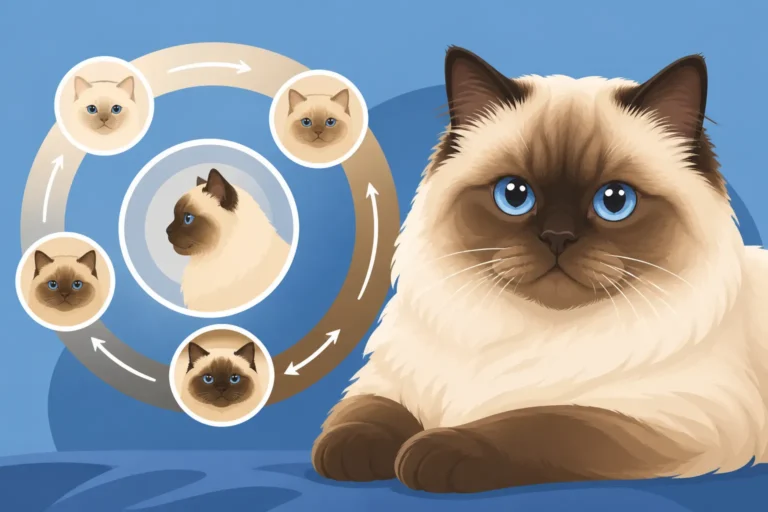
By the time your Himalayan kitten is ready to leave its breeder, typically around 10-12 weeks of age, their points should be quite evident. The blue will be a soft, slate-grey blue, clearly distinguishable from other point colors like seal or chocolate. The contrast between their pale body and their developing points will be much more noticeable. This is the stage where you really start to see the beauty of their unique pattern coming into its own. This progression of color is well-documented in guides like How a Himalayan Kitten's Points Darken Month by Month, offering a visual roadmap for what to expect.
Here’s a general timeline of blue point development:
| Age Range (Weeks) | Point Development | Key Features |
|---|---|---|
| Birth – 2 | Almost entirely white/cream | Body coat is pristine; faint shadows might appear on ear tips in some kittens. |
| 3 – 4 | Subtle emergence | Ear tips show a delicate smoky blue/grey blush; tail tip might hint at color. |
| 5 – 8 | Definitive appearance | Ear tips and tail show clearer blue-grey; mask starts to form around nose/eyes; paw pads show color. |
| 9 – 12 | Deepening & definition | Points are clearly blue-grey; good contrast with body; mask is more pronounced. |
| 3 – 6 Months | Continued deepening | Blue points become richer and darker; body coat remains pale but might show slight shading. |
| 6 Months – 1 Year | Maturation & full contrast | Points reach near-adult depth; body coat is fully developed, maintaining desired pale contrast. |
| 1 Year + | Lifelong deepening | Points continue to deepen subtly with age, especially in cooler environments. |
Maturing Hues: Beyond 3 Months
The development doesn't stop once your kitten hits the 12-week mark. Far from it! While the initial blue is well-established, the points will continue to deepen and enrich over the next several months, and even years. During their adolescence, from around 3 months up to a year, you’ll observe a gradual intensification of the blue color. The mask on their face will spread a little more, and the blue on their legs and tail will become more profound. The body coat, while remaining much paler than the points, might also develop a very slight shading, particularly along the spine, which is normal.
It’s important to understand that a Himalayan’s point color is never truly "finished" in the way a solid-colored cat's might be. The temperature-sensitive gene means their coat is always subtly reacting to their environment and their own body temperature. Most Himalayans will reach their near-adult point depth by around 12 to 18 months, but subtle darkening can continue for several years after that. An older Himalayan, particularly one kept in a cooler home, might have surprisingly deep, rich points that are a testament to a lifetime of gradual coloration. How Long a Himalayan Takes to Finish Its Coat and Points delves into this long-term development.
Factors Beyond Genetics That Influence Point Color
While the genetic predisposition for points is non-negotiable, the intensity and speed at which those blue points deepen can be influenced by several external and internal factors. It’s not just about what genes they have, but how those genes are expressed in their environment.
Environmental Temperature's Role
This is perhaps the most significant external factor. As we discussed, the point coloration is temperature-sensitive. This means that a Himalayan kitten (and indeed, an adult cat) living in a cooler environment will generally develop deeper and more intense point coloration than one living in a consistently warm environment. Think about a Himalayan that spends a lot of time lounging on a cool tiled floor or near a window in a colder climate versus one in a very warm, humid climate. The former is likely to have darker points. How Temperature Decides a Himalayan's Point Color explains this phenomenon in detail.
This isn't just theory; it's something breeders observe keenly. Kittens kept in slightly cooler rooms often show faster and stronger point development. This sensitivity also explains why a shaved patch on a Himalayan, perhaps for surgery, will often grow back darker than the surrounding body coat. The shaved skin, being directly exposed, is cooler, thus activating the pigment enzyme. Owners often try to maintain a comfortable but not overly warm environment to promote good point contrast. While you wouldn't want to make your cat uncomfortable, a perpetually warm house can certainly lead to paler points than you might expect for a true blue point.
Nutrition and Overall Coat Health
While nutrition doesn't change the color a Himalayan is genetically programmed to be, it absolutely plays a role in the quality and vibrancy of their coat, which in turn can affect how clearly and richly the points appear. A cat on a high-quality diet, rich in essential fatty acids like Omega-3 and Omega-6, will have a healthier, shinier coat. This healthy coat reflects light better and can make the existing point color appear more lustrous and defined. Conversely, a cat with a dull, dry, or unhealthy coat might have points that seem less vivid, even if the underlying pigment is there.
Consider cat foods that support coat health. Many premium brands, often found on platforms like Chewy or Amazon, offer formulas specifically designed for long-haired breeds or for skin and coat vitality. These can help ensure the fur itself is in peak condition. While a diet won't magically turn a pale blue point into a dark seal point, it provides the building blocks for the best possible expression of their genetically determined color. If you're exploring options, specialized raw or gently cooked meals also emphasize high-quality ingredients that contribute to overall feline health, including skin and coat condition.
Individual Variation and Lifespan Deepening
Just like humans, every cat is an individual, and Himalayans are no exception. There will always be natural variations in how quickly and intensely their blue points develop. Some kittens are just born with a genetic predisposition for slightly darker points, or their enzyme is simply more sensitive, leading to quicker development. Others might have a slightly paler genetic blue, or their enzyme is less reactive, resulting in a slower, more subtle deepening. This is part of the charm of living with a living creature; they aren't factory-produced identical twins.
Furthermore, a Himalayan's points can continue to deepen subtly throughout its entire life. An elderly Himalayan will almost invariably have deeper, more saturated points than a young adult. This isn't due to changes in genetics, but rather the cumulative effect of prolonged exposure to ambient temperatures and the natural aging process of the fur. It's a testament to the dynamic nature of their coat. So, even if your kitten's blue points seem to be taking their time, rest assured that they will likely continue to evolve and deepen over the years. Why an Old Himalayan Looks Almost Solid Colored touches on how dramatic this deepening can be over a lifetime.
Nurturing Your Blue Point Himalayan's Coat
Beyond just watching the color develop, caring for your Himalayan's coat is crucial, not only for their comfort and health but also to ensure those beautiful blue points are always looking their best. A well-cared-for coat enhances the visual appeal of their unique coloration.
Grooming to Preserve Point Contrast
Regular grooming is absolutely essential for a Himalayan, and it directly impacts how well their points stand out. The dense, long Persian-type coat they inherit is prone to matting, especially in areas like the "britches" (the fur on their hind legs), armpits, and around the ruff. Mats can not only be uncomfortable and even painful for your cat, but they can also obscure the beauty of their point coloration. A matted coat can also trap heat, potentially interfering with the temperature-sensitive pigment development and making the body coat appear slightly darker or less contrasted.
Daily combing with a good quality steel comb is non-negotiable. This helps remove loose undercoat, prevents mats, and distributes natural oils, keeping the fur healthy and vibrant. When you groom, pay special attention to the areas where mats tend to form, ensuring a smooth, flowing coat that allows the light to catch their blue points beautifully. Products like deshedding tools, often found on Chewy or Amazon, can be a lifesaver for managing that dense undercoat. Keeping the coat free of debris and tangles ensures that the crisp line between the pale body and the dark points remains clear and striking, which is important, especially if you have a show-quality cat where How Judges Score a Himalayan's Point Contrast matters.
Dietary Considerations for a Vibrant Coat
As mentioned, while diet won't change the hue of blue, it profoundly affects the health and shine of the fur. A lackluster coat can make even the most perfectly colored points appear dull. To support a vibrant coat, ensure your Himalayan is eating a diet with a good balance of protein, fats (especially Omega-3s and 6s), and essential vitamins and minerals. High-quality animal protein is fundamental for healthy hair growth, and fats contribute to the fur's luster and skin health.
There are many excellent cat food options available. For those interested in home-prepared options, carefully balanced recipes contribute to overall vitality, which directly translates to a healthier, shinier coat. If you prefer kibble or wet food, look for brands that highlight “skin and coat” benefits, often enriched with fish oils or flaxseed. Always ensure your cat has access to fresh water, as hydration is also key to skin and coat health. A well-hydrated cat with a properly nourished coat will exhibit the most stunning, lustrous blue points possible.
Monitoring for Health-Related Color Changes
Sometimes, changes in a Himalayan's coat color can be an indicator of health issues, though usually not directly related to the deepening of points in the way we've been discussing. For example, severe illness or prolonged stress can impact coat quality, making it dull or even causing slight discoloration. Hormonal imbalances, like thyroid issues, can also lead to changes in hair texture and growth, which might indirectly affect the appearance of their points.
Any sudden, significant changes in your Himalayan’s overall coat appearance, beyond the gradual deepening of points, should warrant a conversation with your veterinarian. This could include excessive hair loss, dullness, unusual patches of darkness on the body coat that aren't typical shading, or persistent skin irritation. While the natural deepening of points is a beautiful aspect of owning a Himalayan, staying vigilant about their overall health ensures that their coat, and those exquisite blue points, remain a true reflection of a happy, healthy cat. Caring for a Himalayan Whose Points Have Gone Dark is an excellent resource if you notice any concerning changes in your cat’s point coloration.
Disclaimer
This article is for general informational purposes only and does not constitute professional advice. Laws, prices and regulations vary by location and change over time. Consult a qualified professional for guidance on your specific situation.