How Many Hours a Himalayan Takes to Dry
That magnificent, flowing coat of a Himalayan cat is undoubtedly one of its most defining features, a true showstopper! But let's be real, while it's gorgeous to look at, dealing with it after a bath can feel like an unending task. Many of us have stood there, towel in hand, wondering if our beloved Himmie will ever truly be dry. This guide is here to walk you through exactly what to expect when drying your Himalayan and how to make the process as efficient and stress-free as possible for both of you.
Understanding Your Himalayan's Unique Coat and Drying Challenges
The reason drying a Himalayan can feel like such an uphill battle isn't because you're doing anything wrong. It's simply because their coat is a marvel of nature, designed for warmth and beauty, which unfortunately makes it incredibly absorbent and slow to dry. It's a double-edged sword, isn't it?
The Double-Coated Conundrum
Unlike some other long-haired breeds, Himalayans inherited a dense double coat from their Persian lineage. This isn't just one layer of hair; it's a thick, often cottony undercoat nestled beneath a longer, silkier outer guard coat. Think of it like a down comforter under a decorative duvet. Both layers are fantastic for insulation, keeping them cozy in cooler temperatures, but when that undercoat gets wet, it holds onto moisture like a sponge.
The sheer volume and density of this fur mean that water penetrates deep, often right down to the skin, and then gets trapped between the layers. You might think the outer layer feels dry, but underneath, your Himmie could still be quite damp, leading to all sorts of issues we'll discuss later. This isn't just a quick rub-down situation; it requires a strategic approach to ensure every single strand, especially the dense fur on their ruff, britches, and tail, is completely dry. This is why How Long a Himalayan Takes to Finish Its Coat and Points is such an important consideration from kittenhood, as a full, mature coat is even more challenging to dry.
Why Temperature Matters for Coat Health and Drying
Himalayans, with their luxurious coats and often brachycephalic (flat) faces, are famously sensitive to temperature. During the drying process, it's crucial to use appropriate warmth without letting them overheat. High heat can damage their delicate fur, but more importantly, it can put a significant strain on their respiratory system. Their shortened nasal passages mean they can't cool themselves as efficiently as other cats.
Imagine trying to blow-dry your own thick hair in a stuffy, warm bathroom while wearing a fur coat. That's essentially what your Himalayan experiences. Excessive heat can cause stress, panting, and even lead to dangerous overheating. Remember that Why a Himalayan Cannot Cool Itself by Panting is a real concern. Maintaining a comfortable ambient temperature in your grooming area, coupled with a dryer that offers variable heat settings, is paramount. You want to dry them efficiently, but never at the expense of their comfort or health. Learning How to Cool a Long Coated Himalayan in Summer can give you good strategies for managing their temperature in general, which applies to drying time too.
The Impact of Matting on Drying Time
If your Himalayan's coat isn't meticulously maintained, mats are an inevitable consequence. These tangles and knots, often formed from shed undercoat that gets caught in the longer guard hairs, become even more pronounced when wet. Water causes the hair to swell and the mats to tighten, making them incredibly difficult, if not impossible, to dry thoroughly.
A matted area essentially becomes a dense, impenetrable barrier that traps moisture against the skin. Not only does this prolong the drying process significantly – we're talking hours longer for even small matted spots – but it also creates a perfect breeding ground for bacteria and fungi. This is why The Daily Comb a Himalayan Cannot Skip is not just about aesthetics, it's about health and manageability. A coat free of mats allows air to circulate, making drying much quicker and more effective. If you've missed a day or two of combing, you already know Why a Missed Day Costs a Himalayan a Mat. Dealing with mats before bathing is critical to a successful and timely drying experience.
Effective Strategies for Drying Your Himalayan
Drying your Himalayan might seem daunting, but with the right techniques and tools, you can significantly reduce the time and effort involved while ensuring your cat stays comfortable and healthy. It's all about preparation and patience.
Pre-Drying Essentials
Before you even think about reaching for the blow dryer, effective pre-drying is your best friend. The more water you can remove manually, the less time you'll spend with a noisy appliance.
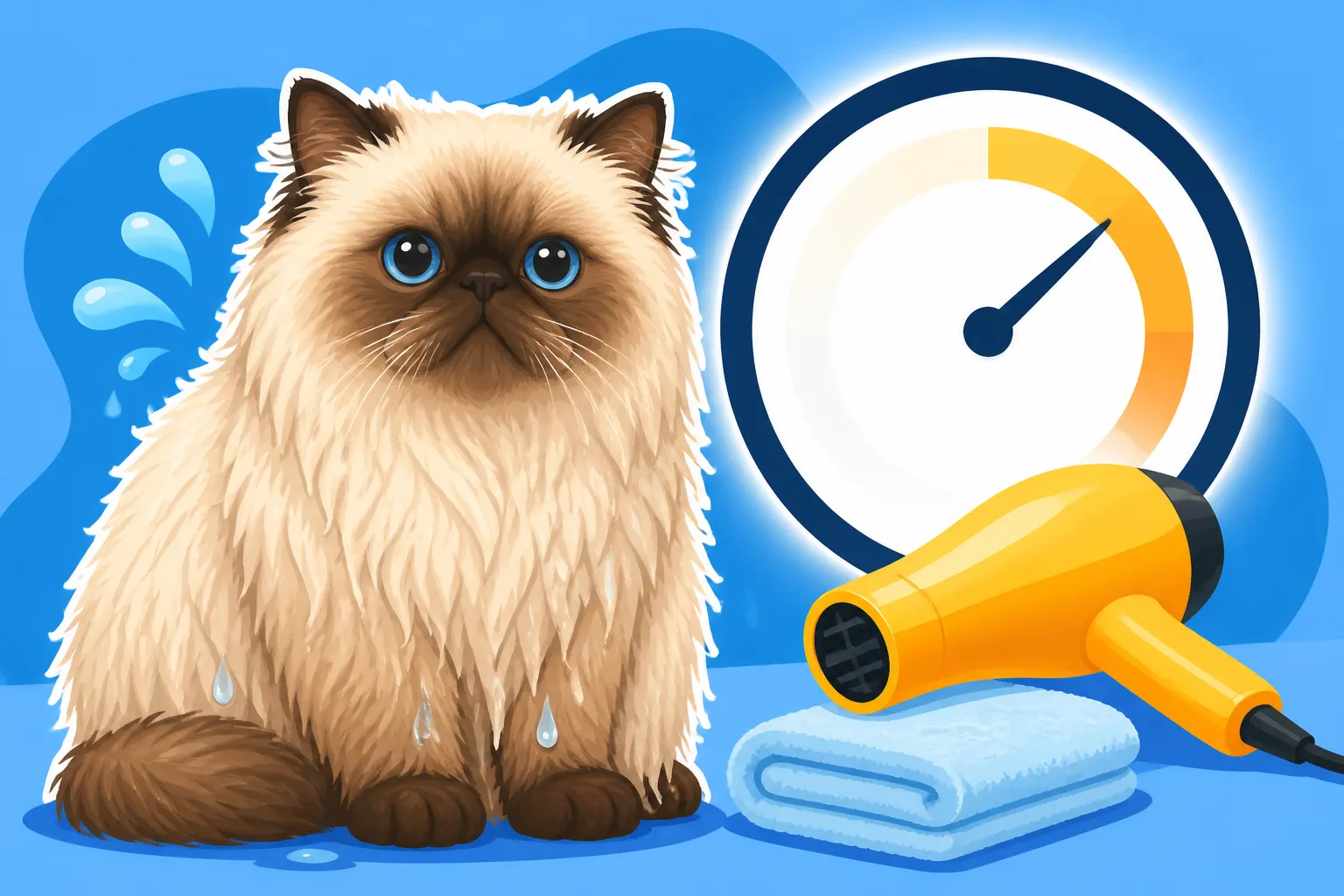
Start by gently squeezing excess water from their coat while they're still in the tub or sink. Don't wring or rub vigorously, as this can tangle their fur and create mats. Instead, use a blotting motion with a large, absorbent towel. Have several towels on hand, as you'll likely soak through one or two just from blotting. Wrap your Himmie snugly in a fresh, dry towel, holding them close for comfort, and gently pat and squeeze for a few minutes. You'll be amazed how much water this initial step can remove. Focus particularly on their legs, belly, and underarms, as these areas tend to stay wet longer. Getting a good head start here can shave significant time off the overall drying process.
The Power of the Right Tools
When it comes to efficiently drying a Himalayan, your choice of tools is absolutely critical. You can't just use any old hair dryer you have lying around.
- Pet-Specific High-Velocity Dryer: This is, hands down, the most effective tool. These dryers are designed to move a high volume of air at a lower heat, quickly separating the fur strands and blasting water out of the coat without overheating your cat. Many excellent options are available from online retailers like Chewy or Amazon. Look for models with adjustable air speed and heat settings.
- Quality Combs and Brushes: As you dry, you'll need to continuously comb and brush your cat's fur to separate the strands and ensure air reaches every layer. A good quality steel comb, particularly one with both wide and fine teeth, is indispensable. Which Steel Comb a Himalayan's Coat Needs is crucial for getting through that dense undercoat without pulling. You'll want to work in sections, starting from the roots and moving outwards, making sure no damp spots are missed.
- Absorbent Towels: As mentioned, stock up on highly absorbent microfiber towels. They make a huge difference in the initial stages of drying.
Using the right tools not only speeds up the process but also makes it more comfortable and safer for your Himalayan.
The Art of Blow Drying Safely
Once you've blotted as much water as possible, it's time for the blow dryer. This part requires patience, a gentle touch, and careful attention to your cat's comfort.
- Introduce Gradually: If your cat isn't used to the dryer, introduce it slowly. Start with the lowest setting, both for air speed and heat, and let them get used to the sound and sensation. Offer treats and praise to create a positive association.
- Work in Sections: Don't try to dry your entire cat at once. Start with less sensitive areas like their back, then move to the sides, belly, legs, and finally, the ruff and head. Use one hand to hold the dryer and the other to continuously comb and lift the fur, allowing air to penetrate to the skin. This technique is key to How to Dry a Himalayan Down to the Skin.
- Maintain Distance and Temperature: Always keep the dryer nozzle a safe distance from your cat's skin to prevent burns. Constantly monitor the temperature of the air with your hand and ensure it's never too hot. If the dryer feels hot on your skin, it's too hot for your cat.
- Watch for Signs of Stress: Your cat will tell you if they're uncomfortable. Look for flattened ears, tail flicking, vocalizations, or attempts to escape. If they're stressed, take a break. You can even split the drying into two sessions if needed.
- Focus on Dense Areas: Pay extra attention to the ruff, britches, and tail, as these are the thickest areas and the slowest to dry. Continue to comb through these areas meticulously. Learning Working a Comb Through a Himalayan's Ruff can be particularly helpful here.
- Check for Dampness: Once you think your cat is dry, run your fingers deep into their coat, especially in dense areas. If you feel any coolness or dampness, keep drying. Any remaining moisture can lead to matting, skin irritation, and even chilling.
By following these steps, you'll ensure a thorough and safe drying process.
Common Pitfalls and Post-Drying Care
Even with the best intentions, improper drying can lead to several problems for your Himalayan. Knowing what to look out for and how to maintain their pristine coat afterward is just as important as the drying itself.
The Dangers of Incomplete Drying
Leaving even small patches of a Himalayan's coat damp can have serious repercussions. This isn't just about a slightly messy look; it can genuinely impact their health and comfort.
- Matting: Damp fur mats much faster and more severely than dry fur. As the water evaporates, the hairs can clump together, forming tight knots that are difficult and painful to remove. These mats can pull at the skin, restricting movement and causing discomfort. Severe matting often requires professional grooming or even veterinary sedation for shaving, which can lead to Why a Shaved Patch Regrows Darker on a Himalayan.
- Skin Infections: Warm, damp environments are a breeding ground for bacteria and yeast. If moisture is trapped against your Himalayan's skin, especially in skin folds or under dense mats, it can quickly lead to painful hot spots, fungal infections (like ringworm), or other dermatological issues. These conditions are uncomfortable for your cat and can require expensive veterinary treatment.
- Chilling: While Himalayans have thick coats, prolonged dampness can lead to a drop in body temperature, especially in cooler environments. Kittens and older cats are particularly vulnerable to chilling, which can weaken their immune system and make them susceptible to illness.
- Odor: An incompletely dried coat can develop a musty, unpleasant odor as bacteria and fungi proliferate. This isn't just cosmetic; it's a clear sign that moisture is trapped and a potential skin issue is brewing.
Ensuring your Himalayan is bone-dry from nose to tail is a non-negotiable step in their grooming routine.
Maintaining That Pristine Coat Post-Bath
Once your Himalayan is thoroughly dry, the work isn't quite over. Proper post-drying care and ongoing maintenance will keep their coat looking its best and minimize the need for frequent full baths.
The most critical step is their regular grooming routine. A fresh bath is a great start, but it's the daily (or at least every other day) combing that truly keeps their coat in top condition. How Often a Himalayan Must Be Combed is often a point of surprise for new owners, but it's essential. This regular combing prevents new mats from forming and distributes natural oils, keeping the coat healthy and shiny.
Consider supplementing with a leave-in conditioner or detangling spray specifically designed for cats. These products can help prevent static, add shine, and make future combing sessions easier. When selecting products, always opt for cat-safe formulas, ideally from reputable pet supply brands found on Amazon or Chewy. Also, ensure your cat has a clean, dry environment to relax in after their bath to prevent them from picking up dirt or new dampness.
When to Seek Professional Help
There are times when the task of drying a Himalayan, or even bathing them, becomes too much to handle at home. Don't feel guilty about seeking professional assistance; sometimes it's the kindest thing you can do for your cat and yourself.
A professional groomer has the specialized tools, experience, and techniques to bathe and dry a Himalayan efficiently and safely. They can handle even severely matted coats, often through a "lion cut," which removes most of the body fur, allowing for easier maintenance as it grows back. If your cat is particularly resistant to grooming, gets stressed easily by the dryer, or if you consistently find damp patches leading to skin issues, a professional groomer can be a lifesaver. They can also offer advice on specific products and techniques tailored to your cat's coat type and temperament. Sometimes, the peace of mind knowing your beloved Himmie is being cared for by an expert is well worth the investment.
Estimated Drying Times for a Himalayan
The following table provides a general idea of how long it might take to dry a Himalayan, depending on the method used. Remember, these are estimates and can vary based on coat density, cat's cooperation, and environmental factors.
| Drying Method | Estimated Time (Post-Blotting) | Pros | Cons |
|---|---|---|---|
| Air Dry (No Assistance) | 12-24+ hours | No effort from owner, less stress for cat | Highly prone to matting, risk of skin issues, potential chilling |
| Towel Dry Only | 8-16 hours | Less noise, minimal equipment | Still very slow, high risk of mats, may not fully dry to skin |
| Low-Heat Pet Blow Dryer | 2-4 hours | Most effective, dries to the skin, prevents mats | Requires cat cooperation, noise can be stressful, requires dedicated effort |
| Professional Groomer | 1-2 hours | Fastest, most thorough, expert handling | Costly, requires travel |
As you can see, simply air-drying a Himalayan is not a viable option if you want to avoid serious coat and skin problems. A pet-specific blow dryer, combined with diligent combing, is the sweet spot for most home groomers.
Drying your Himalayan properly is an act of love and commitment to their well-being. It might take a good portion of your afternoon, but the result – a fluffy, soft, healthy cat – is absolutely worth every minute.
Disclaimer
This article is for general informational purposes only and does not constitute professional advice. Laws, prices and regulations vary by location and change over time. Consult a qualified professional for guidance on your specific situation.