Whether a Himalayan Policy Writes Out the Persian Muzzle
It's a common, gut-wrenching worry for anyone bringing a beautiful Himalayan into their home: you adore their distinct, flat little face, but you've heard whispers, perhaps from friends or online forums, about the unique health challenges that can come with that adorable "Persian muzzle." The biggest question that inevitably pops up is, "Will my pet insurance actually cover these breed-specific conditions, or will they just 'write out' coverage for the very features that make my Himalayan special?" This guide is here to untangle that knot of anxiety, explaining exactly how pet insurance policies typically approach the unique facial structure of your beloved Himalayan and what you need to look out for.
Understanding the Himalayan's Unique "Persian Muzzle" and Its Health Implications
When we talk about the "Persian muzzle" in a Himalayan, we're really referring to the brachycephalic (short-nosed) facial structure they inherited from their Persian ancestors. This isn't just about looks; it profoundly impacts their physiology and can lead to a range of health considerations that any responsible owner needs to be aware of.
What Defines the Himalayan's Face Structure
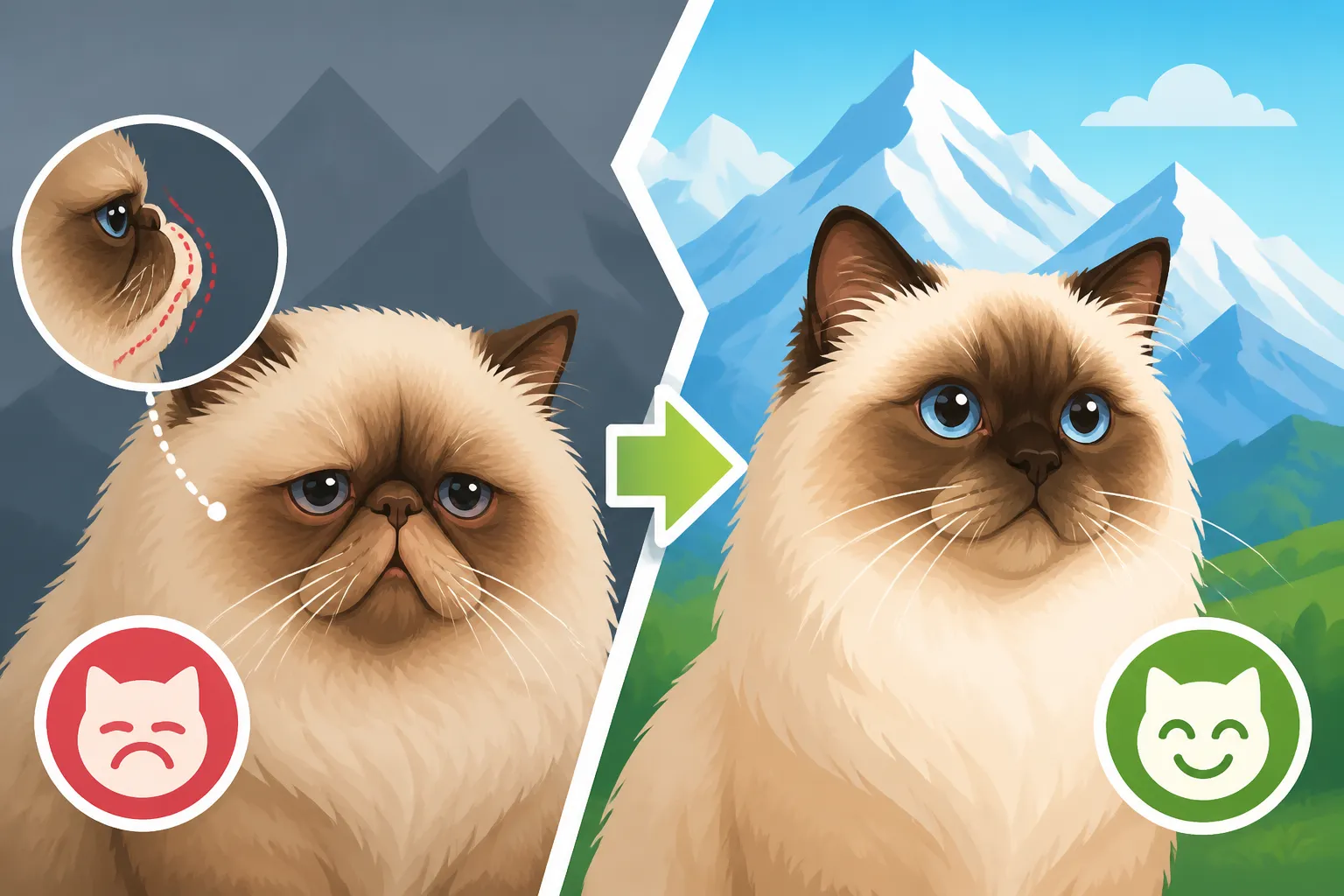
The Himalayan's face is, in many ways, its defining feature. Depending on the specific breeding lines, a Himalayan can have a "doll face" with a more discernible nose, or the more extreme "peke face" which is much flatter. This flattened appearance means a shorter skull and often, a nose that appears to be set almost between their large, round eyes. Their lower jaw might protrude slightly, and the teeth might not align perfectly. This unique configuration gives them that sweet, almost perpetually surprised expression we love so much.
The "peke face" type, for instance, exhibits a very specific profile. If you were to look at your cat from the side, a true peke face What a Peke Face Himalayan's Profile Measures would show the bridge of the nose aligning almost perfectly with the lower eyelid, giving a virtually flat plane from forehead to chin. Contrast this with a "doll face" Himalayan, where you'd see a more pronounced break in the nose, giving them a more traditional cat-like profile, albeit still with a broad head. What a Doll Face Himalayan's Profile Measures It’s these subtle, yet significant, differences in structure that lead to varying degrees of health concerns, making it all the more important to understand what you're dealing with.
Common Health Challenges Associated with the Flat Face
Unfortunately, that endearing flat face isn't without its potential drawbacks. The shortened skull affects several systems in your Himalayan's body, primarily their respiratory and ocular (eye) health.
- Brachycephalic Obstructive Airway Syndrome (BOAS): This is perhaps the most well-known issue. The shortened muzzle means compacted soft tissues in the airways. They often have narrowed nostrils (stenotic nares), an elongated soft palate that can block the windpipe, and sometimes everted laryngeal saccules. All of this makes breathing harder. You might notice your Himalayan snoring quite loudly, far more so than their Siamese ancestors ever did Why a Himalayan Snores Louder Than Its Siamese Ancestors, especially when asleep. This isn't just cute; it's a sign of a restricted airway. In severe cases, they might struggle to breathe during exertion or in warm weather, panting excessively.
- Dental Overcrowding: The shortened jaw means less space for the full set of teeth. This can lead to dental overcrowding, crooked teeth, and a higher risk of plaque buildup, gum disease, and tooth resorption. You might even see their lower canines jutting out. How a Shortened Jaw Crowds a Himalayan's Teeth This often means they need professional dental care much earlier and more frequently than other breeds.
- Eye Issues: Their large, prominent eyes are beautiful, but they can be more exposed to dust, debris, and injury. The facial folds around their nose can also direct tear film directly into the coat, leading to chronic tear staining Why a Himalayan's Eyes Water All Day. More serious conditions like entropion (where the eyelid rolls inward, causing eyelashes to rub against the cornea) or corneal ulcers from chronic irritation are also possibilities.
It's crucial to understand that these aren't just random illnesses; they are structural predispositions directly linked to the breed's physical characteristics. This distinction is vital when we start talking about pet insurance, as the policy's stance on breed-specific conditions will greatly influence what is and isn't covered.
How Pet Insurance Policies Generally Address Breed-Specific Conditions
Navigating pet insurance can feel like deciphering ancient scrolls, especially when you're trying to figure out if your Himalayan's unique facial features are going to be a giant red flag for coverage. The key really lies in understanding the language insurers use around "exclusions" and "pre-existing conditions."
The Concept of "Exclusions" and "Pre-Existing Conditions"
Let's get this straight: pet insurance isn't a magic wand that retroactively fixes problems. Like all insurance, it's designed to cover new, unexpected illnesses or injuries that occur after your policy starts and after any waiting periods have passed.
- Pre-Existing Conditions: This is the big one. If your Himalayan has already been diagnosed with a condition, or even shown symptoms of it, before you enroll in a policy or before your waiting period ends, it will almost certainly be considered "pre-existing" and will not be covered. For example, if your Himalayan already has severe dental crowding requiring immediate extractions when you sign up, those extractions will likely be excluded.
- Breed-Specific Predispositions vs. Pre-Existing Conditions: This is where it gets tricky for Himalayans. A policy generally won't "write out" coverage for a breed itself. Instead, it will look at individual conditions. If your Himalayan is genetically predisposed to BOAS because of its flattened face, that's a breed predisposition. If symptoms of BOAS (like heavy snoring, panting, exercise intolerance) only develop after your policy is active and waiting periods are met, then treatments for BOAS – such as nostril widening or soft palate surgery – might be covered. However, if your kitten already has visibly narrowed nostrils and struggles to breathe before you get insurance, then BOAS treatments could be considered pre-existing. This distinction is absolutely critical.
Policy Variations: What to Look For and What to Avoid
Not all pet insurance policies are created equal, and this is particularly true when it comes to brachycephalic breeds like Himalayans. You simply cannot assume every policy offers the same level of coverage.
Some policies might have clauses that specifically address "brachycephalic conditions" or "conditions related to conformational abnormalities." These can vary from explicit exclusions for any condition linked to the flat face to more nuanced approaches. For example, a provider like Healthy Paws, known for its comprehensive accident and illness plans, generally aims to cover unexpected conditions, but their stance on specific brachycephalic issues would still hinge on whether they are deemed pre-existing.
When comparing policies, look for:
- Clear definitions of "pre-existing conditions": Do they refer to symptoms, diagnoses, or both? How long is the look-back period?
- Waiting periods: How long do you have to wait after enrolling before coverage for illnesses or accidents begins? Some policies have longer waiting periods for orthopedic conditions or specific illnesses.
- Any mention of breed-specific exclusions: While rare to outright exclude a breed, some policies might list specific conditions common in Himalayans as exceptions, particularly if they are congenital or hereditary and symptoms present early.
- Coverage for hereditary and congenital conditions: Many reputable policies do cover these if the symptoms manifest after enrollment. This is crucial for conditions like BOAS, which are technically hereditary.
- Annual limits, deductibles, and reimbursement percentages: These impact your out-of-pocket costs, regardless of what's covered.
Avoid any policy that uses vague language or doesn't provide clear answers about breed-specific health concerns. A low premium might seem attractive, but it often comes with significant exclusions or very low reimbursement rates that leave you paying a fortune in the long run.
Specific "Persian Muzzle" Related Conditions and Coverage
Let's break down some of the common conditions associated with the Himalayan's facial structure and how they might be treated by insurance.
Breathing Issues (BOAS)
This is a major concern. If your Himalayan develops significant breathing difficulties (snoring, struggling for air, exercise intolerance) after your policy is active and waiting periods are satisfied, then veterinary interventions such as corrective surgery could be covered.
- Stenotic Nares (Nostril Widening): This surgery involves widening the nostrils to improve airflow. It's a relatively common procedure for brachycephalic breeds. If your kitten's nostrils are clearly narrowed at 12 weeks old, this could be considered a pre-existing condition if you then try to get insurance. But if it becomes a problem later, it might be covered. Whether widening a Himalayan's nostrils helps
- Elongated Soft Palate Surgery: This procedure removes excess tissue from the soft palate that can obstruct the airway. Again, if your vet diagnoses this after your coverage begins, it's typically covered as an illness treatment. What Soft Palate Surgery Involves for a Himalayan
- Everted Laryngeal Saccules: These are small sacs in the larynx that can get sucked into the airway during increased respiratory effort. Their removal is often covered if it's a new development.
The key is timing. An insurer will often request your pet's full veterinary history when you make a claim. If there are notes in the records about breathing issues before your policy started, even if surgery wasn't discussed, it could be deemed pre-existing.
Eye Issues
The Himalayan's beautiful, large eyes are also vulnerable, and conditions like entropion are common.
- Entropion: This is where the eyelid rolls inward, causing irritation to the cornea. Surgery is often required to correct it. If your Himalayan develops entropion after your policy starts, treatment for What Entropion Does to a Himalayan's Blue Eye is generally covered. However, if your kitten already showed signs of inward-rolling eyelids at their initial vet checks before insurance, it could be excluded.
- Corneal Ulcers: These open sores on the eye can result from trauma, chronic irritation (like entropion), or even just dryness due to prominent eyes. Prompt veterinary attention is crucial. What a Corneal Ulcer Looks Like on a Blue Eyed Himalayan If an ulcer appears due to an accident or a new, covered illness, treatment is typically covered. If it's a recurrent issue tied to an existing, uncovered condition like untreated entropion, the coverage might be denied.
- Chronic Tear Staining: While not usually a medical emergency, severe tear staining can lead to skin irritation and infections around the nose folds. Treatment for such secondary infections might be covered, but the aesthetic issue of tear staining itself generally wouldn't be.
Dental Problems
Dental issues are almost a given with a Himalayan's crowded mouth.
- Extractions due to Overcrowding or Disease: Many standard pet insurance policies do not cover routine dental cleanings or extractions due to pre-existing periodontal disease or overcrowding. However, some policies offer optional dental riders that can help with these costs. If a tooth is broken due to an accident, that might be covered under a standard accident policy. Himalayans often need dentals earlier than many other breeds Why a Himalayan Needs Dentals Earlier Than a Siamese, so this is a significant consideration. Providers like Chewy often offer various dental products and food that can help maintain dental health, but direct coverage for overcrowding issues is a policy-specific detail to scrutinize.
Navigating the Policy Details for Your Himalayan
Choosing the right pet insurance for your Himalayan isn't just about picking the first company you see. It requires careful consideration, proactive steps, and a willingness to ask tough questions.
The Critical Role of Early Enrollment
I cannot stress this enough: enroll your Himalayan in a pet insurance policy as early as possible, ideally as a kitten. This is perhaps the single most impactful step you can take to maximize your coverage.
Why? Because of the "pre-existing condition" clause we just discussed. A kitten is a blank slate. The younger they are when you enroll, the less likely they are to have any documented health issues that could later be flagged as pre-existing. If you wait until your Himalayan is five years old and starts exhibiting signs of BOAS or dental issues, it's already too late for those specific conditions to be covered.
Imagine you bring home a fluffy little Himalayan kitten. At 10 weeks, they're just starting their life. If you enroll them in insurance right away, after the initial waiting period, any new illness or injury that arises – including breed-specific conditions like BOAS or entropion that develop later in life – has a much higher chance of being covered. The policy essentially starts fresh with your kitten's fresh health history. This foresight can save you thousands of dollars and immense emotional stress down the line.
Asking the Right Questions to Your Provider
Don't be shy about contacting pet insurance companies directly. Their customer service representatives are there to help clarify policy details. Here are some specific questions you should ask, and always, always ask for the answers in writing or refer to the policy document itself:
- "My Himalayan cat is a brachycephalic breed. How do you cover conditions associated with this, such as Brachycephalic Obstructive Airway Syndrome (BOAS), specifically elongated soft palate surgery or stenotic nares correction?"
- "What is your policy on hereditary and congenital conditions? Are they covered if symptoms appear after the waiting period?"
- "How do you define a 'pre-existing condition'? Is it based on diagnosis, symptoms, or veterinary notes?"
- "Are eye conditions common in Himalayans, such as entropion or corneal ulcers, covered if they develop after policy enrollment?"
- "Do you offer any coverage for dental disease or extractions due to overcrowding, or is there an optional rider for this?"
Be specific with your questions, mentioning Himalayan-specific conditions. If they give you a vague answer, push for clarity. It's your responsibility to understand the coverage before an issue arises.
Comparing Different Insurance Providers
Since policies vary wildly, comparison shopping is essential. Don't just look at the monthly premium; dig into the details.
Here’s a comparison table of typical features you might encounter when researching pet insurance providers. Remember, specific values (deductibles, limits, percentages) will vary greatly by provider, plan, and even your location, so always check the current offerings directly. Companies like Healthy Paws are often lauded for their comprehensive coverage, while others might offer more budget-friendly options with higher deductibles or lower reimbursement rates. Many pet supply retailers, like Chewy, partner with various insurance providers, giving you a range of options to explore.
| Feature | Typical Coverage/Approach | Important for Himalayan Owners |
|---|---|---|
| Accident & Illness | Covers unexpected injuries (e.g., broken bones) and illnesses (e.g., infections, BOAS). | Essential. This is your core coverage for brachycephalic conditions (BOAS, entropion) and other breed-specific issues, provided they aren't pre-existing. |
| Pre-Existing Cond. | Excludes conditions diagnosed or with symptoms prior to policy start/waiting period. | Crucial. Enroll your Himalayan as a kitten to minimize pre-existing conditions. Any signs of breathing difficulty or eye issues before enrollment will likely be excluded. |
| Hereditary Cond. | Covers genetically passed conditions (e.g., BOAS, PKD) if symptoms appear after enrollment. | Very Important. BOAS, PKD1 (Polycystic Kidney Disease from the Persian side PKD1 Came Down the Persian Side of a Himalayan), and retinal atrophy (see Retinal Atrophy Reached the Himalayan From the Persian Too) are hereditary. Ensure these are covered. |
| Congenital Cond. | Covers conditions present from birth but not necessarily obvious immediately (e.g., heart murmurs, palate defects). | Important. Conditions like cleft palates or certain heart conditions could be congenital. Coverage usually applies if diagnosis is post-enrollment. |
| Routine/Wellness | Optional add-on for preventative care (e.g., vaccines, annual exams, flea meds). | Beneficial. Can help offset costs of regular vet visits, which are important for Himalayans, but won't cover major surgeries for brachycephalic issues. |
| Dental Coverage | Basic policies usually exclude routine cleaning and pre-existing dental disease; some offer accident-only or rider options. | Highly Relevant. Himalayans often have crowded teeth leading to early dental issues. Seek policies with robust dental riders or separate dental accident coverage. |
| Annual Limit | Maximum amount the policy will pay out in a year (e.g., $5,000, $10,000, unlimited). | Look for higher limits or unlimited plans given the potential for expensive surgeries related to BOAS or eye conditions. |
| Deductible | Amount you pay before reimbursement kicks in (e.g., $250, $500, $1,000). | Choose a deductible you're comfortable with. A higher deductible usually means a lower monthly premium, but higher out-of-pocket costs at claim time. |
| Reimbursement Rate | Percentage of the vet bill the policy pays after deductible (e.g., 70%, 80%, 90%). | Aim for 80-90% to minimize your financial burden for covered treatments. |
| Waiting Periods | Time before coverage starts (e.g., 14 days for illness, 2 days for accident). | Be aware of these periods. Don't assume immediate coverage. Some policies have longer waiting periods for specific conditions. |
When you're looking at different options, consider a few reputable names like Healthy Paws. They are often highlighted for their comprehensive coverage and no per-incident or lifetime limits, which can be very appealing for a breed with potential ongoing health needs. However, always verify their specific terms regarding brachycephalic conditions directly.
Proactive Care Beyond Insurance
While pet insurance is a fantastic safety net, it's just one piece of the puzzle. Owning a Himalayan means embracing a lifestyle of proactive care that goes hand-in-hand with any insurance policy you choose.
Regular Vet Checks and Preventative Measures
Your Himalayan needs more than just a yearly vaccine booster. Regular veterinary check-ups, ideally every 6-12 months, are crucial for staying on top of their unique health needs. Think of your vet as your partner in preventing minor issues from becoming major, costly problems. How Often a Tested Himalayan Still Needs Checking
During these visits, your vet will pay close attention to:
- Breathing Sounds: Listening for any changes in their breathing, evaluating the structure of their nostrils and the back of their throat.
- Eye Health: Checking for signs of irritation, entropion, or excessive tearing that could indicate underlying issues.
- Dental Health: Examining their crowded mouth for plaque, gum disease, or any teeth that need attention. Early intervention for dental issues can prevent painful infections and costly extractions down the line.
Don't wait until your cat is showing obvious signs of distress. Himalayans, like many cats, are masters at hiding illness, so regular preventative care is truly your best defense. These routine visits, while often not covered by basic accident and illness insurance, are an investment in their long-term health and can help catch issues before they become pre-existing conditions for future insurance claims.
Lifestyle Adjustments for a Flat-Faced Cat
Living with a Himalayan means making a few adjustments to your home and routine to accommodate their unique physical traits. These aren't just recommendations; they're essential for their comfort and well-being.
- Environmental Controls (Especially Heat): Your flat-faced Himalayan struggles to cool themselves down. Their restricted airways make panting less efficient than in longer-nosed cats. This means they are highly susceptible to overheating. During warmer months, or even just on a particularly hot day indoors, you need to be extra vigilant. Keep your home cool, use air conditioning, and provide plenty of fresh, cool water. Avoid strenuous play during the hottest parts of the day. How to Cool a Long Coated Himalayan in Summer A Himalayan can overheat twice as fast as its Siamese ancestors, so shade, cool rooms, and limiting activity are paramount.
- Appropriate Diet and Bowls: Because of their flattened faces and often undershot jaws, many Himalayans find it difficult to eat from traditional deep or narrow food bowls. They can push food out, make a mess, or struggle to pick up kibble efficiently. Look for wide, shallow bowls, or even elevated dishes that allow them to eat without bending their neck excessively. Which Bowl Shape a Flat Faced Himalayan Can Use You might find specific cat food formulations designed for brachycephalic breeds, with kibble shapes optimized for easier pickup, available from retailers like Chewy. Consider wet food as a primary part of their diet, as it's often easier for them to manage and provides essential hydration.
- Grooming Routines: That magnificent Persian coat and those expressive eyes require daily attention.
- Daily Face Wiping: Your Himalayan's eyes often water, leading to tear stains and dampness in their nose folds. This area needs to be gently wiped clean every single day to prevent skin irritation, yeast infections, and unsightly staining. Use a soft, damp cloth or pet-safe eye wipes. The Morning Face Routine Every Himalayan Needs
- Daily Combing: Their long, dense coat is prone to matting. A daily session with a good quality metal comb is non-negotiable to prevent painful tangles and mats that can quickly become a medical issue. A neglected coat can lead to skin problems hiding underneath, making regular checks important.
By integrating these proactive measures into your daily routine, you're not just providing good care; you're actively working to minimize the severity and frequency of potential health issues, making your Himalayan's life more comfortable and potentially reducing the number of costly vet visits you'll need.
Disclaimer
This article is for general informational purposes only and does not constitute professional advice. Laws, prices and regulations vary by location and change over time. Consult a qualified professional for guidance on your specific situation.