Why a Himalayan Stays on the Floor and the Sofa
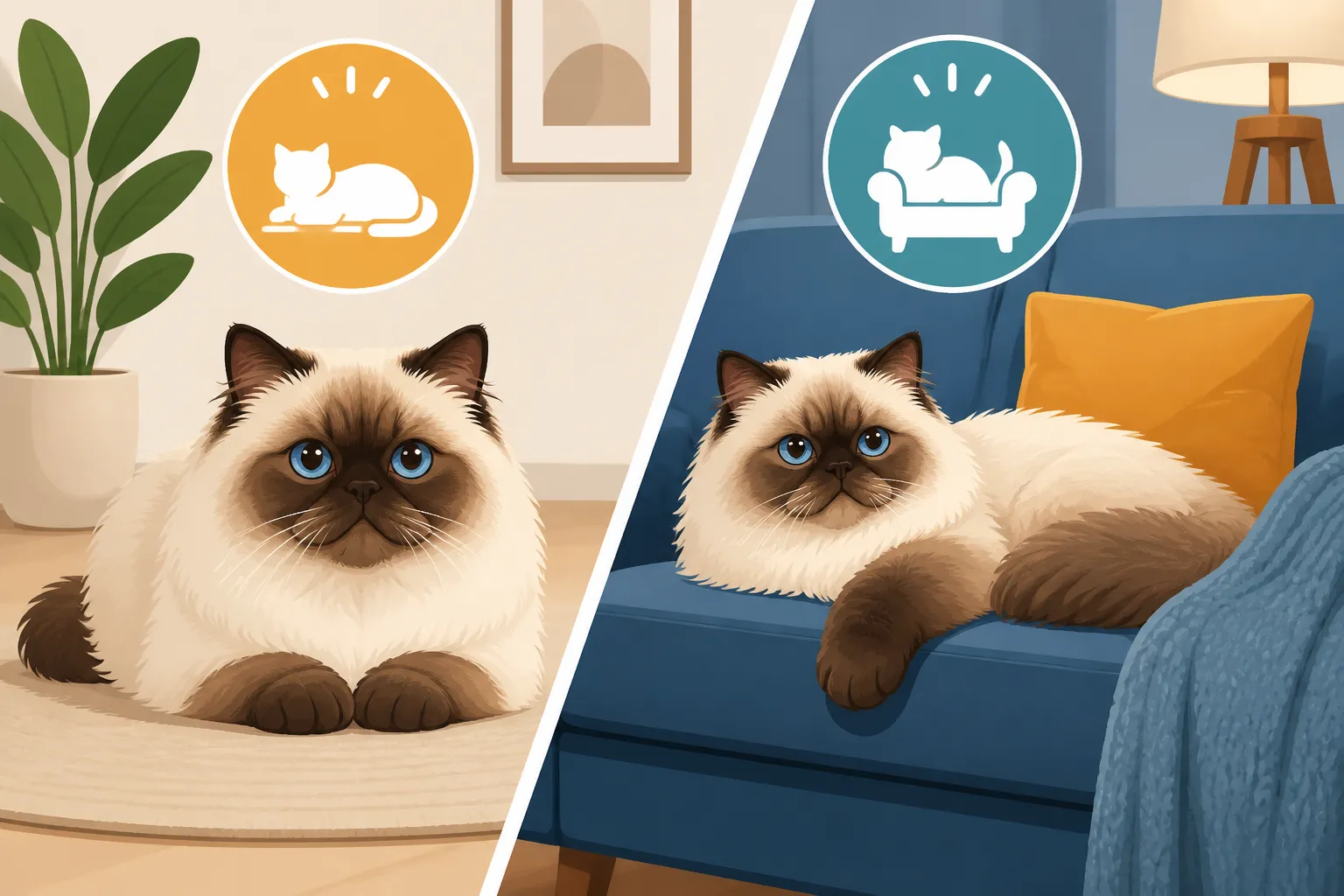
If you've ever owned a Himalayan cat, you've probably noticed they have a unique preference for the ground floor, your comfiest sofa, or perhaps a low-slung armchair. Unlike some of their more acrobatic feline cousins, Himalayans aren't typically found scaling bookshelves or launching themselves onto high cabinets. This guide will dive deep into the fascinating reasons behind this ground-level inclination, exploring everything from their distinctive physical build to their serene temperament, helping you understand and cater to your beloved Himalayan's natural habits.
The Distinctive Cobby Build and Shorter Legs
One of the most immediate and impactful reasons your Himalayan prefers the sofa to the ceiling fan is their distinctive physical structure. They are built differently from many other cat breeds, and this absolutely dictates their comfort and capabilities when it comes to navigating heights. It's not laziness, it's simply how they're made!
Short Stature and Leg Length
Himalayans inherit their "cobby" body type and shorter legs primarily from their Persian lineage. This means they have a stocky, compact build, with a broad chest and a short, thick neck. Their legs, while strong, are not long and slender like those of a Siamese or an Abyssinian. Imagine trying to spring onto a tall counter if you had disproportionately shorter legs – it would be quite the effort, wouldn't it? For a Himalayan, those few extra inches to a high perch can feel like a mountain. They might look at that towering cat tree with a casual glance, but the internal calculation of effort versus reward often lands squarely on "not worth it." This isn't to say they can't jump; many can make surprisingly graceful, albeit low, leaps onto a sofa or a chair. But anything requiring significant vertical thrust or multiple elevated platforms is usually a no-go. You might notice them Why a Himalayan's Short Persian Legs Skip a Step on occasion, a subtle reminder of this physical characteristic.
This short stature also means their center of gravity is lower, making them incredibly stable on solid, flat surfaces. They are designed for comfort and elegance on the ground, not for nimble scaling. When they do attempt a jump, it's often more of a powerful, controlled surge forward and upward, rather than the light, airy spring of a naturally arboreal cat. This makes landing confidently on a narrow shelf or a precarious perch far less appealing, as the risk of misjudging the landing increases.
Weight Distribution and Balance
Coupled with their shorter legs, Himalayans tend to have a substantial, well-muscled body. While they should not be overweight, a healthy, adult Himalayan can easily weigh between 7 and 12 pounds, with some males tipping the scales even higher. This robust body mass, distributed over a cobby frame, means that high-flying acrobatics simply aren't in their nature. They are built for lounging, not for leaping. When you pick up a healthy Himalayan, you often feel their surprising density and solid build. What a Himalayan's Cobby Frame Should Weigh will give you a better idea of what a healthy weight range looks like for them.
Their balance, while excellent on flat ground, isn't always suited for navigating narrow ledges or high, unstable surfaces. A cat built for climbing often has a long, agile tail that acts as a counterbalance, almost like a tightrope walker's pole. A Himalayan's tail is typically shorter and plumed, serving more as an aesthetic balance than an active tool for scaling. This isn't a deficit, it's just a different design for a different lifestyle. They prefer to feel all four paws firmly planted, whether that's on your living room rug or nestled securely into the cushions of your favourite armchair. This sense of stability is paramount to their comfort and feeling of safety.
The Impact of Their Dense Coat on Temperature Regulation
Another major factor contributing to your Himalayan's floor-and-sofa preference is their magnificent, dense coat. While undeniably beautiful, this long, luxurious fur comes with its own set of challenges, particularly when it comes to staying cool and comfortable.
Overheating Risk
Himalayans are a pointed breed, meaning their extremities (face, ears, paws, tail) are darker due to a temperature-sensitive enzyme that activates in cooler body parts. However, their core body is usually a pale cream or white and covered in an incredibly thick, double coat. This coat, while stunning to look at and wonderfully soft, acts like a built-in fur blanket. In warmer environments, or even just during periods of sustained activity, this can lead to them overheating quite quickly. Cats regulate their temperature primarily through panting and sweating through their paw pads, neither of which are terribly efficient when you're essentially wearing a heavy winter coat all year round.
Think about how quickly you'd feel warm wearing a thick wool jumper indoors, even on a mild day. Now imagine that jumper is permanently attached! This makes them acutely sensitive to ambient temperatures. They will naturally seek out cooler spots in your home. The floor, particularly tiled or wooden areas, is often significantly cooler than elevated surfaces where warm air tends to rise and collect. That's why you'll often find them stretched out on a cool kitchen floor or tucked under a piece of furniture where the air flow is better. How to Cool a Long Coated Himalayan in Summer can offer some practical advice on managing this.
Reduced Agility Due to Bulk
The sheer volume and density of a Himalayan's coat can also contribute to a feeling of bulkiness, further discouraging ambitious climbing. While the cat underneath the fur is quite nimble, the added 'drag' and weight of the coat can make them feel less streamlined for jumping and balancing. This isn't to say their coat makes them heavy; it's more about the physical sensation and impedance it creates during movement.
Imagine trying to navigate a tight space or perform a complex maneuver while wrapped in layers of thick fabric. It just makes things a bit more cumbersome. This perceived bulk, combined with their already cobby body type, means that a Himalayan often prioritizes comfort and stability over reaching precarious heights. They'd much rather settle into a plush cushion on the sofa, where their beautiful coat can spread out without getting snagged or feeling restrictive, than squeeze themselves onto a narrow perch. This preference for grounded, unobstructed movement is a natural consequence of their luxurious, high-maintenance fur.
The Flat Face and Breathing Challenges
The distinctive "Peke-face" or "Doll-face" profile of a Himalayan, while adored by many, is another significant factor in their preference for staying low. This brachycephalic (flat-faced) structure directly impacts their breathing and overall energy levels, making high-energy activities less appealing.
Breathing Limitations
Himalayans, particularly those with the more extreme Peke-face profile, often have shortened nasal passages and sometimes elongated soft palates. This anatomical structure, known as Brachycephalic Airway Syndrome (BAS), can make breathing more challenging, especially during exertion or in warm conditions. While many Himalayans live perfectly comfortable lives, vigorous activity, like repeated jumping or climbing, can quickly lead to shortness of breath and even panting. You might notice Why a Himalayan Snores Louder Than Its Siamese Ancestors or When a Himalayan's Open Mouth Breathing Needs a Vet if their breathing is particularly labored.
For a Himalayan, a simple sprint across the living room or a short burst of play can be more taxing than for a long-nosed cat. Asking them to repeatedly jump to high places would be like asking a human with asthma to run up several flights of stairs just for fun. They instinctively conserve energy and avoid situations that will make them uncomfortable. The sofa or floor offers a comfortable, low-impact environment where they can relax and breathe easily without putting undue strain on their respiratory system. They prioritize their ability to breathe freely over the perceived thrill of elevation.
Vision and Depth Perception
While not universally true for all flat-faced breeds, some Himalayans, particularly those with very prominent eyes and a significantly flattened face, can have a slightly altered field of vision. Their wide-set eyes, while beautiful, might impact their depth perception, especially at angles that require precise judgment of distance for jumping. This is often exacerbated by their plush ruff, which can further obscure their peripheral vision, especially when looking downwards from a height.
Imagine trying to accurately gauge the distance to a landing spot if your vision was slightly obstructed or skewed. It would make you far more cautious, wouldn't it? A Himalayan might simply prefer to avoid situations where such precise visual judgment is required, opting instead for the predictable, solid ground. This doesn't mean they are blind or severely vision-impaired; it simply means their unique facial structure can influence their confidence in activities that demand keen depth perception, especially when combined with their other physical characteristics. They're smart enough to know their limits and choose environments where they feel most secure.
Their Gentle, Less Agile Nature
Beyond their physical attributes, a Himalayan's inherent temperament and activity level play a significant role in their preference for ground-level living. They are generally known for being calm, sweet, and incredibly affectionate, rather than boisterous and athletic. The Himalayan Is a Lap Cat That Answers Back perfectly encapsulates their personality.
Less Inclined to Climb
Compared to some of their more active Siamese ancestors or other highly agile breeds, Himalayans are simply not wired for extensive climbing. Their playful bursts tend to be horizontal dashes rather than vertical ascents. They might bat at a dangling toy from the comfort of your lap or chase a laser pointer across the rug, but you're unlikely to see them scaling curtains or launching themselves onto precarious ledges. They much prefer to observe the world from a comfortable, grounded vantage point, like the back of the sofa, or from a sunny patch on the floor.
This isn't a sign of boredom or unhappiness; it's just their natural inclination. They are perfectly content with lower-intensity activities. Their idea of a good time often involves a long nap in a warm spot, a slow-motion stalk of a toy mouse, or a quiet cuddle session. They thrive in environments where they don't need to be constantly on the move or seeking out high places. In fact, forcing them into such activities might even cause them stress or discomfort due to their breathing limitations and physical build.
Preference for Ground-Level Play
When a Himalayan does engage in play, it's typically an interactive, ground-based affair. They love wand toys that can be dragged across the floor, crinkle balls they can bat around, or soft toys they can bunny-kick from a prone position. These types of games allow them to exercise their hunting instincts without demanding strenuous jumps or sustained vertical effort. You might observe Why a Himalayan Watches a Toy Rather Than Chase It before engaging in play, conserving energy for the opportune moment.
Even during a lively play session, a Himalayan might only manage Why a Himalayan Pants After Five Minutes of Play, indicating their need for more frequent breaks. This makes extended climbing sessions impractical and undesirable for them. They'd much rather have you dangle a feather wand from the sofa arm, engaging them in a fun, low-impact chase that allows them to stay close to their favorite resting spots. If you're looking for toys, consider options available on Amazon that encourage ground-level interaction, such as long wand toys or automatic laser pointers that create moving targets on the floor.
The Desire for Comfort and Warmth (or Coolness)
Himalayans are connoisseurs of comfort. Their entire existence seems to revolve around finding the perfect spot for a nap, a cuddle, or simply observing their surroundings without expending too much energy. This innate desire for comfort profoundly influences their choice of resting places.
Seeking Soft, Stable Surfaces
Given their cobby build and long, flowing coat, Himalayans naturally gravitate towards soft, cushioned, and stable surfaces. A plush sofa, a thick rug, a soft bed, or even a favorite blanket on the floor provides the ideal substrate for their bodies. These surfaces offer support for their frame and allow their beautiful fur to spread out without being compressed or uncomfortable. They are not built for perching on narrow ledges or balancing precariously on furniture arms. They want to sink into comfort, not perch precariously.
The softness of these surfaces also provides a gentle landing spot should they decide to hop down, reducing any impact on their joints. This is especially true as they get older, and their joints might not be as spry as they once were. Think of your own preference for a soft mattress or a comfortable armchair after a long day – your Himalayan feels much the same about their chosen resting spots. They appreciate the security and luxurious feel of a stable, yielding surface beneath them.
The Appeal of a Consistent Spot
Himalayans are creatures of habit. Once they've found a spot that meets their criteria for comfort, safety, and optimal temperature (whether warm or cool), they tend to claim it as their own. This might be a particular cushion on the sofa, a sunbeam on the rug, or a cozy bed in a quiet corner. They value predictability and routine, and their chosen resting spots become an integral part of their daily rhythm. You'll observe How Often a Himalayan Notices Anything Has Changed in their environment, especially regarding their comfort zones.
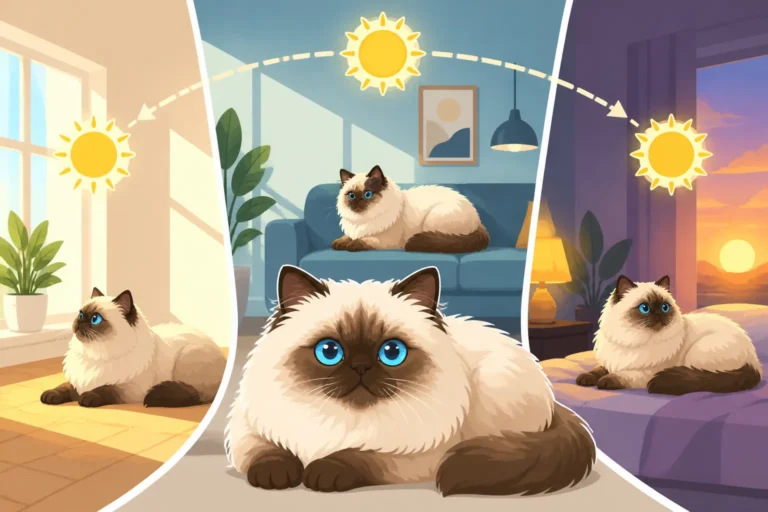
They may even move throughout the day to follow the sun or find the coolest patch of floor as temperatures shift. In winter, they'll seek out the warmest blanket or a spot near a radiator. In summer, you'll find them stretched out on cool tile or hard floors. You might consider placing a cooling mat, easily found on Amazon, in their favorite low-lying spots during warmer months. This adaptation to temperature, seeking the ideal microclimate, often keeps them firmly on the ground or low furniture where they can best regulate their body temperature within their dense coat. This constant search for comfort reinforces their preference for accessible, stable, and temperature-controlled surfaces.
Routine and Predictability Preference
Himalayans are generally cats who appreciate a consistent environment and a predictable schedule. This trait extends to their physical spaces and contributes to why they stick to the familiar comfort of the floor and sofa rather than exploring high, novel territories.
Settling into Familiar Spaces
These beautiful cats thrive on routine. They find comfort and security in knowing where things are and what to expect. Their favorite spots on the floor or sofa become extensions of their established daily patterns. Moving furniture, introducing new elevated cat trees, or encouraging them to explore new heights can actually be unsettling for some Himalayans. They've already assessed their world from ground level and found their safe, comfortable zones. You might find that How Long a Himalayan Takes to Accept a Change in their routine or environment can be quite significant.
Their contentment stems from predictability. They know how to get on and off the sofa safely, they know the temperature variations of different floor tiles, and they understand the dynamics of their immediate, lower-level environment. Introducing new variables, such as navigating a multi-tiered cat tower, requires them to re-evaluate risks and expend mental and physical energy that they'd often rather conserve. This isn't laziness; it's simply a preference for an established, known, and reliable world.
Resistance to Novel Heights
Because of their physical limitations and temperament, a Himalayan is less likely to be an adventurous climber. While a curious kitten might briefly explore higher surfaces, most adult Himalayans will show a distinct lack of interest in complex climbing structures or very high perches. They don't typically feel the innate drive to survey their kingdom from the highest point, a common characteristic in more arboreal cat breeds.
If you introduce a tall cat tree, you might find your Himalayan using the very bottom tier as a scratching post or a nap spot, but rarely venturing higher. This is often because the effort required to reach those heights isn't balanced by a strong intrinsic motivation for elevation. They prefer to rule their roost from a comfortable, eye-level position, making the sofa or a low window perch their preferred observation deck. Even for play, Why a Himalayan's Cat Tree Should Be Waist High at Most is a good guideline, as they are unlikely to make use of higher levels. Their world is rich and engaging at ground level, and they see little reason to change that.
Environmental Factors and Safety
Creating a safe and accessible environment for your Himalayan reinforces their preference for staying low. Their unique physical characteristics mean that certain aspects of a typical cat-friendly home need to be considered differently.
Avoiding Falls and Injury
For a cobby, sometimes less agile cat with a thick coat and potentially compromised breathing, the risk of a fall from a height is a genuine concern. A misstep from a tall shelf or a clumsy landing from a counter could lead to serious injury. Himalayans, with their more deliberate movements, instinctively avoid situations where such risks are higher. Their body is not designed for graceful mid-air corrections or soft landings from great distances.
By staying on the floor or low furniture, they significantly reduce their chances of accidental falls. This is a survival instinct, albeit one that manifests as a preference for lounging. As responsible pet parents, ensuring their environment is safe means embracing their low-to-the-ground lifestyle. This might involve providing pet stairs for the sofa or bed, ensuring stable, wide surfaces if they do venture onto low furniture, and generally avoiding encouraging them to climb high, precarious structures. This creates a comfortable, low-stress environment where they feel secure.
Accessibility of Resources
Another practical reason Himalayans prefer to stay low is the accessibility of their essential resources. Food, water, and litter boxes are, by necessity, kept at ground level. For a cat that prioritizes ease of movement and comfort, having everything within easy reach reinforces the appeal of staying grounded.
Imagine if their food bowl was on a high shelf – it would be an unnecessary daily climb. Even something as simple as drinking water can be an effort if the bowl is too deep or placed too high for their flat face. Special considerations need to be made for their feeding dishes, choosing wide, shallow bowls that they can eat from comfortably without bending their whiskers or pushing food out. Many excellent options can be found on Amazon designed for brachycephalic breeds. Which Puzzle Feeder a Himalayan Can Get Its Face Into is also a good question to consider for enrichment at floor level.
Similarly, litter boxes need to be easily accessible, especially for their short legs. A high-sided box, while great for containing litter spray, might be a physical challenge for a Himalayan to enter and exit gracefully, particularly as they age. A low-entry litter box is often preferred, ensuring they don't have to jump or strain to use the facilities. This practical consideration solidifies their preference for a life lived largely at floor level, where all their needs are met without undue effort.
The Practicalities of a Himalayan's Lifestyle
Owning a Himalayan means understanding and adapting to their unique needs, many of which reinforce their preference for staying low. From grooming to owner interaction, their grounded lifestyle often simplifies certain aspects of their care while highlighting others.
Grooming Considerations
A Himalayan's magnificent long, dense coat requires daily attention to prevent matting. This grooming routine is much easier to perform when your cat is relaxed and settled on a stable surface like the floor, a grooming table, or your lap on the sofa. Trying to groom a Himalayan that's constantly attempting to climb or balance on high perches would be an exercise in futility and frustration for both cat and owner.
Their preference for staying low simplifies the grooming process immensely. You can comfortably sit on the floor with them, or have them on your lap on the sofa, making it easier to reach all parts of their body, including their often-matted "britches" and underarms. This daily ritual, which is critical for their health and comfort, is facilitated by their calm, grounded nature. It's much simpler to work through a knot or brush out loose undercoat when they are not trying to navigate heights. This symbiotic relationship between their low-key lifestyle and their grooming needs further reinforces why they are so happy on the floor or the sofa. What Daily Combing Costs a Himalayan Owner in Time highlights the importance of this routine.
Impact on Owner Interaction
A Himalayan's preference for the floor and sofa also shapes how they interact with their human companions. These cats are known for being affectionate lap cats, and their desire to be close to their people often means settling wherever you are, which, for many of us, is often on the sofa or in a chair. They aren't aloof cats who prefer to watch from a distance; they want to be part of the action, even if that action is just watching TV together.
Their love for being near you, combined with their disinclination for heights, translates into a constant presence at your level. They will curl up on your lap, nap at your feet, or recline on the sofa right beside you. This makes for a wonderfully close and interactive companionship. You don't have to coax them down from high places; they're already there, waiting for a pet or a quiet moment. This aspect of their behavior makes them incredibly appealing companions for those who appreciate a devoted, calm, and ever-present feline friend who prefers the comfort of shared, grounded spaces. How Many Hours a Day a Himalayan Is Actually Awake might surprise you, given how much of it is spent in these comfortable, low positions.
| Feature | Himalayan Cat (Floor/Sofa Dweller) | Common Climbing Breeds (e.g., Siamese, Bengal, Domestic Shorthair) |
|---|---|---|
| Body Type | Cobby, robust, short legs; lower center of gravity. | Lean, athletic, long legs; agile and lightweight. |
| Coat | Long, dense double coat; prone to overheating, adds bulk. | Shorter, single coat or sleek double coat; better temperature regulation. |
| Face Profile | Brachycephalic (flat-faced); potential breathing limitations, especially during exertion. | Dolichocephalic (long-nosed); clear airways, efficient breathing for activity. |
| Energy Level | Low to moderate; prefers short bursts of play, long periods of rest and lounging. | High energy; constantly active, seeks mental and physical stimulation through climbing. |
| Motivation for Height | Low; minimal innate drive to scale heights, prefers stable, comfortable surfaces. | High; strong instinct to survey territory from above, loves vantage points. |
| Balance/Agility | Good on flat surfaces, less nimble for precarious perching; shorter, plumed tail. | Excellent agility and balance, uses long tail as counterbalance; prefers narrow ledges and high jumps. |
| Play Style | Ground-based, interactive with owner; chasing toys on the floor, lap play. | Vertical play, climbing cat trees, jumping for toys; enjoys high-intensity, acrobatic games. |
| Ideal Environment | Comfortable, stable, accessible surfaces (sofas, rugs, low cat trees); quiet and predictable. | Vertical spaces, tall cat trees, wall shelves, clear counters; dynamic and stimulating. |
| Owner Interaction | Close, lap-oriented; prefers to be beside or on owner on low furniture. | May observe from a distance, interact on all levels; may prefer to be "eye-level" from a high perch. |
Disclaimer
This article is for general informational purposes only and does not constitute professional advice. Laws, prices and regulations vary by location and change over time. Consult a qualified professional for guidance on your specific situation.