Handling a Himalayan So It Will Let You Comb It
One of the most profound joys of sharing your life with a Himalayan cat is that glorious, flowing coat – but let's be honest, it's also the source of endless concern and often, a battle of wills. Many Himalayan parents struggle with grooming their majestic felines, feeling like every session is a wrestling match rather than a bonding experience. This comprehensive guide will walk you through the art of handling your Himalayan cat in a way that encourages cooperation, making daily combing a peaceful ritual for both of you.
Understanding the Himalayan's Unique Grooming Needs
Let's face it, the Himalayan cat isn't just any cat when it comes to grooming. Their coat is a marvel, a true Persian legacy, but it comes with specific demands that, if ignored, can lead to discomfort for your cat and heartache for you. It's not just about aesthetics; it's about their health and well-being.
The Unique Persian Coat Challenge
The hallmark of a Himalayan is that luxurious, long, dense double coat, a direct inheritance from their Persian ancestors. This isn't just a fluffy outer layer; it consists of a softer, insulating undercoat and longer, coarser guard hairs. While absolutely stunning, this combination is a magnet for tangles and mats. Imagine wearing two sweaters, one thick wool and one fine cashmere, all day, every day. Now imagine trying to move and stretch in it without anything catching or bunching up. That's what your Himalayan deals with. Every time they stretch, roll, or even just walk, their fur rubs against itself, creating tiny knots that, if left unchecked, quickly escalate into tight, painful mats that pull at their skin. It's a constant, never-ending process of potential tangles.
The Flat Face and Tear Stains
Beyond the coat, Himalayans have that adorable, brachycephalic (flat) face, which brings its own set of grooming quirks. Their prominent eyes often water more than other breeds, leading to tear stains that run down their face and into the fur around their nose and chin. These aren't just cosmetic; if the area remains damp, it can create a breeding ground for yeast and bacterial infections, leading to skin irritation and a rather unpleasant odor. It's a daily battle to keep that area clean and dry, a task that requires gentle handling and a cat that trusts you implicitly. You're not just wiping away a stain; you're preventing potential health issues. The specific challenges here mean that The Morning Face Routine Every Himalayan Needs is critical, not optional.
Why Daily is Non-Negotiable
Given the nature of their coat and facial structure, daily grooming isn't a suggestion; it's a fundamental part of responsible Himalayan ownership. Skipping even a day can mean the difference between a quick, pleasant comb-through and wrestling with a budding mat. Think of it like brushing your own long hair. If you skip a day or two, it's manageable. Skip a week, and you've got a knotty mess. For a Himalayan, that progression is exponentially faster. Daily combing helps distribute natural oils, keeps their skin healthy, removes loose fur (reducing hairballs!), and most importantly, prevents those dreaded mats that can require professional intervention and even sedation. It truly does save your cat from discomfort and you from significant veterinary bills down the line. It's also worth considering What Daily Combing Costs a Himalayan Owner in Time as part of the overall commitment.
Starting Early: The Kitten Stage
The absolute best time to instill good grooming habits is when your Himalayan is a tiny, impressionable kitten. They are like sponges, soaking up every experience, and if grooming is introduced as a positive, gentle ritual from the get-go, it can set the stage for a lifetime of cooperative combing.
Early Introduction to Touch
From the moment you bring your Himalayan kitten home, start gently handling them all over. Stroke their back, sides, legs, belly, and even their tail. Gently touch their paws, spread their toes, and softly rub their ears and face. Do this often, for short periods, and always when they are relaxed and receptive. The goal is to desensitize them to touch in all areas, so when the comb comes out, it's not a sudden, alarming invasion of their personal space. Many cats instinctively recoil from having their paws touched, but for a Himalayan, nail trims are essential, so making this a non-event early on is a huge advantage. This gentle handling also helps you bond with your kitten, building trust that will pay dividends during grooming sessions.
Making the Comb a Positive Experience
Once your kitten is comfortable with general handling, introduce the comb. Don't start by vigorously combing. Instead, let them sniff the comb, rub against it, and even play with it for a moment. Then, gently run it over their fur for just a few strokes in an area they enjoy being touched, like their back. Immediately follow this with a high-value treat, some loving praise, or a short play session with a favorite toy. The key here is positive reinforcement. You want them to associate the comb with good things – delicious snacks, affection, or fun. Keep these initial sessions incredibly short, perhaps 30 seconds to a minute, and gradually increase the duration as your kitten's comfort grows. If they show any signs of discomfort, stop, reassure them, and try again later with even gentler strokes or in a different spot. This slow and steady approach is crucial for Getting a Himalayan Kitten Used to the Comb.
Establishing a Routine from Day One
Consistency is king when it comes to grooming a Himalayan kitten. Choose a specific time each day – perhaps after a meal when they're sleepy, or right before a favorite activity – and stick to it. This predictable routine helps your kitten understand what to expect. They'll learn that after breakfast, it's comb time, and that comb time is followed by cuddles or treats. A set location can also help. A quiet, comfortable spot where you both feel relaxed can become your designated "grooming station." This predictability minimizes anxiety and resistance, making grooming a natural part of their day, not a surprise attack. Even if you only manage a minute or two of gentle combing in the early days, that daily routine is building a powerful habit.
Essential Tools for a Himalayan's Coat
You wouldn't try to sculpt a masterpiece with a dull butter knife, right? The same logic applies to grooming your Himalayan. Having the right tools isn't just about efficiency; it's about making the experience comfortable and effective for your cat. Skimping on tools will only lead to frustration for both of you.
The Right Comb for the Job
Forget flimsy plastic combs; they'll barely scratch the surface of a Himalayan's dense coat. You need a sturdy, good-quality metal comb with both wide and fine teeth. This is your primary weapon against mats. The wider teeth are perfect for the initial pass, gently separating the longer guard hairs and feeling for any tangles. The finer teeth then work through the undercoat, catching loose hairs and smoothing everything out. My personal go-to is often a Greyhound-style comb, readily available on platforms like Amazon, because its weight and tooth spacing are just right. Look for one with rounded tips on the teeth to prevent scratching your cat's skin. A rotating-tooth comb can also be very helpful as it glides through tangles with less pulling. Investing in Which Steel Comb a Himalayan's Coat Needs is truly one of the best decisions you can make.
Essential Grooming Accessories
Beyond the primary comb, a few other accessories are non-negotiable for a Himalayan household:
- Slicker Brush: While the comb is for deep detangling, a slicker brush is great for daily surface grooming and removing loose topcoat hairs. Choose one with fine, bent wire bristles. Use it gently, as the bristles can scratch if you press too hard.
- Mat Splitter or Dematting Tool: For those inevitable minor tangles that refuse to budge with a comb, a mat splitter or dematting rake can be a lifesaver. These tools are designed to cut through mats with minimal pulling on the surrounding fur. However, extreme caution is advised. These are sharp tools and should only be used by someone confident in their technique, always pulling away from the skin. If a mat is too close to the skin or too large, it's time to call a professional groomer or vet.
- Blunt-Tip Scissors: For trimming small bits of fur around the face (especially after eye wiping) or sanitary trims around the britches. The blunt tips prevent accidental pokes or cuts. Again, caution is paramount.
- Nail Clippers: Keep those claws trimmed to prevent them from snagging on furniture or, worse, on your own skin during a grooming session.
- Cotton Pads/Soft Cloths and Pet-Safe Eye Wash: Essential for that daily facial care. Which Drops Suit a Himalayan's Exposed Blue Eyes can be very helpful for preventing irritation.
- Grooming Table (Optional but Recommended): A non-slip grooming table, even a small, portable one, can elevate your cat to a comfortable working height for you. This saves your back and often keeps your cat more still, as they associate it with a specific task rather than just casual cuddles on your lap.
Creating a Dedicated Grooming Space
Just like establishing a routine, having a dedicated grooming space can make a world of difference. This doesn't need to be a fancy salon; a clean, quiet, well-lit area is perfect. It could be a specific spot on a table (with a non-slip mat, always!), a corner of a sturdy counter, or even a designated spot on the floor where distractions are minimal. The key is consistency. Your Himalayan will learn that when they are placed in this spot, it's grooming time, and they'll be less likely to try and bolt. Ensure all your tools are within easy reach so you don't have to break contact or leave your cat unattended while fumbling for a comb. Good lighting is also crucial for spotting those insidious tiny mats before they become major problems.
The Art of the Daily Comb: Technique and Patience
Now that you've got your tools and your dedicated space, let's talk technique. This is where patience truly comes into play. You're not just combing fur; you're building trust and making an investment in your Himalayan's long-term comfort.
Gentle Handling and Positioning
Approaching your Himalayan with a calm, confident demeanor is step one. Scoop them up gently, supporting their substantial, "cobby" body. Place them on your grooming surface. If they're on your lap, position them so you have easy access to their sides and back without having to twist them into uncomfortable positions. Start with soft strokes and quiet praise. Many Himalayans are quite amenable to being brushed while lying down on their side, allowing you to access their belly and inner legs, areas notoriously prone to matting. Avoid scruffing unless absolutely necessary (and then, only for very short durations and with care), as it can be distressing and counterproductive to building trust. The goal is to make them feel secure, not restrained. Remember, Lifting a Cobby Himalayan Without Straining Its Back is important for you and them.
Sectioning the Coat Effectively
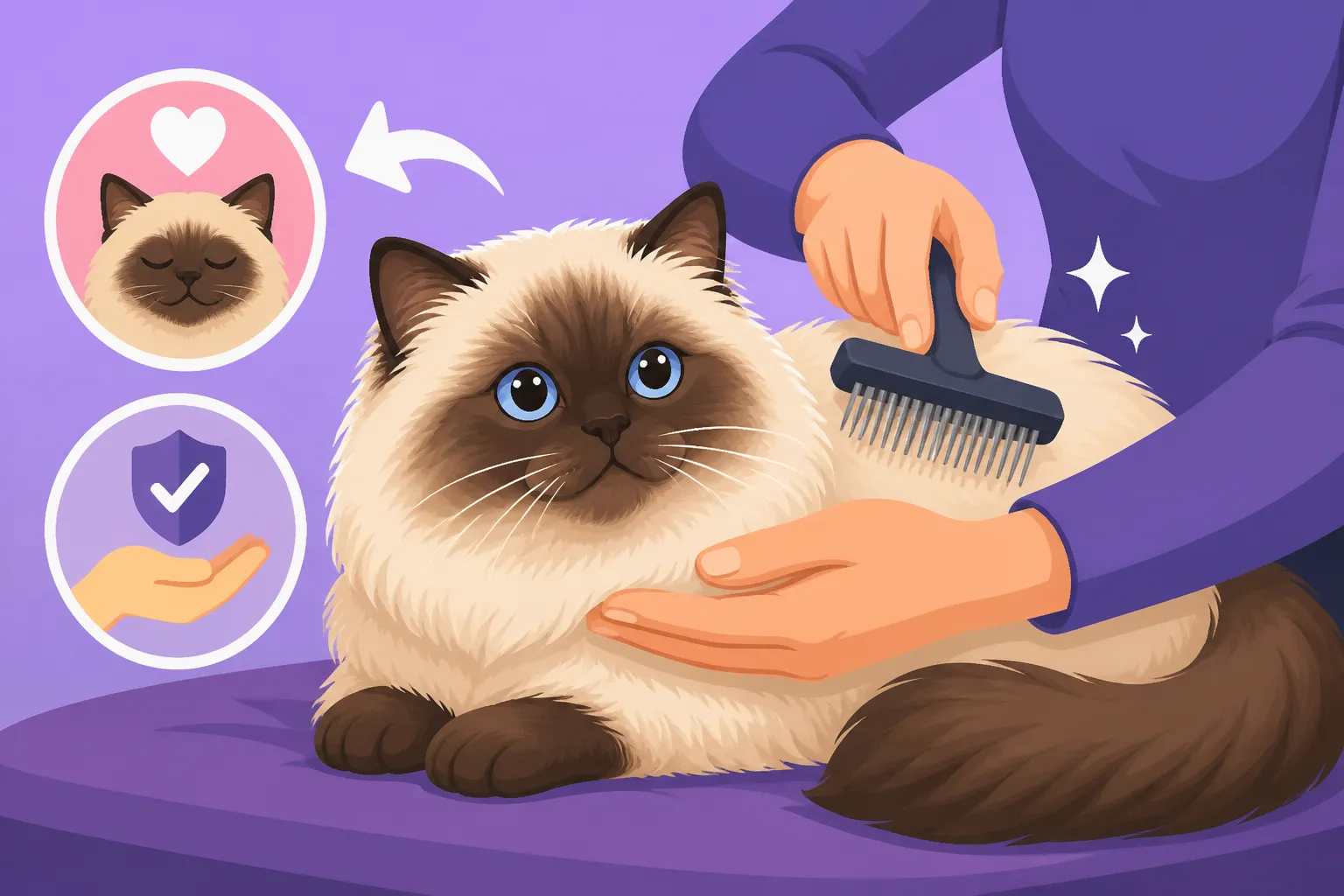
A Himalayan's coat is too dense to tackle all at once. The secret to success is sectioning. Imagine you're styling a human's long hair – you wouldn't just dive in. Start by using your wide-toothed comb on an easy area, like their back or shoulders. Gently part the fur with your fingers, working in small sections, always combing with the direction of hair growth, never against it.
Once you've done a general pass with the wide-toothed comb, switch to the finer teeth. Again, part the fur, hold the fur closer to the skin with one hand (this helps prevent pulling when you encounter a tangle), and comb downwards in short, gentle strokes. Work your way methodically around their body: back, sides, chest, belly, legs, and finally, the notoriously tricky britches and armpits. These hidden areas are often where mats first form. Combing a Himalayan's Britches Without Turning It Over requires a specific technique, often involving the cat lying on its side. Take your time, focus on one small section, and then move to the next.
Rewarding Good Behavior
Positive reinforcement isn't just for kittens; it's a lifelong strategy for a Himalayan. Throughout the grooming session, offer quiet praise ("Good kitty!"), gentle reassuring strokes, and every few minutes, a tiny, high-value treat. If your cat tolerates a particularly difficult area, reward them immediately. Make the end of the session a clear positive experience, too. A favorite treat, a special toy, or some dedicated cuddle time signals that they've done well and that grooming isn't something to dread. Never punish or scold your cat during grooming, even if they're being difficult. This will only create negative associations and make future sessions even harder. Instead, if they're truly stressed, take a short break, let them calm down, and then resume, perhaps for a shorter session. This approach makes What a Himalayan Will Take to Sit Through a Comb much more positive.
Common Challenges and Troubleshooting
Even with the best intentions and techniques, you're bound to run into some bumps in the road. Himalayans are still cats, after all, and they have opinions! Knowing how to anticipate and address common grooming challenges can save you a lot of stress.
Dealing with Mats and Tangles
Mats are the bane of every Himalayan owner's existence. The moment you find one, resist the urge to pull or yank. This is painful for your cat and will only make them hate grooming.
For small, loose tangles:
- Isolate: Gently separate the tangled section from the surrounding fur.
- Apply a Detangler: A pet-safe detangling spray can help lubricate the fur and make it easier to work through. You can find these on Amazon or at your local pet store.
- Finger Pick: Start by gently trying to tease the knot apart with your fingers.
- Work from the Outside In: Use the wide teeth of your metal comb or a special dematting comb. Start at the very end of the tangle, working just a few hairs at a time. Hold the fur closer to the skin to minimize pulling. Gradually work your way closer to the skin.
- Small Scissors (Extreme Caution): If a mat is particularly stubborn and resistant to combing, and it's not tight against the skin, you might be able to carefully cut it out. Use blunt-tip scissors and always, always slide the comb underneath the mat, between the mat and the skin, and then cut above the comb. This creates a barrier to protect the skin. If you have any doubt, stop. Seriously, it's not worth accidentally cutting your cat. This is where Working a Mat Out From Under a Himalayan's Points becomes very tricky and often needs professional help.
For large, tight, or skin-bound mats, do not attempt to cut them yourself. These are incredibly painful and can hide skin infections or wounds underneath. This is a job for a professional groomer or veterinarian. Why a Matted Himalayan Becomes a Medical Case is not an exaggeration.
Handling a Resistant or Fearful Cat
Some Himalayans, especially those not introduced to grooming early or with past negative experiences, can be quite resistant or even fearful.
- Patience is paramount: Rushing will only make it worse. If your cat is struggling, stop, let them calm down, and try again later or for a shorter period.
- Desensitization: Revert to basics. Start with very gentle petting, then brief touches with the comb, immediately followed by rewards. Gradually increase the duration and intensity.
- Calming Aids: Talk to your vet about calming diffusers (like Feliway), calming treats, or even a very mild sedative for extremely anxious cats, especially for their first few grooming sessions.
- Wrapping (Carefully): For very squirmy cats, a "burrito wrap" in a soft towel can sometimes provide comfort and control, but only if your cat tolerates it and doesn't become more distressed. Ensure their face is clear, and they can breathe easily.
- Short, Frequent Sessions: Instead of one long, stressful session, try two or three very short, positive sessions throughout the day.
- Identify Triggers: What specifically makes them resistant? Is it a certain area? A particular tool? Try to adjust your approach based on their cues.
Preventing Grooming Aggression
A cat that bites or scratches during grooming is usually doing so out of fear, pain, or discomfort. It's their way of saying "stop!"
- Listen to their signals: Pay attention to subtle signs of stress like flattened ears, tail twitching, dilated pupils, tensing up, or growling/hissing. Stop before they escalate to biting.
- Never punish: As mentioned, punishment will backfire, leading to more aggression in the future.
- Professional Help: If your cat is consistently aggressive and you're unable to make progress, consult with a veterinarian or a certified feline behaviorist. They can help identify the root cause of the aggression and develop a safe management plan. Sometimes, underlying pain (like arthritis) can make grooming unbearable, so a vet check is always a good idea if aggression is new. Remember, Why a Himalayan That Fights Grooming Ends Up Sedated is often a last resort for their own safety and welfare.
Beyond the Comb: Maintaining Overall Coat Health
Grooming a Himalayan isn't just about the comb. There are other aspects of their care that contribute to a healthy, mat-free coat and a comfortable cat.
Bathing a Himalayan (Rarely, but Sometimes Needed)
Most cats, Himalayans included, are quite adept at self-grooming. However, their long, dense coats can sometimes get into trouble, especially around the britches or if they get into something sticky or messy.
- Infrequent is Best: Unless absolutely necessary, bathing should be a rare event for a Himalayan. Over-bathing can strip essential oils from their skin and coat, leading to dryness and irritation.
- The Right Shampoo: If a bath is needed, use a specifically formulated pet shampoo that is gentle and moisturizing. Avoid human shampoos, which can be too harsh for a cat's skin.
- Thorough Rinsing: This is the most crucial step. Any shampoo residue left in that dense coat will irritate the skin and can actually attract more dirt and cause matting. Rinse until the water runs completely clear and you can feel no slickness on the fur.
- Power Drying: A Himalayan's coat takes ages to dry naturally, and leaving it damp can lead to skin issues and matting. Use a pet-safe low-heat blow dryer or a forced-air dryer, carefully combing and fluffing the coat as you go. Make sure they are bone-dry down to the skin. How to Dry a Himalayan Down to the Skin is a task that often requires significant time and patience.
Nail Trimming Considerations
Even if your Himalayan rarely uses a scratching post (and many are content to just lounge!), their claws will grow. Long claws can snag, cause pain, and, if they grow too long, can even curve back into the paw pad, leading to infection.
- Regular Trimming: Aim for a trim every 2-4 weeks.
- Good Clippers: Invest in sharp, good-quality cat-specific nail clippers.
- The Quick: Be careful to only trim the very tip of the claw, avoiding the "quick," which is the pink part containing blood vessels and nerves. Cutting the quick is painful and will cause bleeding. If you do accidentally nick it, a styptic powder can stop the bleeding.
- Start Early: As with combing, introduce nail trims during kittenhood to desensitize them. Trimming a Himalayan's Claws When It Rarely Uses a Post becomes easier with regular practice.
Eye and Ear Care Integration
These often-overlooked areas are critical for a Himalayan's overall comfort and coat health.
- Daily Eye Wiping: Their flat faces mean tear production can be excessive. Use a soft, damp cloth or a pet-safe eye wipe to gently clean around their eyes every single day. Pay special attention to the folds around the nose where moisture can accumulate. If neglected, What Happens If a Himalayan's Nose Fold Stays Damp can lead to uncomfortable and smelly skin fold dermatitis.
- Tear Stain Management: For persistent tear staining, consider specific tear stain removers (always consult your vet first) or ensure you're using filtered water for drinking, as minerals in tap water can sometimes exacerbate staining.
- Ear Checks: While Himalayans generally don't have a high incidence of ear infections, their small, low-set ears can sometimes trap dirt or wax. Once a week, gently lift their ear flap and check for any redness, odor, or excessive wax buildup. If you see anything unusual, consult your vet. Only clean with a vet-approved ear cleaner and cotton ball, never insert anything deep into the ear canal.
When to Call in a Professional
Sometimes, despite your best efforts, you might need a helping hand. There's absolutely no shame in seeking professional help for your Himalayan's grooming. In fact, it's a responsible part of their care.
Recognizing When You're Outmatched
It's crucial to be honest with yourself about your limits. You might be outmatched if:
- Mats are widespread or severe: If you find large, tight mats close to the skin, especially in sensitive areas like armpits, behind the ears, or on the belly, trying to remove them yourself can cause immense pain and injury.
- Your cat is highly aggressive: If grooming sessions consistently result in bites, scratches, or extreme distress for your cat, it's safer for both of you to involve a professional.
- You lack confidence: If you're nervous about using clippers or sharp tools, or if you're unsure about how to tackle a specific grooming challenge, a professional can provide guidance or do the job safely.
- Time constraints: Life gets busy. If you simply don't have the 15-30 minutes daily that a Himalayan's coat demands (and sometimes How Long a Himalayan's Daily Comb Takes can be even longer), a professional can help maintain their coat between your at-home efforts.
The Benefits of Professional Grooming
Professional groomers are trained and equipped to handle even the most challenging coats and temperaments.
- Mat Removal: They have specialized tools and techniques to safely and efficiently remove severe matting, often requiring a "lion cut" or extensive clipping to start fresh. This is often the safest and most humane option for a severely matted cat. When a Lion Cut Is the Right Answer for a Himalayan is a serious decision that a professional can guide you through.
- Full Coat Care: They can provide a thorough bath, blow-dry, full comb-out, nail trim, ear cleaning, and even sanitary trims.
- Early Detection: Groomers often spot skin issues, lumps, or other health concerns that you might miss under that dense coat.
- Less Stress for You: Taking your cat to a professional can alleviate the stress and frustration you might experience trying to manage a difficult coat yourself.
Preparing Your Himalayan for a Groomer Visit
Even a professional groomer appreciates a little help!
- Communicate: Be open and honest with the groomer about your cat's temperament, any problem areas, and their history with grooming.
- Vet Check: If your cat is particularly matted or aggressive, consider a vet visit first. The vet can check for underlying pain and may even recommend sedation for the grooming session to ensure it's stress-free for your cat. Why a Matted Himalayan Ends Up Clipped Under Sedation is a common scenario.
- Carrier Training: Make sure your cat is comfortable in their carrier. A stress-free ride to the groomer is a good start.
- No Food Right Before: Avoid feeding your cat a large meal right before a grooming appointment, especially if they are prone to motion sickness or anxiety-related upset stomachs.
The Lifelong Commitment to Grooming
Owning a Himalayan is a marathon, not a sprint, when it comes to grooming. It's a commitment that lasts their entire life, but the rewards are immense – a healthy, happy cat and a deep bond built on trust and consistent care.
Adapting Grooming for Senior Himalayans
As Himalayans age, their needs change. They might develop arthritis, making it painful to stand for long periods or reach certain areas to groom themselves. Their skin might become more fragile, and their energy levels will drop.
- Gentler Touch: Be even more gentle and sensitive to their discomfort. Use softer brushes if their skin is more delicate.
- Shorter Sessions: Break grooming into even shorter, more frequent sessions to avoid over-tiring them.
- Temperature Control: Older cats can be more sensitive to temperature. Ensure their grooming spot is warm and comfortable.
- Increased Assistance: You might find yourself doing more of their self-grooming for them, especially for hard-to-reach areas like their back, tail, and britches. What an Old Himalayan Needs Once Its Coat Starts Matting often involves more dedicated daily care from you.
- Vet Consultation: Regularly discuss grooming challenges with your vet. They might recommend pain relief or supplements to improve joint comfort, making grooming more tolerable for your senior cat.
The Mental and Physical Benefits of Regular Grooming
Beyond preventing mats, regular grooming offers a wealth of benefits for your Himalayan:
- Improved Circulation: The act of combing stimulates blood flow to the skin, promoting healthy coat growth and overall skin condition.
- Reduced Hairballs: By removing loose fur, you significantly reduce the amount your cat ingests during self-grooming, thus minimizing hairball formation and associated digestive issues.
- Early Detection of Health Issues: Daily handling allows you to routinely check your cat's skin for lumps, bumps, parasites, or injuries that might otherwise go unnoticed under their thick coat. This early detection can be critical for prompt veterinary intervention.
- Enhanced Bonding: For many cats and owners, grooming becomes a cherished bonding ritual. The physical contact, the quiet conversation, and the feeling of care foster a deeper connection and trust between you and your feline companion.
- Stress Reduction: A well-groomed cat is a comfortable cat. Being free of painful mats and skin irritation significantly contributes to their overall well-being and reduces chronic stress.
The Bond Forged Through Care
Ultimately, handling your Himalayan for grooming is more than just a chore; it's a testament to your commitment and love. It's in those quiet moments, gently working a comb through their luxurious fur, offering a reassuring word, and watching them relax under your touch, that the true bond between you strengthens. It’s a profound responsibility, yes, but it’s also an incredible opportunity to connect with your beautiful companion. By approaching grooming with patience, the right tools, and a deep understanding of your Himalayan's unique needs, you're not just maintaining a coat; you're nurturing a relationship that will bring joy for many years to come.
Disclaimer
This article is for general informational purposes only and does not constitute professional advice. Laws, prices and regulations vary by location and change over time. Consult a qualified professional for guidance on your specific situation.