How Much More Play a Himalayan Wants Than a Persian
It's a common misconception that all long-haired, plush cats are content to simply be living decor, especially when you're looking at a fluffy Himalayan. Many prospective owners expect a quiet, sedate feline companion, perhaps assuming the Himalayan is just a Persian in fancy dress. But if you've ever owned one, you know there's a definite spark there, a surprising zip that their Persian cousins often lack. This guide aims to thoroughly explore just how much more playfulness a Himalayan brings to the table compared to a pure Persian, delving into the nuances of their energy levels, play styles, and how their unique heritage shapes their interactive nature.
The Himalayan's Energetic Ancestry: More Than Just a Plush Persian
When you first meet a Himalayan, with their magnificent long coat, deep blue eyes, and often serene expression, it's easy to assume they are simply a variant of the Persian. And in many registries, they are classified as such – a Colorpoint Persian. However, their history tells a different story, one that explains the distinctive twinkle in their eye and the unexpected bursts of energy. The Himalayan isn't just a Persian; it's a careful blend, an exquisite fusion that brought together the Persian's luxurious coat and calm demeanor with the vibrant personality and striking point coloration of the Siamese. This intentional crossbreeding in the mid-20th century created a cat that, while embodying much of the Persian's physical grandeur, inherited a delightful splash of its Siamese ancestor's vivacity.
The Siamese Spark in a Persian Package
Imagine combining two distinct personalities. On one paw, you have the Persian, known for its dignified, often lazy, and generally quiet nature. Persians are creatures of comfort, perfectly happy to recline on a soft cushion, observing the world with calm detachment. They are truly the aristocrats of the cat world, valuing peace and quiet above all else. On the other paw, you have the Siamese, a breed famous for its boisterous voice, boundless energy, and insatiable curiosity. Siamese cats are highly interactive, often described as "dog-like" in their devotion and their tendency to follow their humans from room to room, engaging in long, often loud, conversations. They demand attention and participate actively in household life.
The Himalayan, then, sits right in the middle, a beautiful compromise. While they certainly inherited the Persian's stunning long coat and cobby body, they also received a significant infusion of that Siamese "spark." This means a Himalayan isn't just a furry cushion; it's a cat with an inner motor, a keen intelligence, and a definite desire for interaction. They might not be scaling curtains or vocalizing with the piercing intensity of a purebred Siamese, but they certainly aren't content to simply nap all day. You'll find your Himalayan has a more pronounced desire to engage, to explore, and to communicate its needs and observations. It’s this underlying Siamese energy that gives them a play drive often surprising to those accustomed only to the languid Persian. This duality is what makes them such fascinating companions – a plush lap cat that still possesses a lively spirit. This is also where you hear the difference in their vocalizations; if you're curious, you can learn more about Where the Himalayan's Voice Came From.
Temperament Differences: Active Curiosity vs. Regal Repose
The contrast in temperament between a Himalayan and a Persian often boils down to their approach to their environment and their human companions. A typical Persian cat, while affectionate and loyal, often expresses this loyalty through quiet presence. They might choose to nap on your lap or beside you on the sofa, content with proximity rather than constant interaction. Their curiosity is usually a low-key affair; they might glance at a new object in the room but rarely feel the need to physically investigate it with the same urgency as other breeds. They are perfectly content with a predictable, calm routine and can become quite stressed by significant changes or excessive noise.
A Himalayan, however, exhibits a more active form of curiosity. That Siamese lineage encourages them to be more aware of their surroundings, to follow you from room to room, and to gently "supervise" your activities. If you bring a new grocery bag into the house, a Persian might watch from its perch. A Himalayan, on the other hand, is far more likely to approach the bag, sniff it, perhaps even attempt a gentle pawing to see what treasures it holds. They engage with their environment and their people in a more participatory way, often communicating their thoughts and desires with soft trills and chirps rather than loud meows. If you’ve wondered why your Himalayan seems to "talk" to you, it’s all part of this heritage, and you can delve deeper into Why a Himalayan Talks More Than the Persian It Descends From. This isn't to say Himalayans are high-strung; they still possess a wonderful calmness from their Persian side. But it's a calm that is punctuated by moments of curious exploration and a clear desire for interaction, a stark contrast to the Persian's often regal, almost unbothered, repose. They love to be involved in the quiet happenings of your home, observing and occasionally participating with a gentle, inquisitive nature.
Unpacking the Play Styles: Himalayan vs. Persian
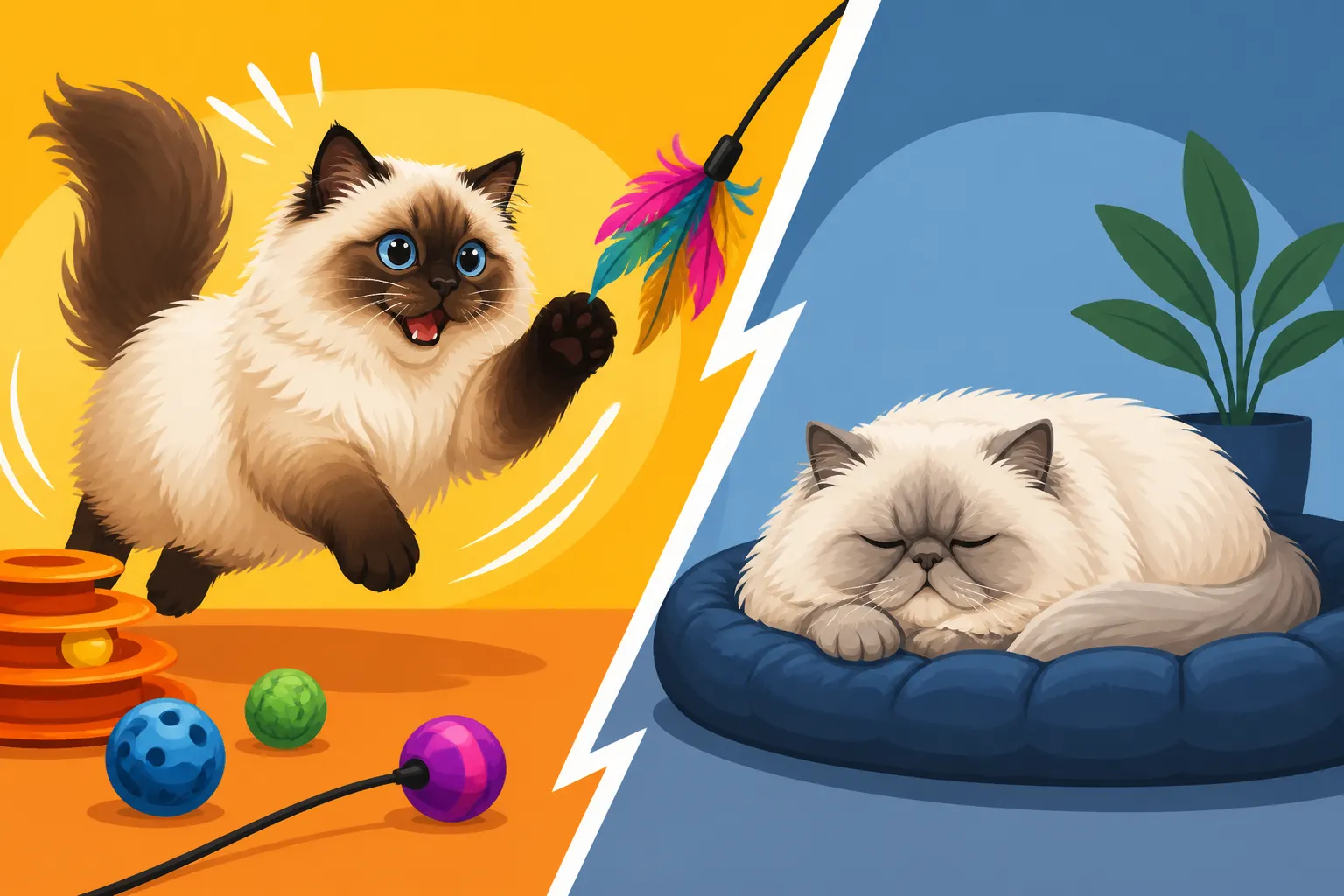
The way a cat plays is a wonderful window into its personality and energy levels. For anyone considering a Himalayan, understanding their play style in comparison to a Persian is crucial. While both breeds are undeniably gorgeous, their approach to playtime can be quite different, reflecting their unique genetic blueprints. A Persian might bat at a toy for a minute or two before deciding a nap is a more pressing engagement, whereas a Himalayan, fueled by that Siamese zest, will often show more sustained interest and a greater variety of play behaviors.
The Pursuit of the Wand: How Himalayans Engage
When it comes to interactive play, especially with toys like a feather wand or a laser pointer, Himalayans really shine. They possess a discernible prey drive that comes directly from their Siamese ancestors. You'll see them stalk, crouch, and pounce with a surprising agility for such a cobby, plush cat. They genuinely enjoy the chase, the swat, and the satisfaction of "catching" their prey at the end of a wand. A typical play session with a Himalayan might involve several minutes of focused engagement, with them running, jumping (modestly, of course, given their build), and batting at the toy. They respond well to teasing movements, simulating the unpredictable flight of a bird or the darting of a mouse. This active participation isn't just about physical exercise; it's also mental stimulation, fulfilling their inherent hunting instincts in a safe, indoor environment. You can find some fantastic, durable wand toys, often with interchangeable ends, on platforms like Amazon that can keep your Himalayan entertained for ages. Many Himalayans particularly love toys with natural feathers or crinkly elements, as these appeal directly to their senses and enhance the illusion of a real hunt. For insights on what really grabs their attention, consider reading Which Wand Toys a Himalayan Can Actually Follow.
In stark contrast, a Persian's engagement with a wand toy is often much more subdued. While some Persians will certainly bat at a feather, their attention span for sustained, energetic play is usually shorter. They might watch the toy intently from a comfortable position, perhaps extending a paw lazily to bat at it as it passes. The full-bodied stalk and pounce are less common, replaced by a more elegant, perhaps even dismissive, interaction. The vigorous chasing and jumping might only last for a minute or two before they decide they've had enough and gracefully retreat to their preferred napping spot. It's not that they don't enjoy play, but their definition of "play" tends to be less strenuous and more about gentle interaction or observation. This difference is important for owners to understand; if you're expecting a cat to play fetch or engage in lengthy, energetic chases, a pure Persian might leave you wanting, while a Himalayan offers a more robust, albeit still gentle, form of engagement.
Solo Entertainment: When There's No One to Play With
Even when you're busy, a Himalayan's desire for mental and physical activity often prompts them to find ways to entertain themselves. They might bat around a small crinkle ball or chase a loose toy mouse across the floor. Some Himalayans will even "talk" to their toys, chirping softly as they pounce. Puzzle feeders are another excellent way to engage a Himalayan's intellect, as they enjoy the challenge of working for a treat. This self-directed play stems from that intelligent, curious Siamese side, making them more resourceful than many Persians when left to their own devices. You might notice them "making biscuits" on a favorite blanket or batting at sunlight spots on the floor, inventing their own games. They're capable of keeping themselves entertained for reasonable periods, which is a blessing for busy households.
Persians, on the other hand, tend to be less inclined towards prolonged solo play. While they might occasionally bat at a toy, their default setting when not actively being engaged by a human is usually rest. They are masters of the catnap and can spend hours in a state of tranquil repose, simply enjoying the comfort of their surroundings. Their internal drive to "do" something when alone is significantly lower than that of a Himalayan. This isn't a fault; it's simply part of their placid nature. They are often content to watch the world go by from a window, or to groom themselves meticulously, making their own quiet entertainment. They may not show much interest in complex puzzle feeders, often preferring food to be readily accessible. However, if you're looking for ways to engage your Himalayan, particularly their mind, you might want to look into Which Puzzle Feeder a Himalayan Can Get Its Face Into to see which styles are best suited for their unique facial structure. Offering a variety of simple, easily manipulated toys is often enough for a Persian, as they aren't typically driven by the same intense desire for challenge or prolonged activity as their Himalayan cousins.
Why a Himalayan Plays Longer But Not Harder
Understanding the nuances of a Himalayan's play drive is crucial for their well-being. While they certainly want to play more than a typical Persian, it's vital to remember that their unique physical characteristics impose certain limitations. It's not about them being lazy; it's about their body structure. The key phrase here is "plays longer but not harder" – meaning they enjoy sustained, gentle interaction, but vigorous, high-intensity exertion is not only uncharacteristic but can also be detrimental.
The Delicate Balance: Energy vs. Brachycephalic Limitations
The Himalayan's delightful combination of a Persian's cobby body and long coat with a Siamese's spirit creates a unique physical profile that impacts their ability to play. They do have that spark of energy, that desire to chase and pounce, but their brachycephalic (flat-faced) structure means they have a shortened nasal passage and often a longer soft palate. This anatomical reality makes them less efficient at breathing and cooling themselves down compared to cats with longer muzzles. When they exert themselves vigorously, they can quickly become overheated and out of breath. Their respiratory system simply isn't designed for sustained, high-intensity cardio. While a Persian might also be less inclined to extreme exertion, it's often more a matter of preference than a physiological limitation to the same degree. The typical Persian's calm demeanor usually prevents them from pushing themselves to the point of overheating.
A Himalayan, however, with its greater enthusiasm for play, can sometimes push itself past its comfortable limits if not carefully monitored. You'll notice they tend to play in short, enthusiastic bursts, followed by periods of rest. They might stalk a toy with intense focus, pounce with surprising speed, and then immediately lie down to catch their breath. This isn't them being lazy; it's their body telling them to slow down and regulate their temperature. For an owner, this means recognizing their unique needs and tailoring play sessions accordingly. It's important to remember that this breathing characteristic is inherent to the breed's structure, which is why a Himalayan will often snore louder than its Siamese ancestors, even when resting peacefully. If you're keen to understand more about their respiratory considerations, you might find Why a Himalayan Snores Louder Than Its Siamese Ancestors an informative read. This delicate balance of wanting to play but being physically limited by their facial structure is perhaps the most defining aspect of a Himalayan's exercise routine.
Managing Play Sessions: Duration and Intensity
Given their brachycephalic nature, managing the duration and intensity of play sessions for a Himalayan is paramount to their health and comfort. Unlike a Siamese that can run zoomies around the house for extended periods, a Himalayan thrives on shorter, more frequent playtimes. Instead of one long, exhaustive session, aim for several 5-10 minute bursts of gentle, interactive play spread throughout the day. This allows them to engage their hunting instincts and satisfy their play drive without overexerting their respiratory system. Focus on ground-level games, like chasing a feather wand along the floor, rather than encouraging high jumps or prolonged sprints. Think of it as a series of delightful "mini-hunts" rather than a marathon.
It’s crucial to be an attentive observer during playtime. Watch for any signs of discomfort or labored breathing. If you notice your Himalayan panting with an open mouth, especially if it's accompanied by a slightly blue tinge to their gums (which would be a veterinary emergency), it's an immediate signal to stop play and allow them to rest and cool down in a quiet, cool spot. Even less severe signs like a prolonged rest period after a short burst of activity, or a visible struggle to catch their breath, should prompt you to reduce the intensity. A good rule of thumb is to let your Himalayan lead the pace, but be prepared to intervene and end the session before they push themselves too hard. For example, if your Himalayan is usually quite vocal during play, but suddenly becomes quiet and starts taking long, deep breaths, it’s a clear indication they’re reaching their limit. Understanding when to call it quits is vital, and you can learn more about When to End a Himalayan's Play Session to ensure your beloved feline stays happy and healthy. Remember, quality over quantity is key for a Himalayan's playtime.
Engaging Your Himalayan: Toys and Techniques That Work
Successfully engaging a Himalayan in play means understanding their unique blend of enthusiasm and physical limitations. It's about providing stimulating activities that cater to their Siamese-inherited desire for interaction while respecting their Persian-derived cobby build and brachycephalic breathing. The right toys and techniques can make all the difference in ensuring a happy, well-exercised, and mentally stimulated Himalayan without causing them undue stress.
The Best Toys for a Himalayan's Play Style
When selecting toys for your Himalayan, think "ground-level engagement" and "easy to manipulate." Their shortened muzzle and powerful jaws from their Persian side, combined with their sometimes clumsy attempts at intricate maneuvers due to their cobby bodies, mean certain toys are better suited than others.
- Wand Toys with Natural Elements: These are often a huge hit. Feather wands, strings with soft fabric, or even simple ribbons tied to a stick can mimic prey movement effectively. The key is to keep the play mostly on the floor or at low heights, encouraging stalking and batting rather than strenuous jumping. Look for durable options on Amazon that can withstand enthusiastic pouncing.
- Crinkle Balls and Soft Plush Toys: Small, lightweight crinkle balls made of Mylar or fabric are excellent for solo play. They're easy for a Himalayan to bat around, carry in their mouth, and produce an enticing sound. Soft plush toys, especially those infused with catnip, can provide comfort and stimulate gentle play, often involving batting or bunny-kicking. Ensure they are small enough for your cat to grasp without strain.
- Puzzle Feeders (Shallow & Wide): While Himalayans enjoy the mental stimulation of working for treats, their flat faces mean most deep-dish or intricate puzzle feeders are physically challenging. Opt for wide, shallow trays with simple barriers or slow-feeder bowls that allow them to easily scoop out kibble or treats with their paws or tongue.
- Simple Laser Pointers: These can be great for engaging their prey drive without demanding much physical exertion. Remember to always end a laser pointer session by directing the beam to a physical toy your cat can "catch" to prevent frustration.
- Kick Sticks: Long, cylindrical plush toys are perfect for satisfying their natural urge to "bunny kick" with their back legs, a behavior often seen when they're wrestling prey.
Avoid toys that require high jumping or extensive running, as these can quickly lead to overheating. Also, be mindful of small, loose parts that could be ingested. By providing a curated selection of appropriate toys, you cater to their natural instincts safely. If you're ever wondering which types of enrichment toys are best suited for getting your particular Himalayan off the couch and engaged, you might find some useful tips in Which Toys Get a Himalayan Off the Sofa.
Encouraging Interaction Without Overdoing It
Himalayans thrive on interaction with their human companions. Their Siamese heritage means they often form strong bonds and enjoy being part of the family's activities, even if it's just watching. Encouraging interaction goes beyond just providing toys; it involves being present and engaged yourself.
- Schedule Playtime: Establish a routine for play sessions, perhaps once in the morning and again in the evening. Cats are creatures of habit, and knowing when to expect playtime can make them more eager to participate.
- Gentle Teasing and Praise: Use wand toys to gently tease them, mimicking the movement of prey. Praise them with soft words when they pounce or interact with a toy. Positive reinforcement goes a long way.
- Hide-and-Seek with Treats: Hide a favorite treat (or a few pieces of their kibble) in various low-to-the-ground spots around the house, encouraging them to use their keen sense of smell and curiosity. This is less strenuous than running and offers excellent mental stimulation.
- "Conversation" and Cuddles: Himalayans appreciate verbal interaction. Talk to them gently throughout the day. And, of course, they are renowned lap cats. While not "play," these moments of quiet affection strengthen your bond and make them feel secure and loved, which in turn makes them more open to engaging in other activities.
- Create a Stimulating Indoor Environment: While Himalayans aren't typically extreme climbers, they do appreciate vertical space, as long as it's safe and accessible. A sturdy cat tree with wide platforms and easily navigable ramps or low steps, no taller than waist-high, can provide observation points and a sense of territory without encouraging risky jumps. Many excellent options can be found on Amazon, often featuring soft carpeting that appeals to their plush coats. Consider exploring Why a Himalayan's Cat Tree Should Be Waist High at Most for more detailed advice on selecting appropriate vertical enrichment.
Remember, the goal is enrichment and engagement, not exhaustion. A well-loved Himalayan is one that feels connected to its family and has outlets for its natural instincts, all within the comfortable limits of its physical design.
Recognizing the Limits: When Play Becomes Too Much
While it’s wonderful to see your Himalayan engaged and enjoying playtime, it’s absolutely critical to be vigilant about their physical limits. Their unique physiology, particularly their brachycephalic facial structure, means they can overheat or become distressed far more quickly than many other breeds. Ignoring these warning signs can lead to serious health issues. Unlike some more robust breeds that will self-regulate by simply walking away, a highly engaged Himalayan might push itself too far out of sheer enjoyment, making careful owner supervision essential.
Signs of Overexertion and Overheating
For any flat-faced breed like the Himalayan, the ability to regulate body temperature and breathe efficiently is compromised. This means that what might be a normal level of activity for a cat with a longer muzzle can be dangerously strenuous for a Himalayan. It's not just about stopping play; it’s about recognizing the subtle and not-so-subtle cues your cat gives when they are struggling.
Here are the key signs to watch for:
- Panting with an Open Mouth: This is the most critical and often the earliest sign of overheating or respiratory distress in a cat. Unlike dogs, cats rarely pant from normal exertion. If your Himalayan is panting, especially after even mild play, it's a serious red flag.
- Labored or Raspy Breathing: Listen closely. If their breathing sounds louder, more strained, or raspy, it indicates their airways are struggling.
- Drooling: Excessive drooling, particularly thick or foamy saliva, can be a sign of heatstroke or extreme distress.
- Lethargy or Unresponsiveness: If your cat becomes unusually sluggish, disoriented, or less responsive to your voice or touch after playing, they may be suffering from heat exhaustion.
- Wobbly Gait or Collapse: In severe cases, a Himalayan might become unsteady on its feet, stagger, or even collapse. This requires immediate veterinary attention.
- Bright Red or Pale Gums: Gently check their gums. Bright red gums can indicate overheating, while very pale gums might signal shock.
- Excessive Grooming or Hiding: Some cats, when distressed, will try to calm themselves through excessive self-grooming or by retreating to a secluded, dark spot.
It's vital to differentiate this from a Persian's typical calm. A Persian might simply stop playing and find a comfortable spot to recline, perhaps with a soft purr. Their decision to disengage is usually a choice, not a necessity driven by physical distress. For a Himalayan, however, these signs are urgent. If you observe any of these symptoms, especially panting, stop play immediately, move your cat to a cool, quiet area, offer fresh water, and if the symptoms don't resolve quickly or worsen, contact your veterinarian without delay. Understanding their thermal limits is paramount, and it’s especially relevant to remember The Temperature a Himalayan Starts to Struggle At.
Creating a Safe Play Environment
Preventing overheating and overexertion is always better than reacting to it. By thoughtfully setting up your home and managing play, you can ensure your Himalayan enjoys their activity in comfort and safety.
- Maintain a Cool Indoor Temperature: This is perhaps the most fundamental step. Himalayans do best in cool, air-conditioned environments, especially during warmer months. Ensure your home is kept at a comfortable temperature year-round.
- Avoid Peak Heat: Never encourage play during the hottest parts of the day, even indoors. Morning and evening are generally the best times for activity.
- Provide Ample Fresh Water: Always have multiple bowls of fresh, cool water accessible. Consider a wide, shallow bowl that accommodates their flat face without bending their whiskers. Some Himalayans might even be enticed by a pet drinking fountain, but ensure they can easily reach the water.
- Cooling Mats and Elevated Beds: Invest in cooling mats (available on Amazon) or elevated pet beds that allow air circulation beneath them. These can provide a comfortable, cool spot for your Himalayan to rest before, during, or after play.
- Shaded Outdoor Access (if applicable): If your Himalayan has access to a secure, enclosed catio, ensure there is always ample shade and cool, fresh water. However, generally, outdoor access should be limited to very mild temperatures, and even then, closely supervised. For detailed guidance on keeping them comfortable in warm weather, consult How to Cool a Long Coated Himalayan in Summer.
- Quiet Retreats: Ensure your Himalayan has access to quiet, dark, and cool places where they can retreat if they feel overwhelmed or overheated. This could be a carrier left open, a cupboard, or a specific bed in a cool room.
By proactively managing their environment and play interactions, you can ensure your Himalayan gets all the enrichment they desire without ever compromising their health.
The Evolving Play Drive: From Kitten to Senior Himalayan
Just like humans, a cat's play drive and physical capabilities change significantly throughout its life. A Himalayan kitten's boundless energy will gradually give way to a more sedate, yet still present, desire for interaction as they enter their golden years. Understanding these natural transitions allows you to adapt your play strategies, ensuring your Himalayan remains happy, healthy, and engaged at every stage of their life.
The Spirited Kitten and Adolescent Himalayan
When you bring home a Himalayan kitten, you might be surprised by the sheer amount of energy they possess. These little fluff balls are often far more active than many people expect from a breed descended from the dignified Persian. The Siamese influence is particularly evident in their kittenhood and adolescence. They love to pounce, chase, and explore every nook and cranny of their new home. You'll likely see them engaging in playful wrestling with siblings (if applicable) or batting at anything that moves. Their little bodies are still developing, and while they might run out of breath quickly due to their developing brachycephalic features, their enthusiasm is undeniable. It's a critical period for establishing good play habits.
Early, consistent, and safe play is essential for their development. This is when you teach them acceptable play boundaries – that hands are for petting, not for biting, and that appropriate toys are always available. Use wand toys to direct their energy, encouraging them to stalk and pounce on the toy rather than your fingers. Socialization through play, if you have other gentle pets, is also valuable. During this stage, it's particularly important to be mindful of their respiratory limits. A young Himalayan might not yet recognize its own boundaries and will push itself until it's panting. Short, frequent play sessions, interspersed with plenty of rest, are the best approach. You might find that a Himalayan kitten's initial burst of energy can be quite intense, making it important to understand How Soon a Himalayan Kitten Runs Out of Breath to prevent overexertion. Their curiosity is at its peak, and directed play channels that energy constructively, fostering a strong bond between you and your spirited little companion.
Graceful Decline: Play in the Golden Years
As your beloved Himalayan enters its senior years, typically around 8-10 years old and beyond, you'll notice a natural and graceful decline in its play drive and overall activity levels. The spirited pounces of youth will become more deliberate, and long play sessions will be replaced by shorter, gentler interactions. This is a normal part of aging for any cat, but for a Himalayan, it's often more pronounced due to potential age-related health issues and the accumulative effect of their brachycephalic structure. Arthritis can make jumping uncomfortable, vision or hearing might decline, and their overall energy metabolism slows down. They'll spend more time napping in warm, comfortable spots, and their play will shift from active chasing to more sedentary forms of engagement.
However, this doesn't mean play stops entirely. Gentle, less strenuous activities are still incredibly beneficial for senior Himalayans, helping to keep their minds sharp and their bodies moving, even if minimally. Think about slow-moving wand toys that they can bat at from a comfortable lounging position. Interactive puzzle feeders with easily accessible treats are still excellent for mental stimulation. Soft, lightweight toys they can gently mouth or bat with a paw are perfect. The focus shifts from high-energy bursts to enriching, low-impact engagement. It's also crucial to be aware of any signs of discomfort during play – if they hesitate, limp, or show any pain, stop immediately and consult your vet. They might benefit from joint supplements or pain relief, and gentle play can become part of a therapeutic routine. The goal is to provide continued enjoyment and mental engagement that respects their changing physical capabilities. For more insights on keeping your older feline friend happy and active, Which Games Suit a Himalayan Past Twelve offers excellent suggestions. These golden years are about comfort, gentle affection, and thoughtful, adjusted interactions that continue to celebrate their unique, loving personalities.
| Feature | Himalayan Play Style | Persian Play Style |
|---|---|---|
| Energy Level | Moderate, with bursts of activity; higher than Persian | Low to moderate; prefers prolonged rest |
| Play Duration | Enjoys multiple short, frequent sessions (5-10 mins) | Prefers very short, infrequent sessions (1-3 mins) |
| Intensity | Gentle pouncing, stalking, batting; avoids high jumps | Minimal physical exertion; gentle swatting, watching |
| Interactive Play | Highly responsive to wand toys, enjoys human interaction | May bat at toys, but often from a relaxed position |
| Solo Play | Engages with crinkle balls, puzzle feeders, explores | Content with napping, self-grooming; less self-directed |
| Vocalization | Soft chirps, trills during play and interaction | Generally silent during play |
| Physical Limits | Brachycephalic (flat-faced) means prone to overheating | Generally few physical limits, but low drive to exert |
| Environmental Needs | Cool environment crucial to prevent overheating | Values comfort, quiet; less sensitive to temperature |
Disclaimer
This article is for general informational purposes only and does not constitute professional advice. Laws, prices and regulations vary by location and change over time. Consult a qualified professional for guidance on your specific situation.