Why a Himalayan That Fights Grooming Ends Up Sedated
There's a specific heartache that comes with owning a magnificent Himalayan cat, and it often involves their glorious, yet demanding, coat. Many of us find ourselves in a deeply frustrating predicament: our beloved floof needs grooming, but they absolutely refuse, turning every attempt into a wrestling match. This guide will walk you through the reasons why a Himalayan's grooming struggles can escalate to the point of needing veterinary sedation, what happens when it does, and crucial steps you can take to prevent this stressful outcome.
The Unavoidable Truth: Why Himalayans Need Constant Grooming
Let's be real, the Himalayan cat's plush, flowing coat is undeniably one of its most stunning features, but it's also a double-edged sword. It's not just a bit of extra fluff; it's a dense, long-haired masterpiece inherited directly from their Persian ancestors. This isn't a coat you can just admire from afar; it's a daily commitment, and when that commitment falters, trouble starts brewing faster than you might think.
The Anatomy of a Himalayan Coat and Why It Mats So Easily
Imagine two layers of fur: a soft, downy undercoat that acts like nature's insulation, and a longer, silkier topcoat that gives the Himalayan its regal appearance. While beautiful, these two layers are prime candidates for tangling. The fine, wispy undercoat easily snags onto the longer guard hairs, especially in areas of friction or where the cat can't reach effectively. Think about the armpits, behind the ears, the 'britches' around their hindquarters, and their magnificent ruff. These are mat-magnets. Every time your cat stretches, rolls, or even just sits still for too long, those hairs are weaving themselves into a tighter, denser knot. It's not malicious; it's just physics at play with a lot of fur.
Furthermore, a Himalayan's inherently cobby body shape, coupled with those relatively short legs, can make self-grooming a real challenge, particularly as they get older or if they carry a little extra weight. They simply can't twist and reach all those crucial spots, leaving them vulnerable to matting in hard-to-reach areas. This isn't a minor inconvenience; it's a fundamental aspect of their breed that demands constant human intervention. The Daily Comb a Himalayan Cannot Skip isn't just a suggestion; it's a cornerstone of their care.
The Real-Life Impact of Even One Missed Grooming Session
We've all been there. Life gets busy. You skip a day, maybe two, promising yourself you'll make it up. But with a Himalayan, even a couple of missed days can start a cascade of issues. A tiny tangle that could have been easily brushed out can quickly tighten into a small mat. That small mat then acts as an anchor, pulling in more loose hair, skin oils, and environmental debris, growing larger and denser. Before you know it, what was once a soft patch of fur has become a felt-like slab, pulling uncomfortably on your cat's skin.
It's not just cosmetic. Mats create a damp, warm environment against the skin, perfect for bacteria and yeast to flourish, leading to painful skin infections (dermatitis). They restrict movement, making it uncomfortable for your cat to walk, jump, or even lie down. Imagine having your hair constantly pulled, or wearing clothes that are several sizes too small and stiff with old dirt. That's what mats feel like for your cat. This discomfort can then lead to further resistance to grooming, creating a vicious cycle where the cat associates the brush with pain, making future sessions even harder. Why a Missed Day Costs a Himalayan a Mat really drives this point home – prevention is far easier than cure.
The Escalation of Resistance: When Grooming Becomes a Battle
When a Himalayan begins to fight grooming, it’s not usually because they're being "naughty." It's almost always rooted in discomfort, fear, or a lack of proper conditioning. Understanding these underlying causes is crucial to breaking the cycle and avoiding more drastic measures.
Understanding Your Himalayan's Signals of Discomfort
Cats are masters of subtle communication. They don't always scream or lash out immediately. Often, they'll give you clear signals that they're unhappy or in pain long before they resort to aggression. During grooming, watch for:
- Tail lashing: A rapid, agitated swishing of the tail indicates irritation.
- Flattened ears: Ears pinned back against their head are a clear sign of fear or aggression.
- Wide eyes/dilated pupils: These can signal anxiety or fear.
- Tensing of the body: A rigid posture suggests they're bracing for impact or trying to get away.
- Low growls or hisses: These are explicit warnings to back off.
- Swatting with unsheathed claws: This is a direct attempt to stop the interaction.
- Attempting to bite: This is often a last resort when all other warnings have been ignored.
Ignoring these signals, even if you're trying to do what's best, only teaches your cat that their protests are futile, and they must escalate to get their point across. If grooming is consistently painful or frightening, they'll anticipate it with dread, and their resistance will naturally increase. It's a fundamental part of Keeping a Himalayan Calm When It Panics – understanding their stress signals.
The Dangerous Cycle of Fear, Pain, and Aggression During Grooming
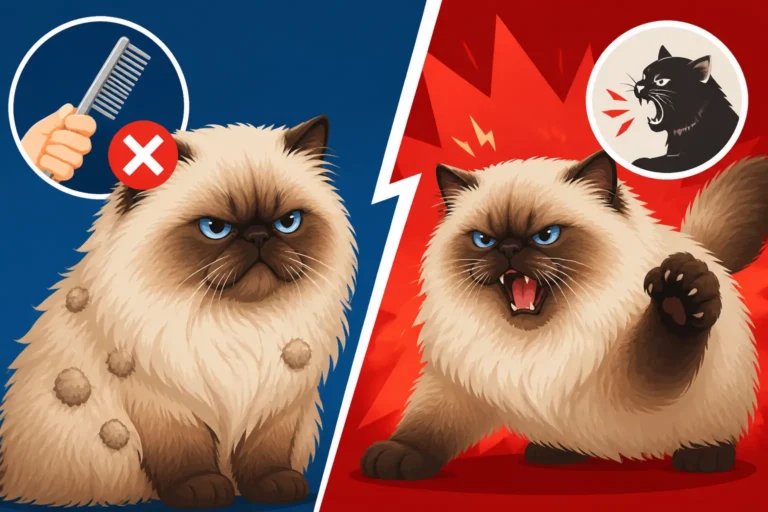
Once a Himalayan associates grooming with pain or fear, a dangerous cycle begins. You try to comb, they struggle because it hurts or they're scared, you might inadvertently pull harder trying to get through a mat, which causes more pain, reinforcing their fear. This quickly leads to aggression – biting, scratching, and fighting to escape. From your perspective, you're trying to help, but from their perspective, you're inflicting pain.
This isn't just unpleasant for you; it's deeply traumatic for your cat. Every negative grooming experience reinforces the idea that the brush (and you, during grooming) is a threat. It can erode the trust between you and even lead to a generally more fearful or aggressive cat in other situations. It also makes effective grooming impossible. You can't safely get through the coat, the mats get worse, and the problem spirals out of control. Many owners find themselves in this situation, feeling guilt and despair because they know their cat needs help, but they can't provide it without getting hurt or further traumatizing their pet.
The Inevitable Vet Visit: Why Sedation Becomes the Only Option
When grooming resistance reaches a critical point, and mats become severe, a trip to the vet for professional intervention often becomes the only humane solution. This isn't a decision taken lightly by either the owner or the veterinarian; it's usually a last resort to alleviate suffering.
Assessing the Severity: When Mats Become a Medical Emergency
It's easy to underestimate how serious matting can become. Beyond the surface-level discomfort, severe mats can cause significant health problems. They can cut off circulation, leading to skin necrosis in extreme cases. They can hide parasites, open wounds, or abscesses that go unnoticed until they become severely infected. The constant pulling on the skin can be incredibly painful, making the cat reluctant to move, eat, or even groom themselves further.
When a veterinarian examines a severely matted Himalayan, they're looking at more than just tangled fur. They're assessing the cat's overall health, looking for skin infections, signs of pain, and any hidden injuries or issues beneath the matted coat. Often, by this point, the mats are so tight and extensive that attempting to brush them out would be excruciatingly painful and simply not feasible. Cutting them out with scissors is dangerous due to the tight proximity of the skin to the mat, risking accidental cuts. This is precisely What a Matted Himalayan Becomes a Medical Case. The cat is suffering, and the priority shifts to relieving that suffering safely and effectively.
The Sedation Process: What to Expect at the Clinic
Once the decision is made that the mats are too severe for awake removal, sedation or anesthesia becomes necessary. Your vet will conduct a pre-sedation exam, which often includes blood work to ensure your cat is healthy enough for the procedure, especially since Why a Himalayan's Kidneys Are Checked Before Sedation is a critical step due to potential breed predispositions.
The actual process usually involves:
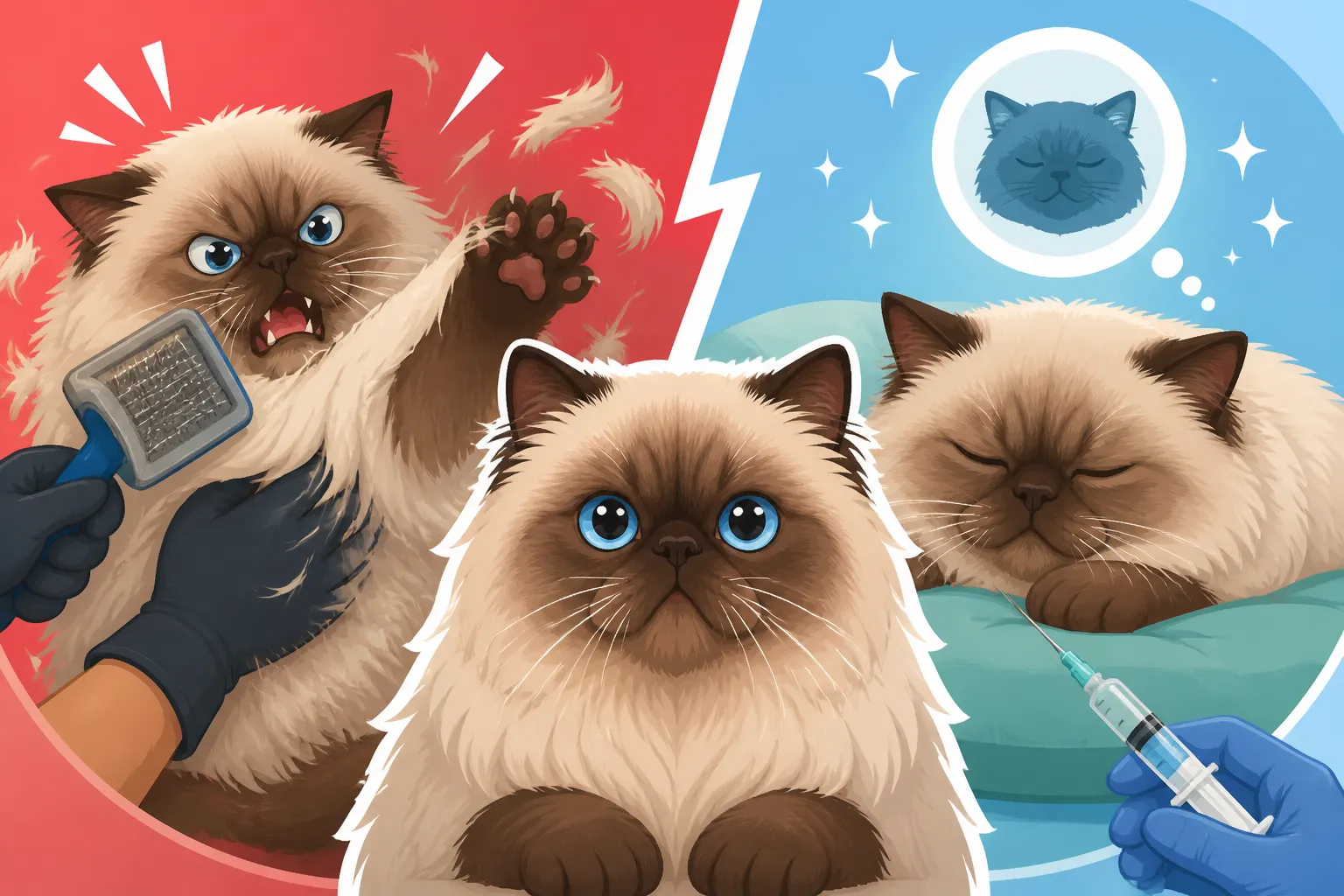
- Preparation: Your cat will be given a sedative, often through an injection, to help them relax. This allows the vet and veterinary technicians to handle them safely.
- Monitoring: Throughout the sedation, your cat's vital signs – heart rate, breathing, oxygen levels, and temperature – will be closely monitored. This is especially important for brachycephalic (flat-faced) breeds like Himalayans, who can have unique respiratory considerations. How a Vet Manages a Himalayan Under Anesthetic involves careful attention to these details.
- Shaving: Once sedated and stable, the veterinary team will carefully shave off all the matted fur. This is typically done with electric clippers, taking great care to avoid cutting the skin, which can be paper-thin and fragile underneath severe mats.
- Recovery: After the mats are removed, your cat will slowly wake up from the sedation. They might be a bit groggy, wobbly, and disoriented for several hours. Why a Himalayan's Anesthetic Needs a Longer Recovery is due to factors like their breathing and the individual response to medication. They'll need a quiet, warm place to recover at home, with easy access to food and water.
While effective, sedation is not without risks, and it's certainly not a pleasant experience for your cat or for you. The goal is always to avoid reaching this point.
Breaking the Cycle: Strategies to Avoid Future Sedation
The good news is that, for most Himalayans, ending up sedated for grooming is entirely preventable. It requires consistency, patience, and establishing a positive routine from a young age.
Building a Positive Grooming Routine from Kittenhood
The absolute best defense against grooming battles is starting early. A Himalayan kitten should be gently handled and introduced to the comb and brush from the moment they come home. These initial experiences shape their entire attitude towards grooming.
- Short, Sweet Sessions: Keep grooming sessions very brief, just a minute or two, especially at first. The goal isn't to get the whole job done, but to create a positive association.
- Gentle Tools: Use a soft kitten brush or a wide-toothed steel comb. Avoid anything that might pull or scratch. As they grow, transition to the appropriate Which Steel Comb a Himalayan's Coat Needs.
- Positive Reinforcement: Always pair grooming with treats, praise, and gentle petting. Make it a positive experience! Immediately after a short session, give them their favorite treat or engage in a brief play session.
- Consistency is Key: Daily, even if for just a few minutes, is far better than long, infrequent sessions. This helps them get used to the routine and prevents small tangles from becoming big mats. Think of it like a quick daily check-in rather than a major overhaul. Getting a Himalayan Kitten Used to the Comb is foundational for their future well-being.
- Handle Sensitive Areas: Gently touch their paws, ears, tail, and belly even when not actively grooming. This desensitizes them to handling in these often-sensitive areas.
It takes time, but this early investment pays off immensely in the long run, saving both of you stress and potential trips to the vet for sedation.
Tools, Techniques, and Training for a Cooperative Cat
Even if you have an adult Himalayan who has already developed an aversion to grooming, there's hope! It will take more patience, but you can often turn things around.
Essential Grooming Tools
Investing in the right tools is paramount. You'll need:
- A high-quality steel comb: Look for one with both wide and fine teeth. Brands available on Amazon often offer these.
- A slicker brush: Useful for removing loose undercoat, but use gently to avoid scratching the skin.
- Blunt-nosed scissors: For carefully trimming any small, superficial mats that can't be combed out, or for tidying the fur around their britches or paws. Always use extreme caution.
- Grooming wipes or soft damp cloths: For daily face cleaning, especially around their eyes and nose fold. Many pet-safe options are available on Amazon.
- Non-slip mat: Place this on your grooming surface (a table or counter) to make your cat feel more secure.
Gentle Grooming Techniques
- Find their Happy Place: Groom them in a quiet, calm environment where they feel safe. A raised surface like a table can be helpful as it signals that this is a dedicated activity and allows you to work comfortably. How Often a Himalayan Must Be Combed is usually daily for these cats.
- Start Slow: If your cat is resistant, start by just petting them with the brush or comb for a few strokes, then stop and reward. Gradually increase the duration.
- Work in Sections: Don't try to do the entire cat at once. Focus on one small area, reward, then take a break.
- "Line Brushing": This technique involves parting the fur down to the skin and brushing section by section. It ensures you're getting through all layers of the coat and not just skimming the top. Working a Mat Out From Under a Himalayan's Points requires a systematic approach like this.
- Support and Comfort: Always support your cat’s body, especially when working on their belly or armpits. Speak to them in a calm, soothing voice.
- Know When to Stop: If your cat becomes agitated, stop before they escalate to aggression. It's better to end on a slightly positive or neutral note and try again later than to push them to the point of biting or scratching.
Training and Behavioral Support
- Desensitization and Counter-Conditioning: If your cat has a strong aversion, you'll need to slowly desensitize them to the grooming tools. Leave the comb near their food bowl or favorite sleeping spot. Gradually move it closer, then briefly touch them with it, always pairing it with a high-value treat.
- Calming Aids: For anxious cats, consider pheromone diffusers or calming treats available from pet stores and Amazon. These can help reduce overall anxiety, making them more receptive to grooming.
- Professional Help: If you're struggling, don't hesitate to seek advice from a professional groomer who specializes in cats or a veterinary behaviorist. They can offer personalized techniques and support. Some owners find it beneficial to enlist a professional groomer even for routine upkeep; Why a Himalayan Owner Ends Up on First Name Terms With a Groomer is a common anecdote among owners!
By proactively managing your Himalayan's glorious coat with patience, the right tools, and a consistent routine, you can prevent mats from forming, avoid distressing grooming battles, and ensure your beautiful companion never has to experience the stress and risks of sedation for a simple haircut.
Disclaimer
This article is for general informational purposes only and does not constitute professional advice. Laws, prices and regulations vary by location and change over time. Consult a qualified professional for guidance on your specific situation.